Author Archives: Conor O'Driscoll

About Conor O'Driscoll

Conor O'Driscoll is a designer and writer, who writes for AppStorm.net. He also enjoys writing about himself in the third person.
  1. One Minute With… Kendrick Kidd

    1 Comment
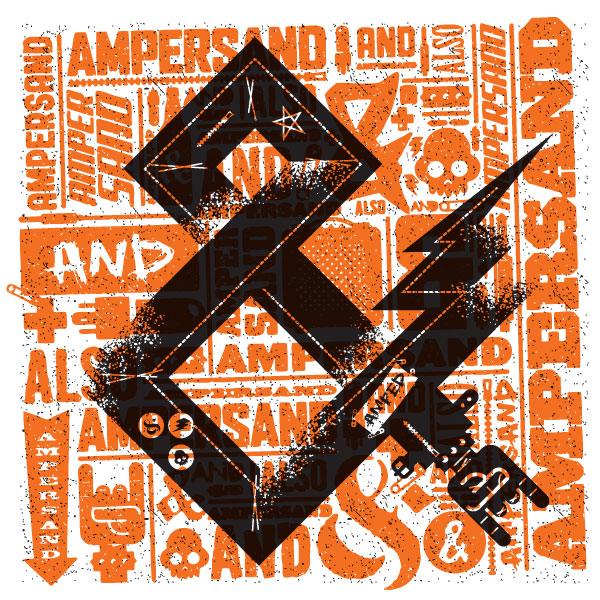
    Ampersand for 55 Hi's

    Hi Kendrick, thanks for taking time to chat with One Minute With. Tell us a little bit about yourself and your work.

    Thanks for having me, Conor!

    Well, I’m currently working out of Jacksonville, Florida for a local advertising agency called Shepherd. In addition to that, I’m one half of Halftone Def Studios (a small screen printing business), and I freelance for myself on nights and weekends. It keeps me pretty busy, but I like it.

    Walk us through a typical day in the life of Kendrick Kidd.

    Hmm, typical day… I’m usually up by 5:00 a.m. everyday, and depending if there’s waves, I try to squeeze in morning surf session with friends before work. I’m at the office by 8:30, salty. After a couple cups of coffee, and visiting several design sites, I start cranking on my work list for the day. If I’m lucky, I’ll grab a slice of pizza with coworkers for lunch, but more-often-than-not I eat at my desk. By 6:00 I’m heading back to my house to see my wife & son. After dinner my freelance work starts and last until it’s time to go to bed. Wake up – repeat.
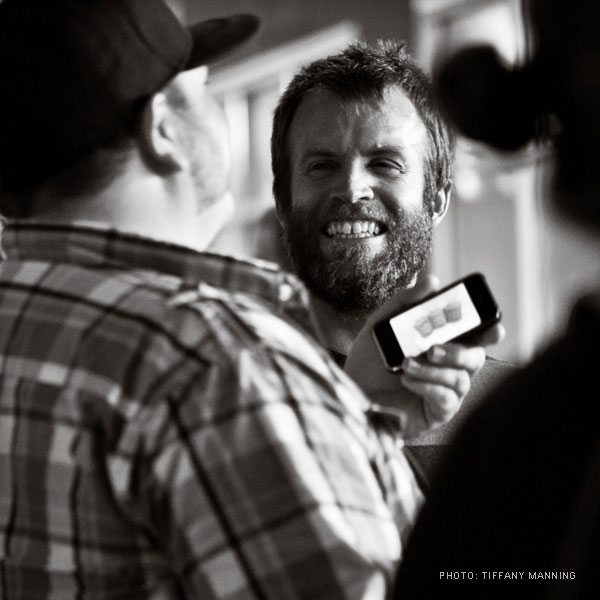
    Kendrick Kidd

    How did you get into design? Was there a defining point in your career, and if so, how did it shape you as a designer?

    It’s hard to pinpoint one thing that got me into design. I think it’s something I’ve naturally been attracted to my whole life. My parents were great about encouraging me to draw when I was growing up, I think that, with some direction from my high school art teacher eventually lead me to a design career. I feel lucky that I took a definitive direction at a pretty young age, while some of my friends struggled to find a major in college, I knew going in what I wanted to do.
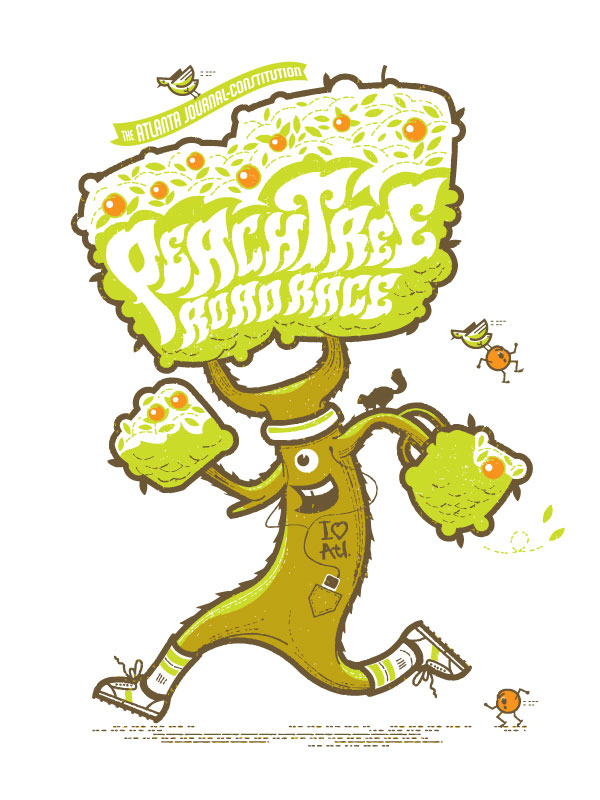
    Peach Tree

    How do you approach a new project? What’s your creative process like?

    When I was younger I use to wish my creative process was more sexy & magical, but I’ve come to appreciate its’ meat & potatoes reality. So I start with a client input meeting and get as much direction as possible. From there I do a bit of research and start sketching out rough ideas (this step usually includes a Yuengling or two). I try to work as fast and loose as I can at this stage to keep the thoughts moving. A quick edit of the sketches for relevance, and I present the roughs to the client. If there’s any major direction changes I try to address them at the sketch stage. Once a direction is chosen it’s off to the computer for rendering. There’s usually some back and forth with the client to tighten down the finer points, then Pow!!… I fly home in my private jet & have dinner with my wife & son at Disney (that last part’s a lie).
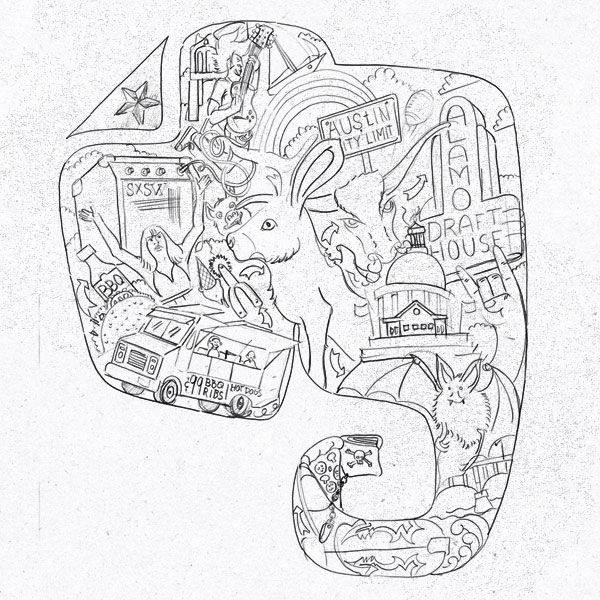
    Evernote Sketch

    Typography is clearly a strong point of yours. Do you see a clear distinction between lettering and type design, and would you ever consider releasing fonts professionally?

    Thanks man, that means a lot! Not always sure how well I do it, but it’s totally something I try to focus on.

    I definitely see a difference between lettering & type design, for sure. Though some folks can do both, I feel like both require a unique skill set. It’s like the difference between being able to bake a really awesome cake, and being a baker (sorry, I watch my fair share of The Food Network).

    I’m pretty intimidated by the idea, but designing a font is on the bucket list, for sure. Would love for it to happen sooner than later, just waiting for some gusto and the right circumstances (ie enough free time).
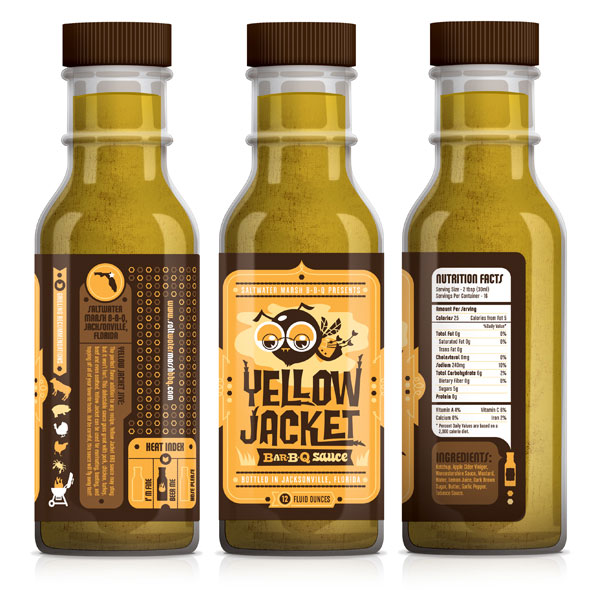
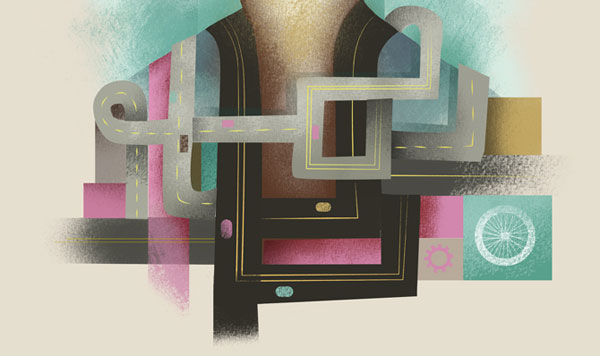
    Yellow Jacket

    Your work includes a vast range of fields, such as print, logos, apparel, and illustration work. If, in some weird hypothetical universe, you could only do one of these, which would it be, and why?

    Wow, thats tough.. I love variety. I think I’d get bored if I could only do one thing. I guess if I had to choose one it’d be identity work. I love thinking about branding systems & how designs will carry from office pencils to outdoor signage and everything in between.
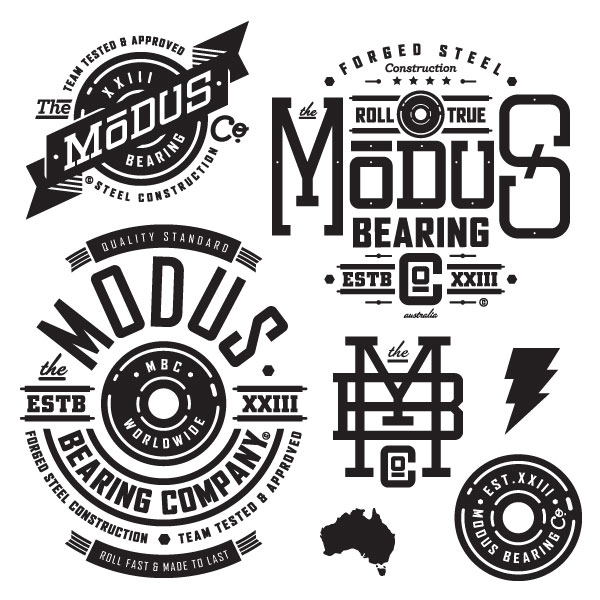
    Modus

    If, in some Freaky Friday-like situation, you could live the life of another designer, illustrator or creative, for a day, who would it be, and why?

    Hmm… I’d split the day: 9:00am – Noon Ken Barber, Noon to 5:00pm Draplin. Ken because I’d love to have his understanding of lettering for a few hours, and Draplin just cause the man is rawesome.

    What design tools could you not live without?

    A pencil & Adobe Illustrator. If you took those away I’d have to find a new vocation.

    And finally, what tips would you give to anybody who is looking to get started in design?

    I heard Candice Olson say something to the effect of, “Take your work seriously, and not yourself.” Always thought that was solid advice.

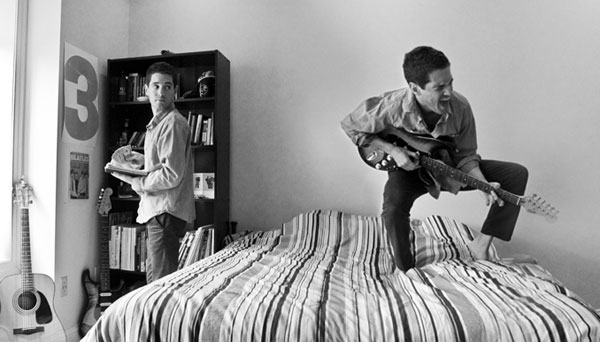
    Thanks Kendrick!

    Thanks so much to Kendrick for giving us an insight into his world! I really enjoyed talking to him, and found his answers really interesting!

    Why not check out Kendrick’s site, and follow him on Dribbble and Twitter?

    Related Posts:

  2. One Minute With… Matt Chase

    Leave a Comment

    One Of Those Days

    Hi Matt, thanks for taking time to chat with One Minute With. Tell us a little bit about yourself and your work.

    Thanks very much for having me, Conor. I’m a Kansan-born designer, living and working in Washington, DC. Presently, I’m enlisted in the ranks of Design Army, where I’ve been fighting the good fight for about a year and a half now. Just before landing in DC, I was interning with ad house Crispin Porter + Bogusky in Boulder, and prior to that, while in school, enjoyed a few summer stints at Hallmark Cards in Kansas City. I try to push my work to tap the widest gamut I can, exploring anything from child-like whimsicality to more serious reflections on life & culture. I’ve got an insatiable taste for the irreverent and am always looking to circumvent the obvious. The past few years have really introduced me to illustration, which I only briefly started fooling around with toward the end of my college years, so that’s been a ton of fun.

    Walk us through a typical day in the life of Matt Chase.

    Pretty normal schedule, really, save for the fact I live in DC, so I probably get offered things like meth and PETA literature more often than most people. I usually get to work around 8:30 and try to catch up on personal things like e-mail / Twitter before settling into real work. I can’t really get into the details of a day at Design Army, but I can tell you that each one is certainly a new adventure. Every person who walks in that door puts their entire life into what we do there, and it’s pretty amazing to see what comes out when we’re done. I usually make it home around 8 or 9, and either dive right into more work or just take it easy. Admittedly, there’s always a project I know I should be doing when I get home, but after after 12 straight hours in the studio, I try and slow things down when I know I need to.

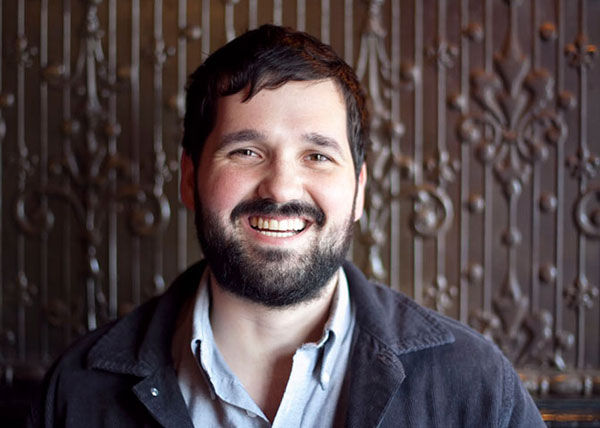
    Matt Chase

    How did you get into design?

    For Christmas, when I was in fifth grade, I asked for a scanner and an Ocarina of Time Player’s Guide. I fired it up and the first thing I did was scan the cover and change Link’s tunic from green to red, which it obviously should have been in the first place because the Goron Tunic allows you to walk through volcanoes and looks way more badass. That’s probably about the time I got hooked, although the majority of my academic career was spent under the assumption that I’d ultimately pursue an English degree. It wasn’t really until high school that I realized design could afford me a rare opportunity to mix my passion for writing and my passion for art. Our teacher at the time, whose background was in pottery, was phenomenally underqualified to be heading the new Computer Arts course we just introduced, so my senior year was basically spent making faux album covers for bands I invented and fabricating track names to songs that only existed in my head. It was a good year.

    I went on to Kansas University, whose program is amazing, and was introduced to a new world of designing around concepts instead of bands called FunkStain. I got lucky the summer after my sophomore year and netted the last internship spot at Hallmark Cards, where I worked the next two summers, and during the year headed the advertising staff of our university’s newspaper, which turned out to be this crazy, surprisingly beneficial exercise in collaboration. Most of the campaigns we ran were the brainstorm children of myself, the marketing kids and local business owners. Working under those circumstances for so long made communicating and developing concepts with later clients much easier. It was like a little microcosm of the real design world—with real clients and real budgets and real deadlines—but in a student atmosphere, with friends and booze and basketball and stuff. Still being in school, it was great to be able to compare the workings of the classroom environment to all the things the classroom environment was preparing me for—in between my classes.

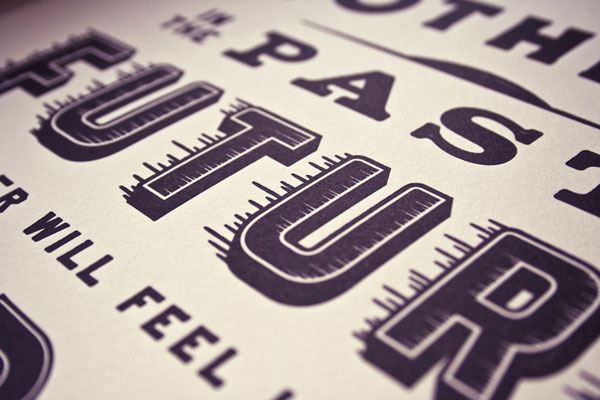
    Nothing Past, Nothing Future

    How do you approach a new project? What’s your creative process like?

    Every project is obviously different, but the first thing I try and do is clear my mind of any assumption I might have about what the client is expecting from me. I’ve found that trying to design around the notion of what you think another person probably wants is needlessly restrictive. But I think a lot of people get caught up in that. It’s like, “oh, well, you probably hired me to do this because you saw this one thing I did—” And while that might be true, you can’t keep your focus there. So, fresh start, always; that’s the first thing. The nature of the work usually dictates the process. For illustration, which comprises the majority of projects I do in my spare time, it’s the idea that I’m after. I’ll do a lot of quick thumbnails, hoping to unearth visual metaphors or clever interactions that speak to what I want the final piece to say. That’s the bulk of the process, actually. I’d say it’s about 80% fiddling around on paper or staring really, really intently at walls while talking to people and 20% finalizing. Computer execution tends to go pretty quick.

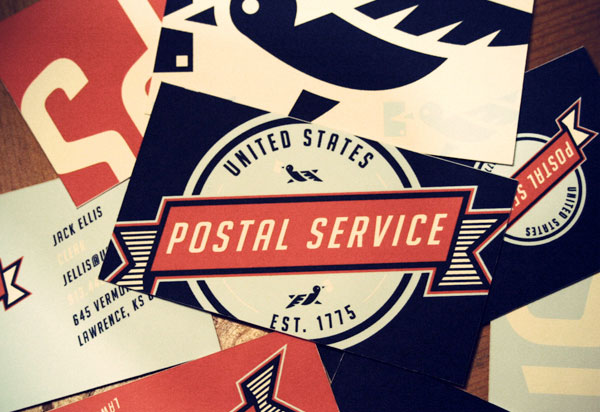
    USPS rebrand

    You gained a good deal of attention for your USPS rebranding concept – How beneficial is it, do you feel, to work on self-initiated projects, as opposed to just paid work?

    USPS paid me $8 million for that work.

    It’s funny you ask though, and a lot of people don’t realize this, but that was actually a school project. Not necessarily in the self-initiated realm, but I think it does address the same kinds of considerations that go into developing projects outside of what you do for clients. There’s no one to answer to but yourself—no deadlines, no budgets, no HR reps to appease. And that’s liberating, big time. It’s basically the workday equivalent of grabbing a beer after 8 hours on the job. Everyone needs that.

    One of the first things I noticed when I got into doing this was that it’s a straight-up passion industry—we do this because we love it. We stay up late to draw pictures of bears and letters and logos for things that only exist in our heads. Regular people don’t do that. Regular people sleep. How many accountants do you know who go home and crunch numbers in their spare time? The answer to that question is zero. I would even go so far as to say that if you aren’t doing work just for the hell of it—or if that notion repels you in the slightest—then you might be in the wrong field. We all want to do good work. We crave it, we need it. But at some point, we’ll all be in a position where good work isn’t happening, even with good clients. So you have to find it on your own. If that means making it for no one, then you make it for no one.

    Throughout your online presence, there’s a great sense of character – You use humour to great effect on your site. How important is it to be a ‘real person’ in the design industry, rather than just a PS/AI robot?

    That means a lot — thank you. I would never presume to say it’s important or not important to be a certain kind of person; I think the only thing that really matters is to be yourself, as high-school-counselor as that sounds. If you care about the work that you do, your personality will come through; it’s inevitable. And people will start to notice.

    All Men Born

    If, in some Freaky Friday-like situation, you could live the life of another designer, illustrator or creative, for a day, who would it be, and why?

    James Victore, probably. More than anyone else I can think of, he embodies this belief that good, powerful ideas should be at the heart of everything you do. I mean, most of his work literally requires the dexterity of a four-year-old, and yet he manages to say things that no masterfully-perfected, digitized wonder of a piece could ever do. And that’s rare. In a world where we so dutifully worship technical proficiency and brilliantly choreographed superficiality, his work always serves to remind me that making something beautiful will never mean as much as making something good.

    What design tools could you not live without?

    Pretty standard stuff, really. Pencil and paper (whatever’s cheapest), Illustrator, Photoshop, InDesign, e-mail. Google images totally revolutionized research; I can’t really imagine not being able to scroll through a hundred pictures a minute. I love anything editorial-based, so I always keep some kinds of magazines around. I could probably toss my cell phone in a dumpster tomorrow morning and forget I’d done it by noon.

    Illustration by Matt Chase

    And finally, what tips would you give to anybody who is looking to get started in design or typography?

    The biggest piece of advice I can give to anyone is to work hard and love what you do.

    The second is to avoid being derivative. Half the design work out there looks almost the same, and at least half of that looks almost exactly the same. It’s what happens when people to look to what’s popular for their inspiration, and stop looking inside. More with the counselor shit, I know, but it’s true. Don’t be concerned with having a style, or what your piece is going to look like when it’s finished. Style is always secondary to substance. You can buy a Ferrari kit car for a quarter of what an original Ferrari costs, and yet the real ones out-sell the fakes two to one. Why? Because a flashy red car on its own doesn’t mean anything; it’s what’s under the hood that counts. You need substance, and you don’t get substance from replicating what everyone else is already doing. Don’t set out to build a better-looking Ferrari, set out to build a better-performing car.

    Thanks Matt!

    We’re really grateful to Matt for spending a few minutes with One Minute With. Hopefully you found his responses as interesting as I did!

    Why not check out Matt’s site, and follow him on Dribbble and Twitter?

    Related Posts:

  3. One Minute With… Mikey Burton

    1 Comment

    A firework

    Hi Mikey, thanks for taking time to chat with One Minute With. Tell us a little bit about yourself and your work.

    Yeah, I’m Mikey Burton, I’m a designer and illustrator based in Philadelphia, Pennsylvania. I spend my days doing a lot of illustrations, infographics and small identity projects. I really like bears. The animal. The lovable, cuddly, yet ferocious animal.

    Walk us through a typical day in the life of Mikey Burton.

    I work out of the house at the moment, so it’s a pretty strict program. [Chuckles to himself] It’s very easy to get distracted if you’re at home alone – If you break out of that you can very easy end up, y’know, doing the laundry during the day!

    So yeah, I get up, gotta have my coffee, gotta put my shoes on and make myself feel like I’m actually at a job. Usually the morning is when I do the most of my thinking – It’s when my brain’s the most fertile and when I’ll come up with the best ideas, so that’s usually used for concepting, or if I have to sketch for a job, that’s when I do it.

    Midday: Design, illustration, and that goes on until I fall asleep. Lately I’ve just been working like crazy.

    Mikey Burton

    How did you get into design?

    As a little kid, I was always drawing, and my mom was always buying me crayons and pencils. After highschool, I was like, “What do I do? I want to do something creative, but I don’t wanna be a starving artist.” So I decided to go into the noble art of graphic design, not really knowing what that was at the time – I just thought I’d probably be making CD packaging, which is really funny to think now, as it’s such an outdated thing!

    So I went to school, and learned a lot of hand skills, not anything computer-based. This isn’t even that long ago, and yet it sounds ridiculous talking about it… I remember buying like $1,500 worth of drafting supplies in college – not even a computer – just so you can sit down with a T-square, an X-Acto knife and rapidograph pens and make stuff by hand like that, with high precision quality. So that was a very big shock to me, and I wasn’t very good at it – I did really bad the first semester, but at some point I got better, and realized that it was just this weeding-out thing that they did at school. But it went on, and I was actually invited to the Master’s program at my school, where they had a combined degree in which you got your Master’s and Bachelor’s all at once.

    Facebook work

    I found myself being there for 6 years, at the same place. If you’re at the same school for that long, you kinda have all the same professors. That’s great, it’s very intimate, and you’re very good friends with them, but you can only learn so much by being with the same professors, so me and my friends unintentionally started to run our own business – We didn’t set out with a business plan, we were just like “Oh, we’ll just start doing concert posters and see where it goes…” It was just this fun thing to do to inspire ourselves and get our creative juices going. It was just me and two other guys, and we started this company called Little Jacket, which is actually still around in Cleveland, Ohio.

    Back then (around 2004), it felt like pre-Internet days, even though it obviously wasn’t! I feel like younger students now have so many things that make it easier – There’s Cargo Collective or there’s Indexhibit, all these things that you can build a website out of, all these different communities you can be involved in, all these different social media outlets that you can get your name out there with. We were just doing posters on a local level, it had this local buzz, and we’d share our work on gigposters.com. Doing these silly posters actually led to doing client work, which we did for about 4-5 years. Around 2008/2009, I was just kinda spent, so I finished my degree, finished school, and moved to Philadelphia for a job in advertising, because I was tired of working on my own and that not going so well, and I wanted to learn something new from somebody else – The idea of working with a proper business with larger clients appealed to me, so I did that for 2 years, at this place in town called 160over90. A year ago, I quit that, and now I’m working on my own.

    How do you approach a new project? What’s your design process like?

    It all depends on what it is, but I am a big advocate of sketching – No matter what you do, it’s always a really important part of the process to just sit down, sketch and get all of your ideas on paper. It’s one of those things that makes me feel better about my work: to just get it all out so that I can see it, and ask myself “Is that all I have?” I always set myself this challenge when I’m sketching to fill the whole page,so that there aren’t pockets that are left, and you have to really force yourself to get that extra idea out. Sometimes, that’s the coolest idea you have.

    One of the things that I regret a lot is that on my site, I only have end results – I usually have loads of good process stuff, and I never show that, which is kinda sad. So that’s a goal for the year: To get a blog up where I can talk more about what actually went into things, as opposed to just the end product.

    Sketch for Facebook

    You’ve been involved in a few high-profile self-initiated projects, such as Freelance Ain’t Free. How much of your work is self-initiated projects, and how much is client work? Is there one you prefer over the other, and why?

    This is another thing I’m trying to work on this year. I can’t say no to client work. I don’t turn away a lot of client work, but it’s really hard. If I can see myself getting it done in the next few days, I usually don’t say no. Just because I like, uh, money.

    And that’s a good way to be – to just not say no, work really hard and take on everything you can. But in the same respect, the things that I really like (that have been working out) are some of the side projects that I do, like Freelance Ain’t Free. Some people do these side projects and get hundreds of thousands of followers out of it, or just really cool work – Jessica Hische is just the Queen of Typography now, after doing Daily Drop Cap, and now she gets to do the titles for the new Wes Anderson movie, which is just awesome and amazing!

    In my case, Freelance Ain’t Free was just a simple idea which I made myself do – It wasn’t like I was going to build a site around it, I just went home to Ohio, and was like “Okay, I love letterpress, I need to print something while I’m there.” I was just tired of people coming to me saying “I only have $5 for you to do 100,000 hours worth of work.” I mean, you’re a giant company, you can pay me something. I just got kinda frustrated with that, so I thought “‘Freelance Ain’t Free’, that’s a cool idea”. So I just did some prints of that, and thought that they were cool, so I did a little site around it. As I was doing that, I decided to do a logo for it. When the site launched, I thought “Oh, this logo is cool”, so that became a t-shirt – It was just this organic process. I didn’t have to pay for stuff along the way – I didn’t pay for the prints, because my friend gave me the paper and let me borrow the ink, which was really nice of him. I just sold the prints, paid him back for whatever I owed him, and then I had money left over to print the t-shirts, and now it’s just this thing that pays for itself.

    It’s been pretty interesting, because it’s not like it’s a ton of work – I mean, I have to pack up all the prints and stuff, but I’ve sold a couple hundred shirts, and, for a dude working out of his apartment, that’s money in pocket. I remember thinking when it first came out “Man, I need to focus on these side projects more” – You can do things that you like, or think are fun or interesting, and actually make money out of it – It’s kinda crazy.

    That even applies to my thesis project that I did in school – Usually when I lecture, that’s a big part of my talk, because there was a 4-5 month process of me just working and making stuff, and it going nowhere. In the educational world, I did a really bad job, but in the end, it was a lot of work that I really liked. Years after I was done with it, it was picked up on a couple of blogs, and these guys who do run Out Of Print Clothing contacted me about collaborating. Their idea is real, beautiful, old art, whether it be Moby Dick, or The Great Gatsby, printed on t-shirts. They really liked the work I had done, and asked if I would be their first artist series, and I was like “Yeah, of course!” That’s another thing that I just made for myself that become this other thing outside of that – I still collect royalties off of that now, which is really cool.

    So yeah, self-motivated work is… awesome. And I wanna make more of it.

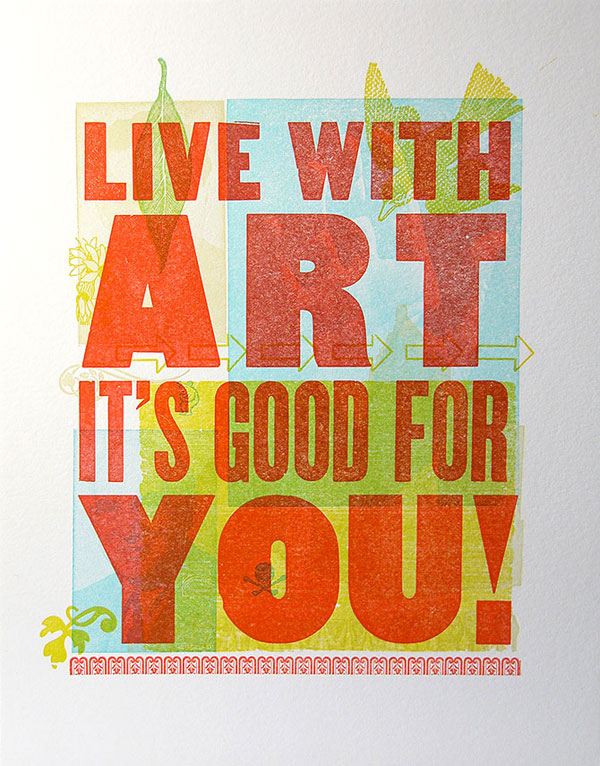
    Live With Art

    Your style is awesomely vintage, and, as you’ve described it yourself, “Midwesterny”. Did you decide to adopt that style, or was it simply something that evolved? How important is it, do you feel, or establish a style, as opposed to maintaining a variety of styles?

    It sucks, because I look at a lot of the trends out there in the world now, and I don’t want to be part of a trend, but I know that my work can be seen as trendy. I think why my work is textural, or retro, or vintage, is because when I was in school, they had a printing press there – one of the old letterpresses, with a pretty decent type collection: just a lot of stuff you can go in and get your hands dirty with. That part of it was so interesting to me – the fact that you could move stuff around, and not have to use a computer, you could line up this type and it prints, and if you don’t ink it right, it’ll print out funny. There was a certain beauty to that mistake: it was just so rich and honest. Even back around 2000 there was all those “distressed” fonts and vector garbage stuff, but this was honest and truthful – I always loved that aesthetic out of letterpress and screenprinting and the qualities that came with the printing itself, so I always try to recreate that in the most authentic way I can, with it still being a digital work.

    I don’t like that it’s a “style”, because I worry that someday, that style will end, and then I’ll be out of a job – That’s really frustrating. Even though I do do a lot of illustrative work, I like to make it somewhat conceptual at the same time, so there’s at least some wit or simple idea to everything I do. That way, it’s finding a visual solution, rather than it being just a “cool style”.

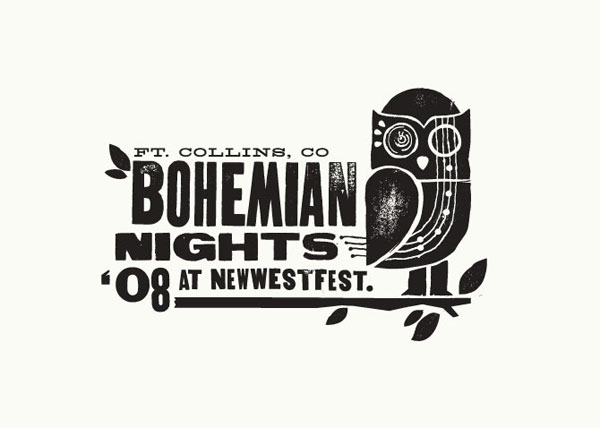
    Bohemian Night Logo

    If, in some Freaky Friday-like situation, you could live the life of another designer, illustrator or creative, for a day, who would it be, and why?

    I dunno, that’s a really tough one. Part of me wants to just have a letterpress, live in the woods, not talk to anybody and just print. I dunno if I’d ever want to be anybody else, but that’s what I want to do. There’s this documentary (Alone in the Wilderness) about this guy who goes into the woods and builds a log cabin out of nothing, he even builds the hinges of the door, and kitchen utensils and stuff. I think that’s awesome. And then I wanna just have a letterpress and print all day. In silence. And just grow a really big beard. Like, never cut it for years. And then someone will see me and be like “Who is that?”

    Does that answer your question?

    What design tools could you not live without?

    Oh, jeez, I have a lot! I can’t live without my Mac, I guess – That’s pretty obvious, everybody says that.

    I have a printer that I use, that prints out things really poorly. That’s how I generate a lot of my textures now – It’s some really old HP Laserjet. Whenever it breaks, I’m just gonna be, uh, fucked. I actually don’t know what I’d do. Before that, I’d always use really abrasive stuff, like acetone transfer pens. I was using them one time, and my nose just started bleeding. I was just like “This isn’t good.”

    I have a couple of books that I like.

    Handbook of Pictorial Symbols (Dover Pictorial Archive)
    Rudolf Modley, William R. Myers

    Trademarks and symbols; vol. 1: Alphabetical designs; vol. 2: Symbolical designs.
    Yasaburo Kuwayama

    American Wood Type: 1828-1900 – Notes on the Evolution of Decorated and Large Types

    by Rob Roy Kelly

    I really like the Rob Roy Kelly wood type books, I have a couple of those.

    When I get something that I really like, I tend to stick with them for a while. I’ve just switched to a Micron 0.5mm pen that I always use, and I always use the same sketchbook now.

    Print work

    And finally, what tips would you give to anybody who is looking to get started in design?

    I’ve already talked about doing self-initiated projects, that’s always something that you have to do. When I talk about it to people, I call it “work for work” – The idea that self-motivated projects generate client work. I’m a complete advocate for that.

    The other thing is simply don’t be a dick. It’s something I think about a lot of the time – You just kinda have to be nice to everybody. No matter how much somebody rubs you the wrong way, you just have to be really nice. The design community is so small, and everybody knows everybody, so if you treat people poorly, or you don’t work hard, or you’re just mean, everybody’s gonna know pretty quickly. Especially now, with the internet, where everybody has online personas, you just gotta be nice, you just can’t really be a dick.

    I worked at a place here in town, and I think about the network of people who worked there, and where they live now, and how I acted around them when I was working with them. One guy worked there for 12 months, and he’s now the art director at New York Magazine. One guy lives in LA, and he does projects with Good Magazine. One guy I knew worked at Nike for a couple of years. That’s three people, and it pushes it all to different coasts – It’s kinda crazy how many people you interact with, and then how it has just spread out in that way. So don’t be a dick.

    Thanks Mikey!

    Thanks a million to Mikey for talking to me – I really enjoyed talking with him, and hopefully you love his answers as much as I do!

    Why not check out Mikey’s site, and follow him on Dribbble and Twitter?

    Related Posts:

  4. One Minute With… Sharon Silverberg

    Leave a Comment

    Seasonal Goodies

    Hi Sharon, thanks for taking time to chat with One Minute With. Tell us a little bit about yourself and your work.

    Thanks for reaching out! I’m a graphic designer and Austin native currently splitting my time between my day job at CA Technologies and freelancing. During business hours, I’m a product designer at CA, where I design data visualizations for web-based IT software and preach the gospel of grids, Helvetica, and white space.

    When I’m not knee-deep in enterprise IT management metrics (yawn, right?), I dabble in fancy hand-drawn type and try to collaborate with as many talented, passionate people as I can. Since I graduated from WashU in 2010, I’ve been lucky enough to work with some great local design firms, including The Screamer Company, Asterisk Group, Digital Letterpress, and Pentagram.

    Walk us through a typical day in the life of Sharon Silverberg.

    Well, nothing important happens before coffee. I’m usually up and out pretty early and in my office going through email by 8:30. Every day’s a little different, but depending on what phase of a project we’re in, I’m doing at least a couple of these things: sketching wireframes, developing workflows, mocking up visual designs, creating clickable prototypes, and/or doing visual QA on implemented designs. And meetings. Lots of meetings.

    After work, I’ll either scramble to meet a freelance deadline from a coffee shop (like I’m doing now), or do something good for me – running, cooking, having drinks with friends. Or, more typically, some combination of all these things. I’m working on that whole work-life balance thing.

    Sharon

    How did you get into design?

    I think I got my first bootleg copy of Photoshop 7 around age 13 and I spent a lot of late nights desaturating and oversaturating mediocre photos of my punk/emo/goth friends because I thought I wanted to be a photographer. Around the same time, I realized I wasn’t a very good painter or draftsman, but I loved doing art and getting messy. So, I spent a lot of time making papercuts, printmaking, and taking mediocre photos. By the time I got to college, I’d figured out that design would let me incorporate everything I wanted to, including a newfound love for typography, and I might actually get paid for it.

    How do you approach a new project? What’s your creative process like?

    I’m going to be super general because it varies depending on whether the project’s a book, a website, an identity, a software prototype, or a luchador costume. But, the first thing I always do is a boatload of research and try to get as much useful information from the client (/internet/library) as I can, especially on what sets this project apart from similar projects that already exist/are being developed simultaneously. Then, lots (LOTS) of hand sketching, thumbnails, and eventually I get caught up in the nitty gritty details and switch to Illustrator. A lot of times, I’ll go back to hand-sketching after I’ve gone digital because my brain still works faster on paper. Once I’ve got a few conceptual directions started, I’ll get feedback from the client, then usually experience some mix of heartbreak and excitement at their decision. After that, its all refinement, refinement, refinement, more often than not a major scope change, refinement, refinement, scrambling, and PROJECT LAUNCH! Then usually some more scrambling to refine just an eensy bit further if I can, because I’m a perfectionist. And lather, rinse, repeat.

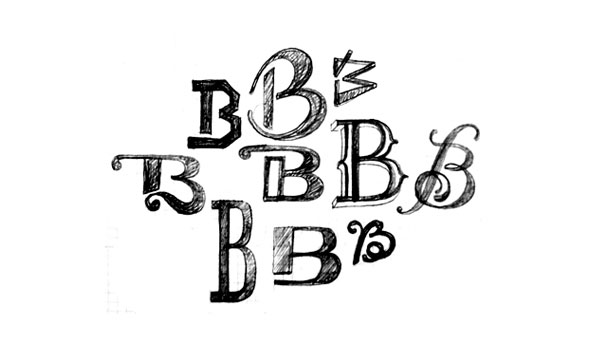
    Lots of Bs

    Your day job is at CA Technologies, a huge software firm with a website full of more corporate buzzwords than you could shake a stick at. How does this compare to client and personal work? Which do you prefer, and why?

    Oh man. My boss might read this, so I totally prefer my day job and would like to keep it, please. Actually, I really love both because they each present a unique set of challenges and inspire each other in unlikely ways. At CA, I work with a number of internal “clients,” who’ve benefited from the experience I’ve had dealing with, let’s say, more colorful freelance clients. My experience at Pentagram and connections with other designers have positively impacted my work at CA as well. At the same time, CA has taught me a ton about prototyping, getting around red tape, focusing on something for more than two months, and how to speak the same language as developers, which has been invaluable in my freelance work. It took a few months for me to get the hang of it, but the two have really started to complement each other. I’m also really grateful that my job at CA allows me to be choosy and take on only the freelance/personal projects that I enjoy and will help me grow as a designer.

    …so, that effectively evaded the question, right? For now, I’d say I’m right where I want to be – doing a mix of everything.

    Along with your work on the screen, you also create wonderful print works, and the most gorgeous lettering. If you could only work in one area of design for the rest of your life, what would it be, and why?

    That’s like the worst question ever for someone as indecisive as I am. If I had complete creative freedom (hah), I’d love to create infographics explaining complicated scientific concepts or historical events to students, maybe even some newfangled textbooks that would actually be engaging. I’m a total nerd at heart, plus I love hitting that sweet spot between delighting and educating a viewer, where they learn almost in spite of themselves.

    If I actually chose ONE area, I’d say publication design, because the current definition of that is so wide open and can incorporate so many things. People read in so many different contexts now – printed books, e-readers, interactive apps – and who knows what’ll happen in the next 6 months.

    Lovely print work

    If, in some Freaky Friday-like situation, you could live the life of another designer, illustrator or creative, for a day, who would it be, and why?

    I’d love to be Lisa Strausfeld – who wouldn’t want to be a Pentagram partner under 40? – she does the kind of innovative information design work I aspire to do at CA, but actually makes it seem cool. Plus she’s got this superhuman renaissance woman thing going on…she does effing everything. Can I just make a quick copy of her brain? I promise to give it right back.

    What design tools could you not live without?

    Technology wise, I’m tethered to Illustrator and InDesign, Rdio, my scanner and my iPhone on a daily basis. If I had to get by without electronics in a post-apocalyptic world, I could probably survive with a couple Microns and a ton of graph paper.

    Fuck.

    And finally, what tips would you give to anybody who is looking to get started in design?

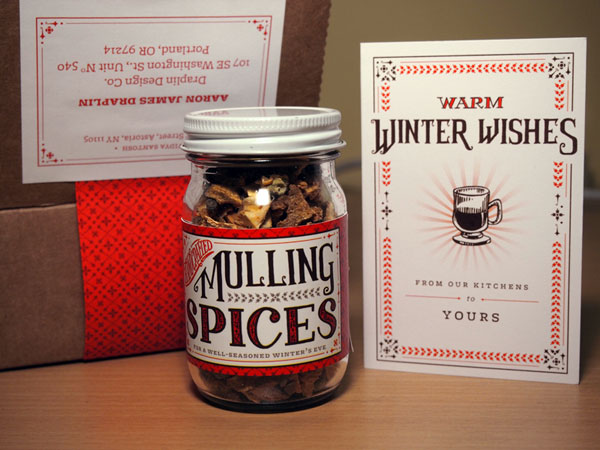
    Give things away. People like free things. And they’ll like you (and more importantly, be more likely to look twice at your work) if you give them something they want for free (note: this often differs from something you want to give them, so tread carefully). I’ve been amazed at the positive vibes and references that’ve come my way after sending out personalized sketchbooks last year and mulling spices this year, just to say happy new year to some of my favorite people.

    Thanks Sharon!

    Many thanks to Sharon for taking some time to talk to One Minute With. I really enjoyed interviewing her, and hopefully you enjoyed reading it!

    Why not check out Sharon’s site, and follow her on Dribbble and Twitter?

    Related Posts:

  5. One Minute With… Aaron Draplin

    Leave a Comment

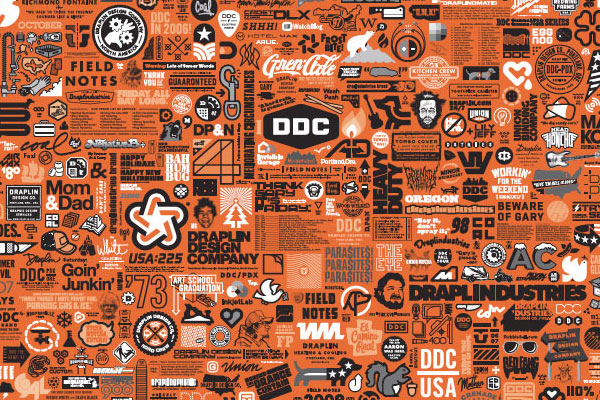
    Loadsa logos

    Hi Aaron, thanks for taking time to chat with One Minute With. Tell us a little bit about yourself and your work.

    I’m a graphic designer and am working as much as possible, striking while the iron is hot. Be it on stuff that makes loot, and equal amounts of stuff that don’t make a cent. I like keeping busy and doing my best to keep up with everything. Proud to report, shit’s going good! Always on the up and up.

    Walk us through a typical day in the life of Aaron Draplin.

    Up at around 9:00am, and down to the shop by 9:30 or so. Read the emails, clean out the junk email and figure out what’s on the docket for the day. Check all the blogs, twitterisms and news sites and then tear into shit. It might be projects, or blog posts, or shipping DDC merch. Whatever it takes to get all the shit that need to get done, well, done. There’s no science or formula. Sometimes it just comes down to forcing myself to get an album going and hammering until the document is ready to ship or whatever. Lunch at noon or 1pm, and depending what time of year it is, out of the shop by 7pm or by midnight. I work a lot so, late shifts are the going rate. Upon getting home, maybe watch some tube and chill out on the couch a bit, dozing off a little after1-2am. Something like that. Sorta changes a lot, depending on my workload.

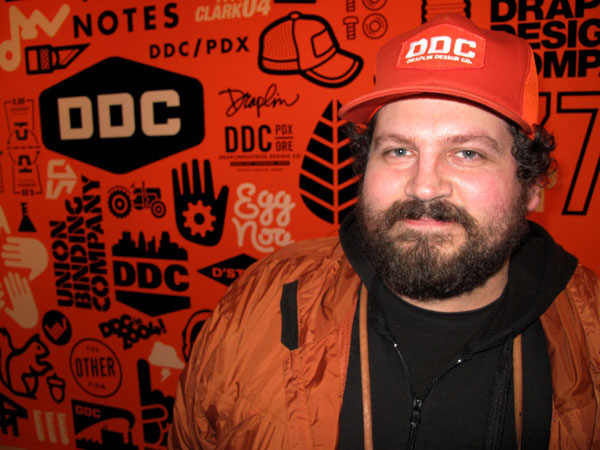
    Aaron Draplin

    How did you get into design?

    I’ve been drawing all my life, and like a good Midwesterner, they start placing you into jobs as you are leaving high school. The forms said I’d be a good engineer. But those dorks just didn’t seem too fun to hang with, so I went after art as a focus. And within art, commercial art seemed pragmatic and made sense to me. People will always need a newspaper or logo designed you know? Fine art was too scary and risky. I liked the idea of learning a real trade, that balanced creativity, and, actually making a real living.

    How do you approach a new project? What’s your creative process like?

    All projects start with a research phase. Might be just a couple spirited conversations with the client, or perusing all angles of the design problem at hand online, looking at competition, see what the marketplace looks like, etc. But I try not to go too deep. I like the idea of “informed invention.” I want to know EXACTLY what the client is trying to accomplish, and then I’ll put my best foot forward with that first round of solutions.

    Logos always start in my Field Notes, with a ton of sketches. Sometimes you hit it fast, and other times it takes a while to solve it. Logos are like little puzzles. I like the exploration and invention of it all.

    I show simple PDF presentations, that show multiple pages of solutions. Sorta like, a big funnel. You dump a pile in the top, and out pops one little refined nugget? The whole time, in conjunction with client feedback. I like the idea of client ownership superseding designer ownership. In the end, it’s their thing. It’s my job to make them something awesome.

    You co-run Field Notes, the much-beloved notebook brand. What inspired you to make it, and how have you found the experience?

    Basically, not seeing stuff out there that I’d purchase. Or, stuff that existed was overly campy or had horrible typography. Or, shit just didn’t feel good in the hands. I fell in love with Muji stuff back in the late ’90s, but the austere, utilitarian cleanliness they exuded was almost a little too nice, or something. I wanted my memo books to be a little dumber. Less precious. Just good paper and good type with human liner notes.

    So I made my own, at first, constructing my own with screenprinted covers and art store graph paper. I made my first run of 2000, and shit took off. Jim Coudal whipped me into shaped and Field Notes became a real thing. So proud of the brand we’ve made. American-made, and proud! By our friends, for our friends. And their friends! Hell yes!

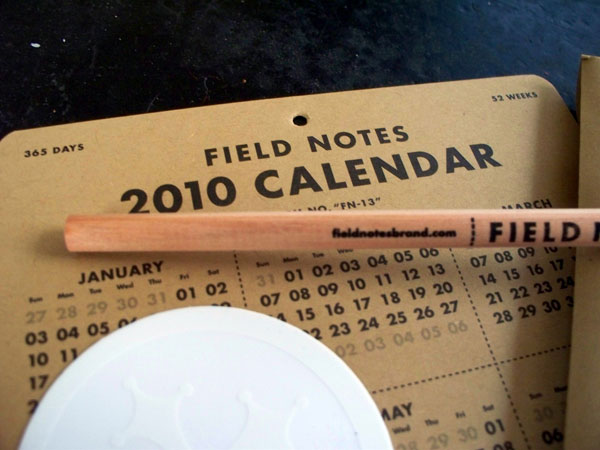
    Field Notes

    Reading your blog, or copy from any of the projects you’ve worked on, you have a particularly wonderful way with words. Do you feel that language and writing has a big impact on design, vice versa, or are they simply two separate passions of yours?

    I just like to write and don’t really think about it. My mom is the sweetest little thing and she’ll say, “You know you are a writer, too?” That always blows me away. I don’t think of myself as anything more than a designer, who likes to make shit. “Maker” is a trendy term, but hits the nail on the head. Be it a logo, an identity system, hunk of DDC merch or fun paragraph about some link I love, it all comes from the same place. I like output. Sometimes shit’s not so good, other times, I hit something. Don’t really care either way. I just like being productive, no matter what I’m working on.

    And hell, the most inspiring, interesting designers are charismatic people. They know how to talk. How to communicate. How to soothe. How to sell bullshit. I like that stuff. It’s a dying art, being able to shoot the shit. I like people who like to talk. It’s a big deal in a world that is more and more about an iPhone lighting up yer face, you know?

    If, in some Freaky Friday-like situation, you could live the life of another designer, illustrator or creative, for a day, who would it be, and why?

    This one is a hard one for me, cuz shit, I love what I get to do so much. I mean, how much better could it get? I work on cool shit, make good loot and don’t have to wear pants in the process. When I daydream about this stuff, my mind goes to rock-n-rollers. I want to be a roadie for the Flaming Lips. I want to play rhythm guitar with the Hold Steady. I want work in the shipping department at Sub Pop with Mark Arm. Those jobs sound fun as hell.

    If anything, I’d like to work on some big identity stuff someday. But that would probably mean working for some firm, for partners who drive overpriced sportcars. And you know, that kinda sounds like it would start to suck real fast. I just want to make good stuff for good people, and eek out an ample living. And hell, I’m doing just that, and am thankful as hell for the run I’ve had.

    What design tools could you not live without?

    Adobe Illustrator has given me life. The big three…Illustrator, Photoshop and InDesign. Those champs are my conduit to so many parts of my life. I love making things come to life on a screen. I’ll hear people lamenting about computers and programs and whatever else and will just sit there thinking, “Those things you are bitching about gave me a life I thought I’d never have.” Like, I get offended. I’ve got a lot of love for my Apple products and Adobe software. I’ve had beautiful tools in front of me for my career. Can insurance salespeople say the same thing? Don’t think so!

    Tall Tales from a Big Man

    And finally, what tips would you give to anybody who is looking to get started in design?

    STAY THE FUCK OUT OF PORTLAND! I don’t need you scrubs messing with my stock price! This line was typed in jest, so settle down you little mouthbreathers! Ha!

    I tell kids the same thing all the time: Love this shit. Stop complaining and learn to roll with the punches. Some shit’s gonna suck, but, some shit will pay the rent or even a mortgage. We’re all in that boat. Do a good job on the clock, and then when you punch out, make stuff you love. That’s life. And don’t be afraid to share it with everyone. Design is a fun thing. Say it loud and say it proud.

    Here’s a couple more nuggets: 01. Don’ stretch type, ever. Ever! 02. Don’t piss into the wind. 03. Respect the masters of design. All the new-fangled shit will come and go, but man, the incomparable Saul Bass will last forever!

    Thanks Aaron!

    Many thanks to Aaron for talking to us. I really enjoyed his answers, and hopefully you did too!

    Why not check out Aaron’s site, and follow him on Twitter?

    Related Posts:

  6. One Minute With… Dave Mott

    1 Comment

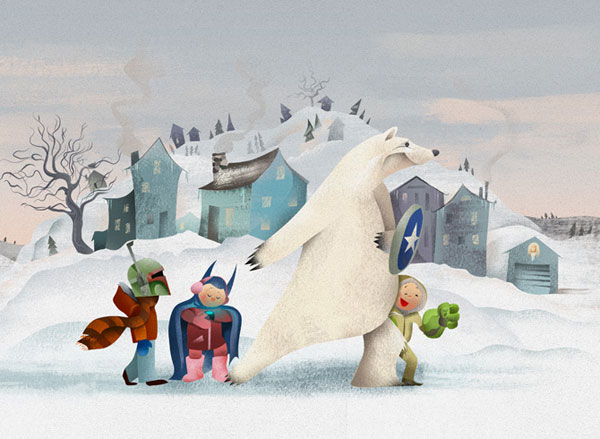
    Polar Kids

    Hi Dave, thanks for taking time to chat with One Minute With. Tell us a little bit about yourself and your work.

    Hi Conor, I am a dad, husband and illustrator in Ohio. I work from home and am currently focused on illustrating children’s books. Another big focus is working with autism, there is tremendous potential in how illustration can help with communication. When I’m not working, I’m sketching, making up movie plots, coloring with my daughter, and trying to fix things around the house. I’ve worked at different ad agencies as a designer for years, hoping to someday go full-time on my own and here I am.

    Walk us through a typical day in the life of Dave Mott.

    Usually, I get up pretty early, have breakfast with my daughter: we have a nice little hangout time before the day starts. Get my 1-2 cups of coffee. Next, take her to school. Then, I sketch for an hour before I dive in to work. I try to get the communication, billing and any revised work done early. Work ’til noon, then get some type of exercise in – even if it’s chasing my dog around. Finally, I have my 3rd cup of coffee, and hammer on the rest of the afternoon. Then, once everybody gets home, I disconnect from work and we hang out. After everyone goes to bed, I stay up late and draw.

    Dave Mott

    How did you get into illustration?

    I was always in it to some degree. Illustration was always something I loved doing since I was really young. I worked as a designer for a good while, then I learned I could make opportunities for myself if I did the design and brought my illustration into it.

    There were some things I needed to understand before I could tell if I was serious about it. One thing I needed to understand was this was a career choice. Secondly, I had work to do, tons of it – you must be prolific. Once I accepted that, I felt ready to pursue illustration as a career. Also, I felt I could make a difference with illustration and that’s a big goal for me.

    How do you approach a new project? What’s your creative process like?

    I start with research. Every project is unique. I’m being hired to help someone tell & sell their idea, so I have to learn about who they are as much as possible. Once I have some knowledge, it’s easier to determine what I can bring to the table.

    After I feel like I have an understanding, I start drawing things out. Drawing gets me thinking. I’ll do as many sketches as I need to do to capture what is on my mind. I’ll share the sketches and talk through where the concepts are headed.

    Lots of collaboration, keep it open, keep it transparent. The best jobs are the ones when my clients and I work together on a shared goal.

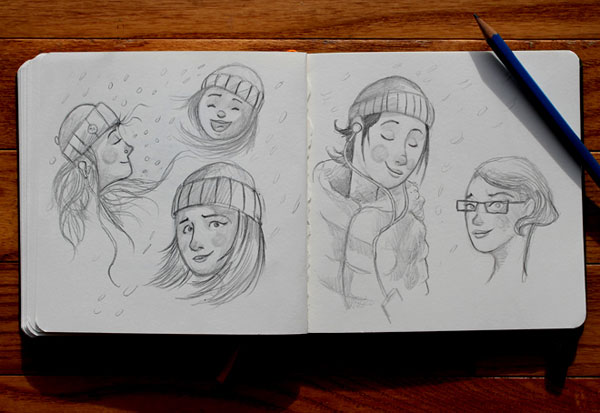
    Some sketches of girls

    You, like many designers and illustrators, run a store, in which you sell various products. In an industry where work can fluctuate so greatly, how important is a passive income source, do you feel?

    I think it’s very important. But it’s also very important to be innovative. If everyone is selling prints, what can I offer that is completely different? I’m still figuring that one out. It’s on my mind all the time.

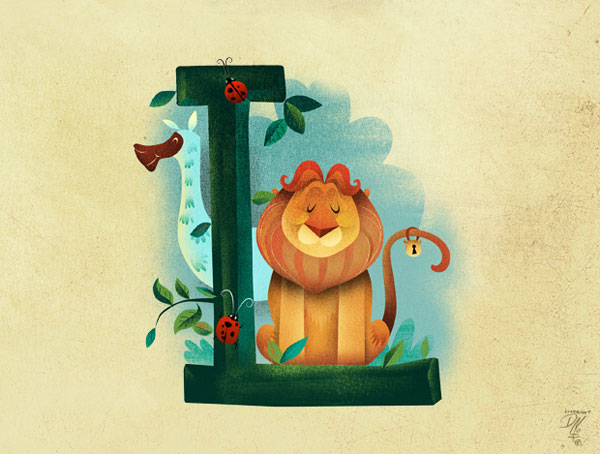
    The Letter L

    Many of your illustrations seem to feature animals – Do you have a particular affinity with them, or are they just easy to draw? How much of your style is intentional, and how much simply evolved?

    Yes, very much an affinity for them. They’re honest.

    I did my first internship (after that, I was hired part-time) at a MetroPark, working with Park Rangers and Conservationists. I spent 2 years surrounded by live animals (owls and turtles) and exhibit animals (bears, wolves, foxes, even a Raptor sculpture used on Jurassic Park.) So that helped fuel my love of animals.

    My style is evolving because there is so much room for improvement. The intentional things vary, sometimes they come in later in the process.

    A Badger Map

    If, in some Freaky Friday-like situation, you could live the life of another designer, illustrator or creative, for a day, who would it be, and why?

    Martin or Alice Provensen, they were an amazing team of illustrators. Can’t say enough about how they inspired me. Their work is amazing, I have worn out the binding, admiring their books.

    What design tools could you not live without?

    I have a Cintiq and I really love it but, I still need pencil and paper. I draw everything on paper first and when I feel it’s ready, I bring it in digitally. Photoshop and Illustrator are key as well. I get asked about what type of paper and pencils I use. The fact is, I buy the cheapest mechanical pencils I can find, and I draw on whatever I have in front of me. So must-haves are pencil, eraser, paper, scanner, Photoshop and Illustrator.

    Also, music. Very eclectic, but Thievery Corporation and Fleetwood Mac are my stand-bys.

    Dave's workspace

    And finally, what tips would you give to anybody who is looking to get started in design?

    Get tough and stay tough. By that I mean, develop a thick skin and know what YOU want. It also means have confidence, not having confidence will lead to bad decisions.

    Be kind. It is very possible that anyone you help will be helping you someday.

    Thanks Dave!

    We’re really grateful to Dave for spending a few minutes with One Minute With. Hopefully you found his responses as interesting as I did!

    Why not check out Dave’s site, and follow him on Dribbble and Twitter?

    Related Posts:

  7. One Minute With… Rod Hunt

    Leave a Comment

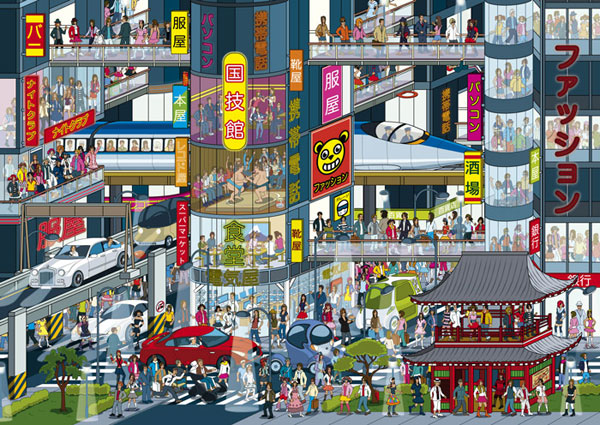
    Tokyo, Rod Hunt-style

    Hi Rod, thanks for taking time to chat with One Minute With. Tell us a little bit about yourself and your work.

    I’m a London based Illustrator & artist who has built a reputation for retro tinged Illustrations & detailed character filled landscapes. With UK & international clients spanning publishing, design, advertising & new media, I’ve illustrated everything from book covers to advertising campaigns, installations and iPhone Apps. I’m also the illustrator behind the bestselling Where’s Stig? books for the BBC’s hit TV show Top Gear.

    I’m currently also the Chairman of the Association of Illustrators. The AOI was established in 1973 to advance and protect illustrator’s rights and encourage professional standards

    Walk us through a typical day in the life of Rod Hunt.

    Up at 8.30am for half a gallon of black coffee, followed by a walk or bike ride to my studio at Second Floor Studios & Arts by the Thames Barrier & I’m usually in by 10am. Fire up the Mac & go though the first emails of the day, & deal with any over night inquiries.

    If I don’t have to get straight on a job for a looming deadline, I’ll probably doing a bit of promo – maybe updating the blog, website, Flickr or an online portfolio. After that it’s heads down on the current job until 1pm when I’ll stop for lunch. Maybe I’ll get out of the studio and go and sit on the Thames river wall to get a break from the studio for a few minutes. Possibly I’ll do some reading back in the studio & catch up with design news. I think it’s important to be very aware of what’s going on in the wider design world beyond what your doing – you never know when that information might be useful or lead to discovering a new potential client.

    Then it’s back to work at 2pm, before a tea break around 4pm where I might meet up with some of the other illustrators on site at the studios. Then a final stint until I leave for home, hopefully before 7.30pm. Have some dinner & try to switch off from work, though I might have to deal with an inquiry from my US agent in New York, or take a conference call with a client on the West Coast.

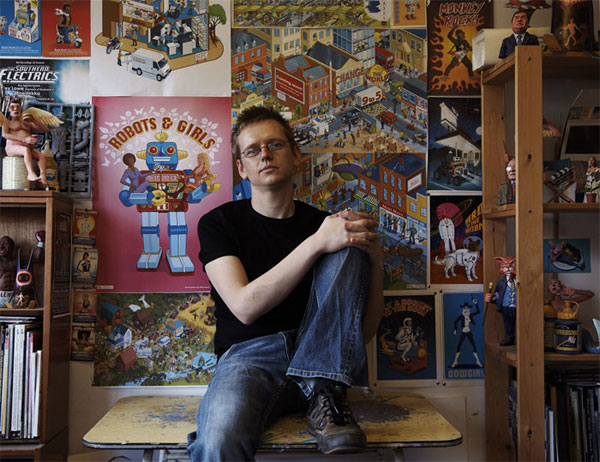
    Rod

    How did you get into illustration and design?

    Comics were my big passion as a kid & the reason I was inspired to draw & eventually choose a career as an illustrator. After graduating from the Cambridge School of Art at Anglia Ruskin University, I spent 2 years living in Nottingham working on my portfolio & starting to get my work seen by clients to gain commission. Eventually it got to the point where I moved to London so I could go full time.

    I graduated in 1994, which was pre Internet portfolio days, so I sent potential clients sample postcards & visiting London to pound the streets with my portfolio. Pretty much all my work was for newspapers & magazines to start with.

    Once I moved to London in 1996 I used to do two mornings a week every week with my portfolio seeing clients, doing in excess of 120 meetings a year. It built from there. Then everything changed with the advent of the internet, & I decided I had to change with it. In 2000 I taught myself web design to create my first website & in 2001 I completely reinvented my work, abandoning paint & mess for a Mac & Adobe Illustrator.

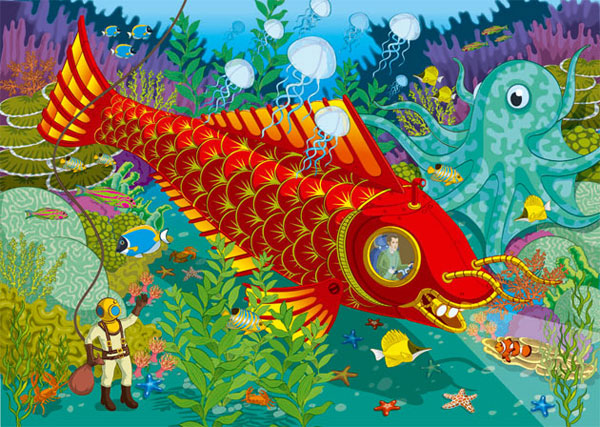
    A fish submarine. Obviously.

    How do you approach a new project? What’s your creative process like?

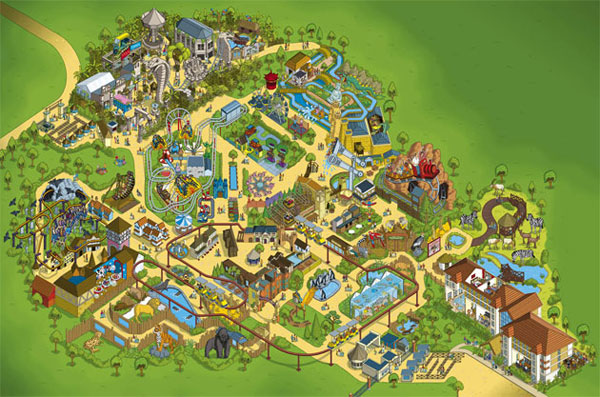
    Once I’ve read the brief, maybe I’ll have a chat with the Art Director & start formulating ideas. There’s often a lot of research that has to go in to each piece, especially for something as complex as a theme park map. I always start by doodling ideas and compositions in an A5 sketchbook with a pencil or biro. These are very quick and throwaway. I don’t get stuck into the detail at this stage & purposely draw with a biro so that I can’t erase anything, keeping away from detail to keep the ideas flowing.

    Compositionally. it’s important to have flow through the piece, leading the eye on a journey. The piece has to work as a whole & not look like the sum of its parts or be disjointed. It’s important not to be seduced into the detail too soon & lose sight of the the overall goal. I also need to give myself enough thinking & doodling time at the beginning of a project before producing a finished rough drawing. That’s where the real hard work is done & is the foundation of a great piece of work.

    After I’m happy with the very rough spread compositions, I moved onto creating a detailed fully finished pencil rough, drawing with a 2B pencil on heavyweight cartridge paper. It’s at this point I work out the amount of detail in the piece.

    The roughs are then scanned & used as a guide in a background layer in Adobe Illustrator to produce the final artwork. After using a normal Wacom tablet for quite a long time I decided to invest in a Wacom Cintiq to help with the work flow & speed things up. It was a pretty wise investment as drawing directly onto the screen made things much more natural & intuitive. I tend to use Illustrator as a straight drawing tool & use effects sparingly, aiming to keep the hands on feel with my work, despite producing the final artwork on the computer. At the end of the day the computer should just be seen another way of making a mark on a page. Everything is broken down into many layers to I can keep track of all the detail & make things easily editable for myself.

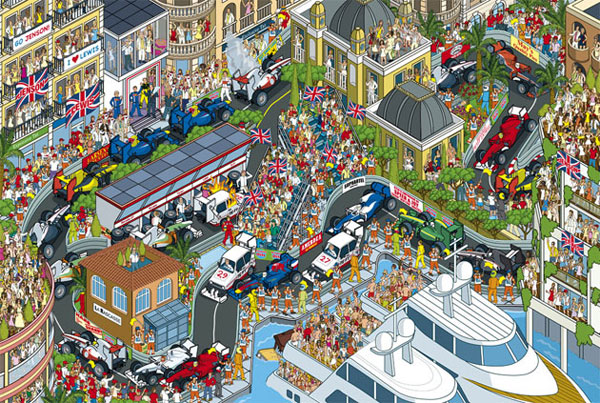
    Monaco, Rod Hunt-style

    You are best known for your highly-detailed isometric illustrations – Was it a conscious decision to find a style you liked and stick to it, or did it simply end up that way? How has your style developed over time?

    I never set out to work in this way, but it’s something that has evolved organically over time. I started creating isometric work at art college, where I painted with fat hogs hair brushes & acrylic paint on paper. After I gradated in 1994 & started working towards getting commissions, some of this work was part of my portfolio. My second ever commission, which was for New Statesman magazine in 1995, was isometric.

    The next big leap forward was when I reinvented my work in 2001 by going completely digital, changing over to working in Adobe Illustrator. Lads mag Maxim asked me to create an isometric lingerie shop which helped me to develop my new digital isometric language. This then lead to more commissions & refining the style. The book cover for Change the World 9 to 5 in 2006 then started me on the path of much more complicated scenes & cityscapes, the culmination of which has been Where’s Stig? which took the detail & sophistication to a whole new level. All along I’ve followed where I saw an opportunity & what I was having fun doing.

    Isometric Map

    You’re currently Chairman of the Association of Illustrators. What do the AOI do, and what is your role in that?

    I Chair the AOI’s Board of Directors, who are responsible for ensuring good governance & the strategic development of the company. It’s an unpaid voluntary role & can sometimes take up a considerable amount of my time. But I’m a passionate believer that we are stronger working together to protect & develop our industry through the AOI than working as individuals. The AOI has helped me develop my career, so I also feel that it’s important to give something back to help develop the organization for the future, support other illustrators & ensure the sustainability of our industry.

    I feel being a member of the AOI is a vital part of a professional illustration career. Being freelance can be a bit isolating & being part of the AOI can give you a sense that you’re not alone in this, you’re part of a community & you know where to get professional advice. With pricing, contracts, copyright & business development it pays to get advice from the professionals, & that is just one phone call or email away by being part of the AOI.
    They’re there to help with all aspects of advice & developing your creative career. The AOI also puts on regular industry events, runs Images – The best of British Illustration competition & publishes the award winning Varoom magazine.

    What design tools could you not live without?

    These days I couldn’t do without my iMac & Wacom Cintiq screen tablet. My Cintiq was probably my biggest indulgence of the last few years, but has definitely been a wise investment.

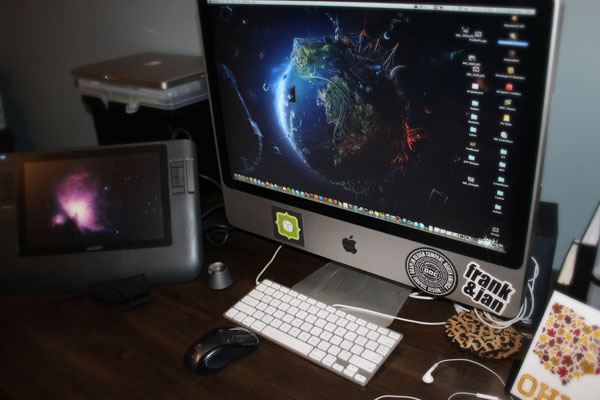
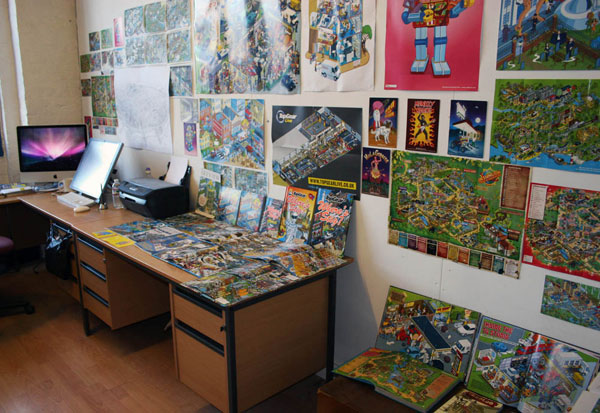
    Rod's workspace

    And finally, what tips would you give to anybody who is looking to get started in design or illustration?

    Get out there and get your work seen by as many people as possible. You should never be afraid to show people your work. It’s important to invest enough time & resources in promoting your work & explore all possible markets. You maybe the best designer/illustrator in the world, but if no one sees your work, you won’t get commissioned

    Be yourself & indulge your personal interests in your work as that is what will set you part form everyone else.

    Perseverance. It can take quite some time to get really established.

    It’s vitally important to educate yourself about the business side of things. Understanding pricing, copyright, contracts, etc is just as important as the drawing if you want to be successful & sustain your career for the long term. I’d recommend joining the UK Association of Illustrators (AOI). They’re constantly campaigning to protect all illustrator’s rights, and if you need advice on pricing commissions, contracts, promotion, developing your career, etc, it really pays to get help from the experts.

    Maintain control over your Copyright in your illustrations. There are very few occasions that clients need to own the Copyright in your work. Your body of work is your livelihood, and you should be entitled to the financial benefits of your talent and hard work.

    Thanks Rod!

    Many thanks to Rod for sharing his thoughts with OMW. I genuinely had a lot of fun interviewing him, and I hope you love the interview as much I do!

    Why not check out Rod’s site, and follow him on Flickr and Twitter?

    Related Posts:

  8. One Minute With… Drew Melton

    Leave a Comment

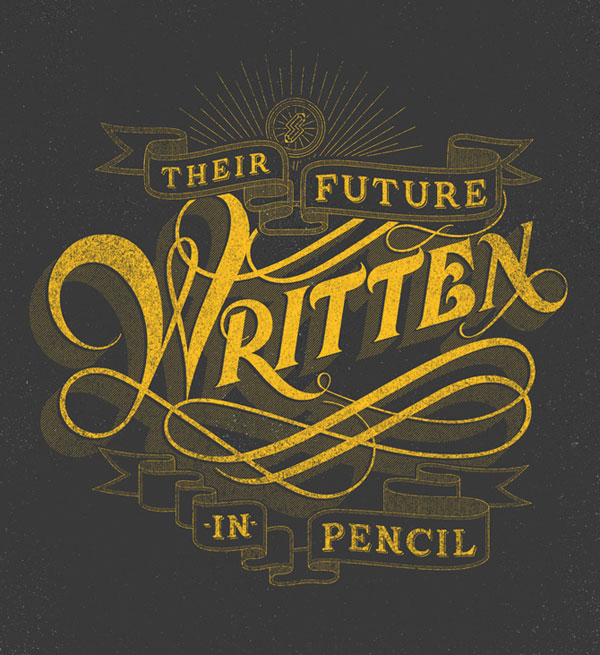
    Their Future Written In Pencil

    Hi Drew, thanks for taking time to chat with One Minute With. Tell us a little bit about yourself and your work.

    Sure thing! My full name is actually Bryan Andrew Melton but for some reason my parents have always called me Drew. I’m from Grand Rapids, MI and I really enjoy working with letters.

    Walk us through a typical day in the life of Drew Melton.

    Wake up, have 3 eggs with some coffee from the press pot. Make my bed and brush my teeth. Open the ol’ laptop and check my email, which is a terrible habit, then I start on projects. This usually entails a lot of drawing and redrawing. Throughout the day I check my email way too much sprinkled with a little extra Twitter here and there. All of the sudden it will be 6:30 and I will have no idea what I’ve accomplished during the day.

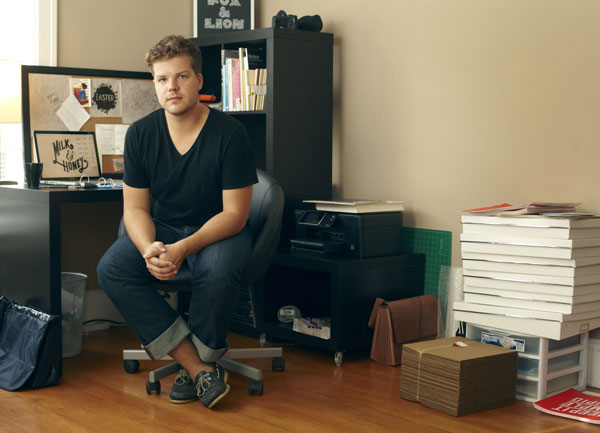
    Drew Melton

    How did you get into design?

    In high school (I was home schooled) I started dabbling with website design and development. I had a connection with an internship in town at a web design firm (no longer existing). They took a risk on me and I’ve been digging deeper ever since.

    How do you approach a new project? What’s your creative process like?

    LOTS of drawing. I am really bad at mind mapping or working through any sort of official process. The best way of explaining my process comes from an interview with Mike Perry, when asked about his process he responded (loosely translated), Basically I create a lot of pieces right off the bat. Great work tends to come out of all of the piles of work. For me, the more I create, the better my chances are at coming up with something decent. I feel like 1 out of 10 pieces that I make actually has some quality to it.

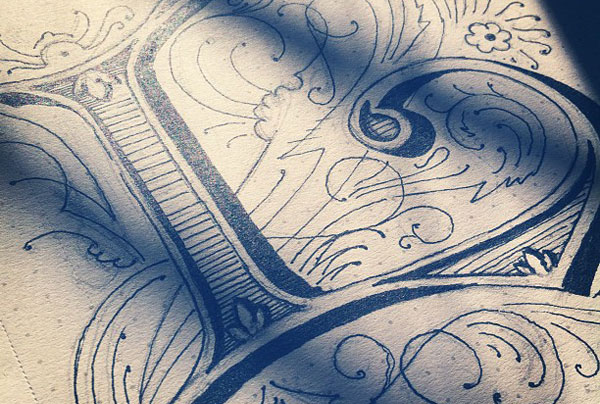
    L Sketch

    You run The Phraseology Project – Tell us a bit about it, and what inspired you to start this project?

    Ok, so I was pretty much broke and I had zero clients around December of 2010. I had been doing really generic graphic design for business clients and I was feeling pretty burned out. I kind of hit a creative bottom where I started to realize that I wasn’t making anything that I would be proud to show my children someday. Ever since college my love for typography and lettering has been growing. So I just started drawing letters… All the time. It gets hard to just make things without a reason so I started looking for a way to turn this into a project. I had the idea of having people submit words or phrases that I could practice lettering on. I created a small simple site with a web form and called it The Phraseology Project (this was my girlfriends idea for the name). Within a week I had 80 submissions! The project is 1 year old and it has had 20,000 submissions since!

    Thank You

    Lettering is evidently your strong point – Would you ever consider making a font? Is there a big difference between lettering and type design, do you think?

    Absolutely! I am so young and inexperienced. I have a lot to learn about typography before I even think of heading in that direction. Not to mention, a type treatment and a font require completely different skills. One being a bit more logical and the other one being a bit more free.

    Everything Is Borrowed

    If, in some Freaky Friday-like situation, you could live the life of another designer, illustrator or creative, for a day, who would it be, and why?

    Have you seen Simon Alander’s work?! The dude is a freaking god when it comes to lettering and typography (and so many other things). I would trade just to understand how his mind works.

    What design tools could you not live without?

    Dot Grid notebook from Behance, STAEDTLER pens and pencils for sure along with tracing paper…. Oh! And a scanner. Couldn’t live without it.

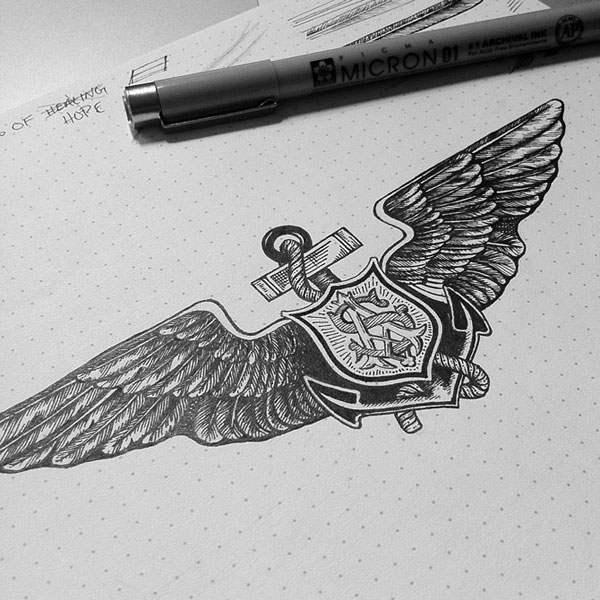
    WARdrobe sketch, with Drew's tools

    And finally, what tips would you give to anybody who is looking to get started in design?

    Stop trying to change the world and get practicing. Great work is always preceded by practice. You don’t have to be the best to get started and put your work out there. Admit it when you’re wrong and move on.
    Thanks Drew!

    Thanks so much to Drew for giving us an insight into his world! I really enjoyed talking to him, and found his answers really interesting!

    Why not check out Drew’s site, and follow him on Dribbble and Twitter?

    Related Posts:

  9. One Minute With… Teresa Wozniak

    Leave a Comment

    The Bucket List

    Hi Teresa, thanks for taking time to chat with One Minute With. Tell us a little bit about yourself and your work.

    I’m a student and designer currently living in Halifax, Nova Scotia, and attending NSCAD University. I mostly work in graphic, lettering an print design, and dabble in typography, illustration and photography. I’ve been working professionally for a painfully short time, but have had the opportunity to work with clients that vary from the NFB of Canada to local hospitals to promotion agencies in California. My work varies from girly-curly script to manly man cigar branding, and I’m constantly trying new things to expand my abilities.

    Walk us through a typical day in the life of Teresa Wozniak.

    My days are usually spent juggling school and freelance work. I’ll wake up for class, head to studio, and spend the afternoons meeting with clients, working as an assistant at the university, or tinkering on some personal work. When I get home, I usually indulge in my student diet and watch Spike TV while wrapping up work. Then I might, just might, get a full night’s sleep.

    Teresa Wozniak

    How did you get into design?

    It kind of happened by accident. In high school, I was a straight A liberal arts student and had a massive scholarship for a Political Science degree at one of the top universities in Canada. I was always really artistically inclined, but wanted to go into, what a would have called then, a “real” degree, so that I would at least have a secure future. My best friend and I had gone to Montreal for university open houses, when we realized that one of the schools was hosting a portfolio day. It only took one meeting with a dean to make me realize that Political Science was not for me – I just didn’t care enough for it. They accepted me on the spot. During first year, I got really tired of the mindless, arty-farty bullshit that a lot of my classmates would get up to – painting with blood, sculpting bongs, overusing the words “tangible” and “ephemeral” – and wanted to pursue something with more purpose and meaning. That’s when I registered for a design degree.

    How do you approach a new project? What’s your creative process like?

    It really depends on the client and the project. Sometimes the process is lengthy, with lots of back-and-forth, sketches, concepts and trashed ideas. Sometimes the concept comes to mind immediately, and the project gets wrapped up quickly. Whoever tells you that your first idea is never your best is kidding themselves – your brain works in strange ways, and you never know when it’s going to surprise you with something brilliant. Clients also play a big role in the approach – some know what they want, and others have no clue. As a designer, you have to interpret their ideas and make them work, whether that’s through hundreds of sketches or brainstorming or user research. It’s like being a translator – there’s countless ways of translating the same thing, but one will always make more sense than the rest and you just have to find it.

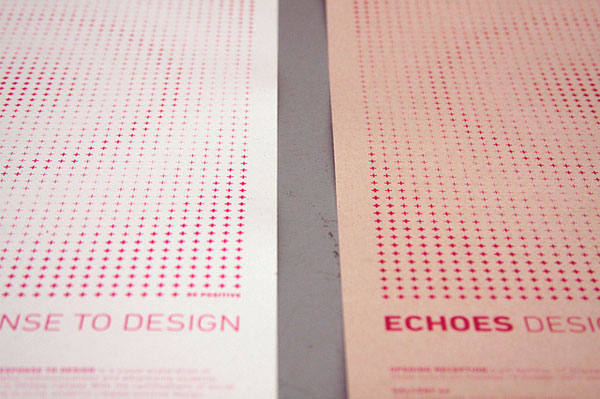
    Echoes

    You’re studying Interdisciplinary Design at NSCAD University in Halifax, Nova Scotia. How important is a formal education in design, do you feel, especially in an industry that changes at such a rapid rate?

    This is a pretty tricky question, and the answer is not simple. A formal education can teach you how to think and work, how to use the programs you need and handle future work. You gain valuable experiences and are taught by incredible people. you have access to great opportunities. However, no amount of formal education will ever teach you how to be a good designer. You need to have a knack for it, a good eye, and the ability to let go of your ego and separate yourself from your work. You can teach a person work habits and technical skills and how to see things. You can’t, however, teach a person good taste, change their character or perception, or force skills on them that they don’t inherently have. If you succeeded in doing that, it would definitely take more than 4 years of formal education. A formal education can give you a good work ethic and creative process primer, but it’s real world experiences that will hone your skills and keep you up to speed with current methods in the industry.

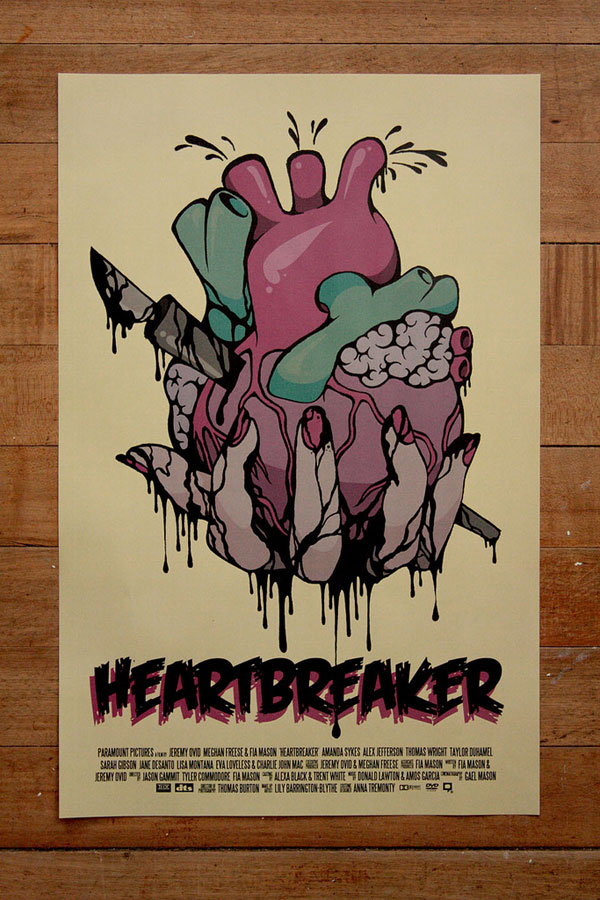
    Heartbreaker

    I’m constantly seeing you experimenting with new styles and techniques on Dribbble. As a designer, do you feel it is important to stay fresh, and avoid getting in a stylistic rut?

    Absolutely. You learn so many new things from using different processes, and you never know when a particular skill that you might have experimented with way-back-when will come in handy. Doing new things opens up your perspective – suddenly you find yourself devising dielines and lettering words in your head while doing the most mundane things. If you stick to one style and one creative form, you better be incredible at it because that’s what you’re going to be known for – there’s nothing worse than a designer who cranks out mediocre versions of the same thing over and over. It’s just not interesting.

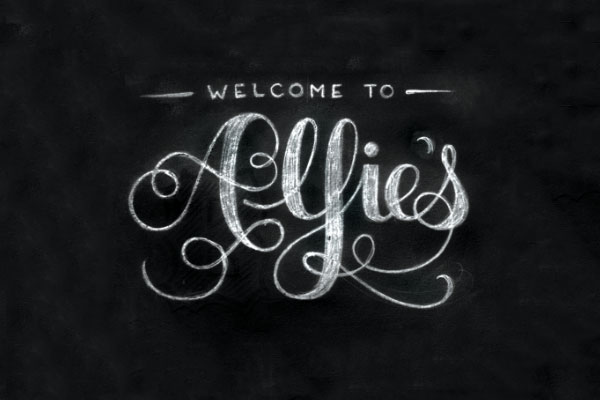
    Welcome to Alfie's

    If, in some Freaky Friday-like situation, you could live the life of another designer, illustrator or creative, for a day, who would it be, and why?

    Another toughie. I wouldn’t be able to choose between Jon Contino, Hydro74, Allan Peters, Shoe, Tim Boelaars or Jessica Hische. Either way, I’d do it to learn their skills and tricks.

    What design tools could you not live without?

    My laptop, Illustrator, a White Lines notebook, Faber-Castell S pens, a Copic Wide, an 18 x 24 craft paper pad, typography and packaging blogs, typography books (currently Typography Sketchbooks by Heller and Talarico), inspiring packaging and print work, and Wallpaper, GQ, Esquire and Details.

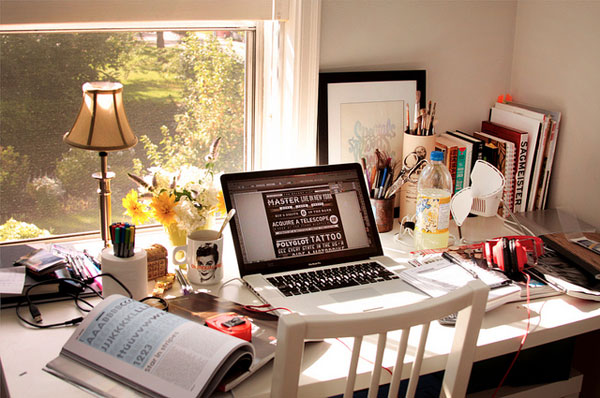
    Teresa' Workspace

    And finally, what tips would you give to anybody who is looking to get started in design?

    Launch into sensory overload. Scour blogs, buy good magazines, invest in design books and really look at them. Don’t disregard your superiors. If you see something you like, learn how to do it. If something looks ridiculous, try to fix it. Critique everything (in your head, so you don’t sound like a jerk) – from cereal boxes in grocery stores to ATM interfaces. Ask for help. Get your name out there through social media. And realize that even though it’s a long road and it might suck, it will pay off (and pay for itself) eventually.

    Thanks Teresa!

    We’re really grateful to Teresa spending a few minutes with One Minute With. Hopefully you, like I, found her responses really interesting!

    Why not check out Teresa’s site, and follow her on Dribbble and Twitter?

    Related Posts: