Author Archives: Conor O'Driscoll

About Conor O'Driscoll

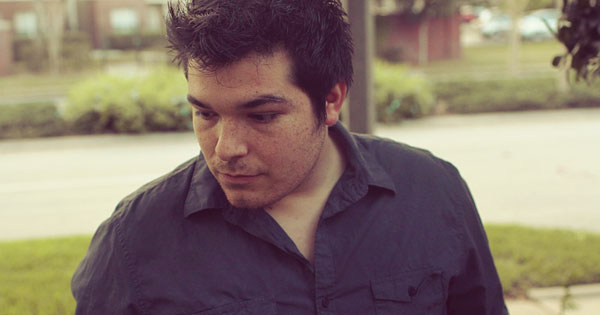
Conor O'Driscoll is a designer and writer, who writes for AppStorm.net. He also enjoys writing about himself in the third person.
  1. One Minute With… Visual Idiot

    3 Comments
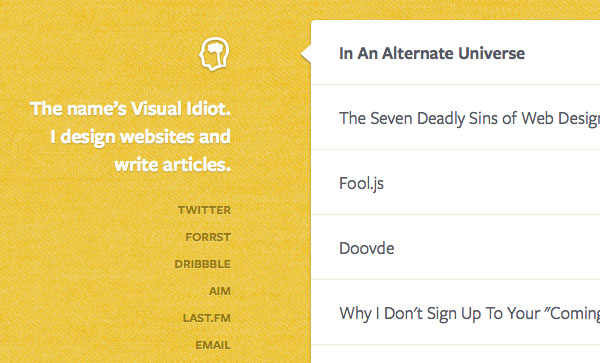
    Visual Idiot

    Hi Idiot, thanks for taking time to chat with One Minute With. Tell us a little bit about yourself and your work.

    Hey, Conor! I’m your usual web designer/developer hybrid, all self-taught. I guess I like to mess around on the Internet more than most, though. By day, I like to work on my blog and various other side projects (Gradients, Motherfucker, and Spiffing CSS, to name a few), and by night, I like to do the same.

    How did you get into design? Was there a defining point in your career, and if so, how did it shape you as a designer?

    Honestly, I never really got into design, but I do remember being in secondary school, choosing the subjects for the upcoming GCSEs (exams), and my art teacher telling me “you’re not an artist, and you’ll never be an artist; you can’t draw. Don’t take my class.” I never did take his class, but it did give me a goal. Since that day, I’ve always tried to make it as an artist of sorts.

    I got in to web design by accidentally viewing the source of a site one day, and feeling like a CSI:Miami hacker; it intrigued me. I just spent more and more time reading magazines, books, blogs, and just playing about.
    Graphical Fool

    How do you approach a new project? What’s your design process like?

    Depends on what the project is, I guess. If it’s an article for my blog, I just write the idea down on this little whiteboard I’ve got, and when I’ve got time, I’ll just write it up, design it, and code it. Just like that, all in one mad dash. No browser-testing, no fancy IA work, nothin’. Actually, all of my personal projects are like that. It’s more fun.

    If it’s a client project, I start by taking two aspirins (since it’s going to be a headache), and have a sketch or two, then I just dive into Photoshop and go nuts. I’ll probably come up with about 5 or 6 different concepts before runnin’ my favourites back to the client. If they’re happy (hah!), then it’s right into Espresso we go to code that bad boy right up. Then I need those aspirins again, because I actually try to browser-test.

    With your name, your blog, your Twitter feed and your self-initiated projects, you seem to maintain a high level of humour in your online persona. How important is it, do you feel, to be a character in this industry, rather than just another HTML/CSS bot?

    So, so important. As long as you can confidently convey your message to other people, and be proud with the name that’s in that copyright line of yours, it’s all good.
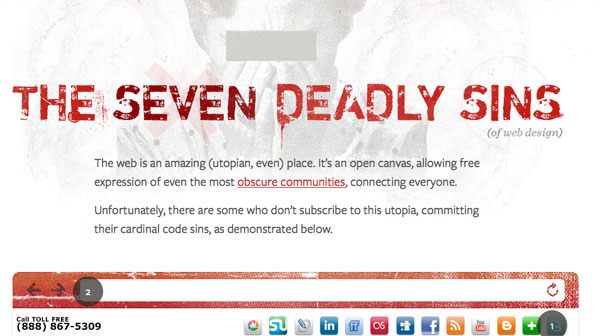
    Optical Dumbass

    Where do you see your career in 5, 10 years? Do you still hope to be making viral sites and popping aspirins, or do you want to have moved on to something bigger/better/smaller/worse?

    Hopefully, I’ll be working on my startup. Not sure what it is yet, but it’ll change the future of social B2B communication. I’ll never stop making my little sites, though. It’s just too fun.

    If, in some Freaky Friday-like situation, you could live the life of another designer, illustrator or creative, for a day, who would it be, and why?

    Oh, it’d have to be the Oatmeal, if only for the power to illustrate velociraptor comics.
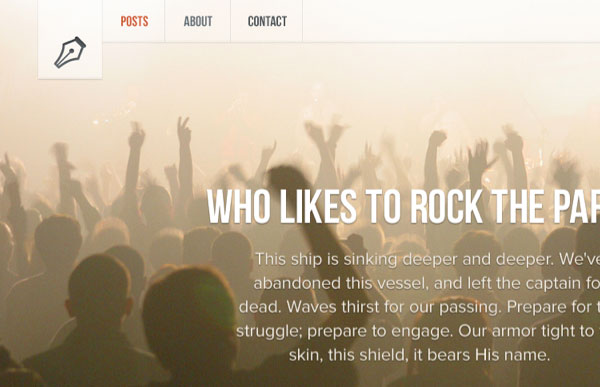
    Perceptible Imbecile

    What do you do in your free time? If you have any, that is, considering how many websites you seem to pop out…

    I’m an avid lover of many things: my guitars (and a whole host of other instruments — I love music), my dog, Molly (she’s even at the bottom of my Hire Me page), and martial arts (I do Jiu-Jitsu, which means I end up with a broken rib every Thursday).

    What design tools could you not live without?

    Software: Photoshop, Espresso, Google Chrome, Gradient.app, Adium, Reeder, iA Writer, Wallet.app, and probably a whole load more

    Hardware: Anything Apple make. I’m a sucker for the aluminium.

    Books: nothing in particular, but my library card is pretty worn out, so I’d say that.

    Websites: Twitter, Forrst, Dribbble, and anything in my RSS (which is so long, it’d take me an hour or two just to start the list).

    Notepads: UI Stencils, and good ol’ plain white paper. No fancy moleskines for me.
    Pictorial Moron

    And finally, what tips would you give to anybody who is looking to get started in design?

    Don’t give up, and keep involved with the community. We’re a nice bunch of folks, apparently.
    Thanks Idiot!

    Thanks so much to Visual Idiot for giving us an insight into his world! I loved talking to him, and found his answers really interesting!

    Why not check out Visual Idiot’s site, and follow him on Dribbble and Twitter?

    Related Posts:

  2. One Minute With… Sean McCabe

    3 Comments

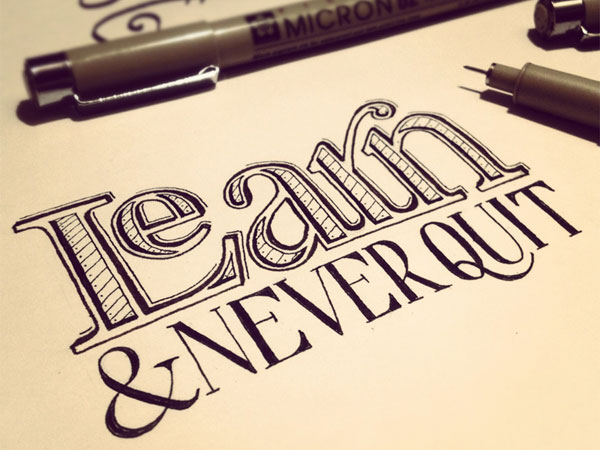
    Learn And Never Quit

    Hi Sean, thanks for taking time to chat with One Minute With. Tell us a little bit about yourself and your work.

    Hey! I’m Sean: a lettering artist, type designer, and interface crafter hailing from San Antonio, Texas. I run Bold Perspective with my partner and co-founder, Brian Purkiss. We’re a design firm primarily focused on web design and branding. During the day, I’m handling design and the business side of things while Brian codes up a storm as our developer, bringing our designs to life.

    You may know me as “seanwes”. Little-known fact: Wesley is my middle name, hence the handle. Lettering is something I’ve always been very fond of, and while it’s something I’ve done since middle school, I’ve only recently in the past couple of years really pursued it with a vigor.

    I’m not sure if I’ve determined the catalyst, but if I had to pinpoint an event, I’d say it was meeting Kyle Steed for the first time in 2010. Kyle is one of the most genuine and humble people you’ll ever meet. I had the privilege of talking with him over coffee where I experienced the contagiousness of his passion. His enthusiasm for doing what he loved was very inspiring. He advocated a disregard for external validation and instead promoted a simple dedication to creating for it’s own sake and recognizing inherent value irrespective of peer approval. I’ll always appreciate the time he took out of his life to invest in mine.

    Sean McCabe

    Walk us through a typical day in the life of Sean McCabe.

    I’ll be honest, I usually check my email, Twitter and Instagram on my phone from bed before my feet even hit the floor. A typical day begins with taking my wife to work at the coffee shop in the morning. It works out very well for me because I have a convenient source of unlimited espresso—something I take daily advantage of.

    Work at Bold Perspective typically starts at 8am. We’re pretty casual in the first half hour, catching up on our Twitter feed, maybe doing some light reading as we wake up. Client emails are taken care of first, and then we get to the fun stuff.

    We really get into our work and usually eat lunch at our desks without stopping. While we work hard, we offset it with regular mid-afternoon Xbox breaks. It’s times like these when working for yourself is definitely a blast! We love what we do, and we always get the work done, so we’re able to be fairly flexible outside of that. Some days we may sleep in an extra hour and others we’ll stay to work a bit later in the evenings. Recently, we’ve instated what we like to call “Bold Perspective Friday” where we take a break from client work and focus on growing our business and improving some of our Labs products like wpLifeGuard.

    We’ll typically call it a day around 6pm, which usually makes for a 10-hour day. Compared to a typical day job, we’ve usually put in about 40 hours by Thursday, and that’s what allows us to have Fridays as “extra” time to invest in growing our company.

    While lettering is most of what I share online, it’s actually something I do almost entirely on nights and weekends. I’ll sit down to a delicious home-cooked meal after work, made by my wonderful wife, and we’ll watch a tv show or two. After that, my time is pretty much consumed by lettering until midnight or 1am. If I’m not working on a commissioned piece, I’m working on a personal piece. I always make an effort to create, no matter what.

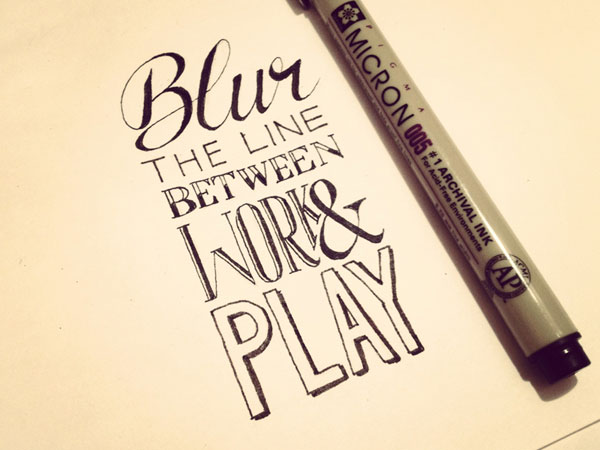
    Blur The Line

    How did you get into design? Was there a defining point in your career, and if so, how did it shape you as a designer?

    My dad introduced me to computers at a very young age. I was fascinated by technology. I never was very into videos games as a kid. I was more interested in making things and learning how things worked. I knew I wanted to do something in the technology industry, but wasn’t sure what. My dad taught me some programming languages, I knew enough about computers that I started up an IT business in high school and was repairing computer full time for a number of years, but none of what I was doing felt like THE thing.

    I freelanced web design in high school alongside my computer repair business. I have always been very creative, but at the same time very logical and meticulous. Design fit this niche for me so perfectly, and I really began to enjoy my freelance work as a web designer. Eventually it got the the point where I was getting more work than I could handle. I saw this as an opportunity to expand. I called up my friend, Brian, and two months later we took the leap into full time web design with Bold Perspective.

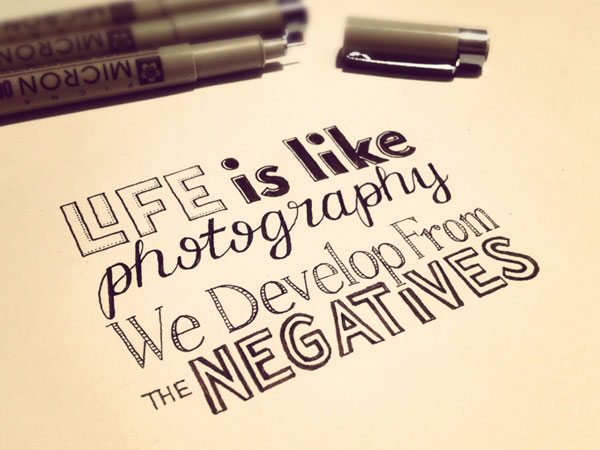
    Life Is Like Photography

    How do you approach a new project? What’s your creative process like?

    I have a lot to say on process and I feel that it would probably be best to point to a couple of places I’ve written on the topic for those want to go more into depth.

    With lettering, it’s a question I was getting asked more times than I could handle. It lead to me writing the Learn page on my website. It goes over my typical process for a lettering piece and answers several general questions about getting into lettering.

    For design, I wrote Establishing a Process (Pt3 of the Enabling Successful Projects series). It goes over everything from the benefits of displaying a process to setting client expectations and breaking down your process into steps that are digestible and easy to comprehend.

    You’re certainly known in the design industry for your hand lettering – Do you find that it’s useful to have a niche, rather than being a jack-of-all-trades? Did you approach design with that aim, or did it naturally evolve?

    This is a great question. When it comes to design, I tend to err more on the side of letting the content dictate the design rather than imposing my own style (though I see either as being very valid approaches). With lettering though, I think I’ve naturally come to develop my own style and voice. I think it’s helpful to have a core element that is distinctly your own, but still maintain a variety within your work.

    It’s worth noting that you will always play your best hits. So make sure you are displaying the type of work that you want to continue making on your portfolio. When you have variety in your work, you’ll be less likely to get sick of getting asked to recreate one particular style over and over.

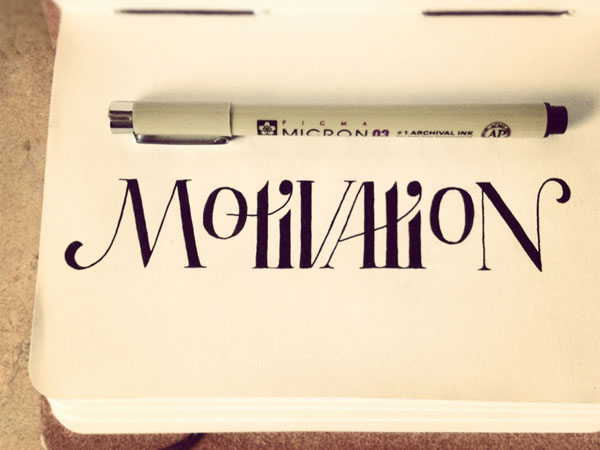
    Motivation

    Not only do you design awesome stuff, but you also write about design, release fonts, and much more – How important is it, do you feel, to contribute back to the industry that fostered you?

    I think it’s extremely important! I am completely self taught myself, and without the generosity of this fantastic community, it would have been very difficult to glean a education. The open and helpful nature of the design community is what makes it so great. The selflessness of those who share their knowledge is invaluable for those of us who are wanting to learn real, relevant skills without racking up huge student loans.

    I think a formal education can be a great thing, but it’s certainly not a prerequisite. If you don’t learn HOW to learn in school, you’ve learned nothing. While schools can teach many fundamentals, I’ve found that there are many critical gaps that are left unfilled. It’s instances like these where it is crucial that you proactively seek to further your own education. Resources like Design Professionalism and Method & Craft are literal gold mines with a wealth of knowledge that is overwhelmingly helpful.

    It is for this reason that I share my process, and for this reason that I write on the topic of design. If what I share is able to help someone else succeed in this industry, I consider it an honor. It really is the least I can do, and I will happily spend the rest of my career doing my best to give back.

    If, in some Freaky Friday-like situation, you could live the life of another designer, illustrator or creative, for a day, who would it be, and why?

    I would have to say it would be the late Doyald Young. The man had such a love and devotion for his craft. I really do love the thought of loving what I do as much as he did at his age. The understanding he surely gained in his many years of experience would no doubt be of incredible insight.

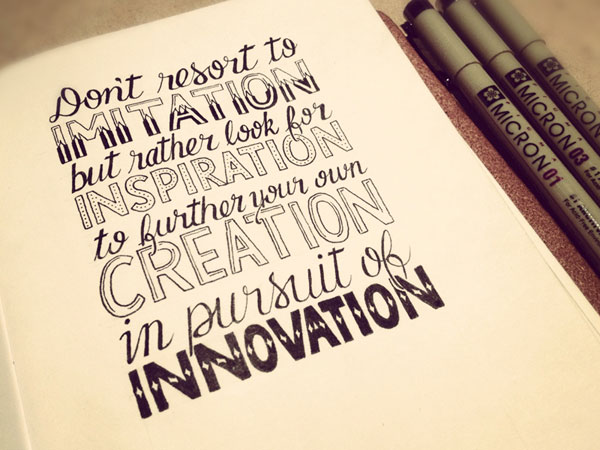
    Imitation Inspiration Creation Innovation

    What design tools could you not live without?

    A full set of Microns and a trusty 2B pencil. While I try, I’m certainly far from perfect, so a good eraser is equally as important! When it comes to computers, I use Photoshop and Illustrator quite heavily. I would love to see Photoshop get a viable competitor, but it certainly pulls its own weight. I’m a keyboard shortcut fanatic, so if you look over while I’m designing in Photoshop, it may look like I’m typing an essay.

    And finally, what tips would you give to anybody who is looking to get started in design?

    Ok you ready for this one? Your portfolio isn’t big enough. I’m serious. Coming into this industry as a new design can be very daunting. Very quickly you’ll be aware of the front runners—those with great success and large followings—and it’s very easy to be discouraged. It’s tempting to look for the fastest and easiest way to get some recognition. Want to know the secret? There is no fast way. Everyone you see who you think has “made it”, has poured blood, sweat, and tears into what they do. They’ve spent many years consistently dedicating themselves to their craft in order to get where you see them now. (By the way, there’s really no such thing as having “made it”. I wrote about it in Arrival is a Fictitious State)

    If there’s one piece of advice I’d like to leave you, it’s this: Do good work and continue to do good work. Only with a large portfolio and a vast amount of work will you be able to discover your own unique voice, and your individual style. Only with persistence, will you improve, and only with dedication will you gain recognition.

    Thanks Sean!

    Thanks a million to Sean for talking to OMW! I really enjoyed talking to him, and found his answers really interesting!

    Why not check out Sean’s site, and follow him on Dribbble and Twitter?

    Related Posts:

  3. One Minute With… Neil Tasker

    1 Comment

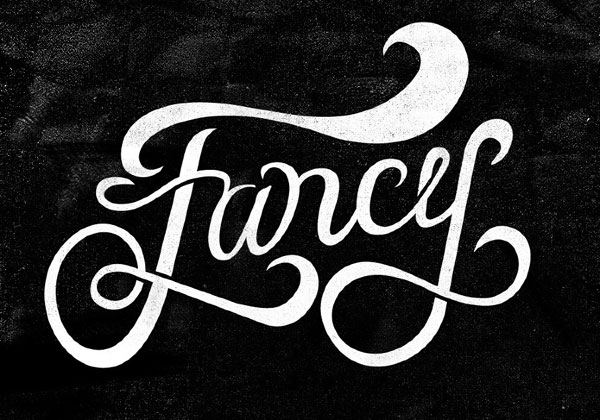
    Fancy

    Hi Neil, thanks for taking time to chat with One Minute With. Tell us a little bit about yourself and your work.

    First off, thank you for interviewing me! I am a 22 year old letterer and designer living in Michigan. I usually do custom lettering and sometimes a tad bit of illustration to mix in.

    Walk us through a typical day in the life of Neil Tasker.

    Nothing too special, Usually wake up around 9am and check out emails/respond and eat breakfast. Usually from there I begin to work on projects, or continue them from the night before. I play a lot of tennis, and usually break from working during the day and walk down the street to where the courts are conveniently located. It is really refreshing to exercise and come back to what you were working on. I usually work till 11-12 and then call it quits for the night.

    Neil Tasker

    How did you get into design? Was there a defining point in your career, and if so, how did it shape you as a designer?

    I actually don’t have that typical story of “I have been coloring since I could hold a crayon.” I never planned on being a graphic artist or artist in any sort. I had went off to college in South Carolina to play tennis and to major in Spanish, and that wasn’t working out, so moving back to Michigan, I had to register late for classes at college aka pretty much every class was full. Scrolling through the list I saw graphic design, and under that the course was typography. I had no clue what that even was, but decided to take it as a filler, and that first day of class, I left smiling, thinking “people actually get to do this stuff?! and from on there, I have loved every aspect of typography.

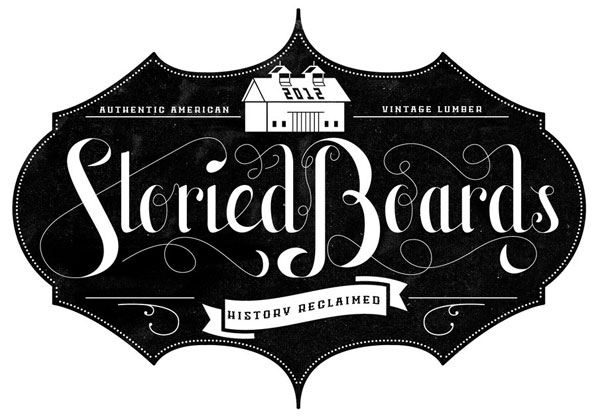
    Storied Boards

    How do you approach a new project? What’s your creative process like?

    I’ll get a brief from a client and we discuss what they like/dislike and from there I begin sketching for hours, trying different letter forms, and go back in forth with the client through sketches, until they love what they see. From there it is scanned into illustrator and outlined with the pen tool, and usually hours of tweaking goes on in that stage. Then you have the final!

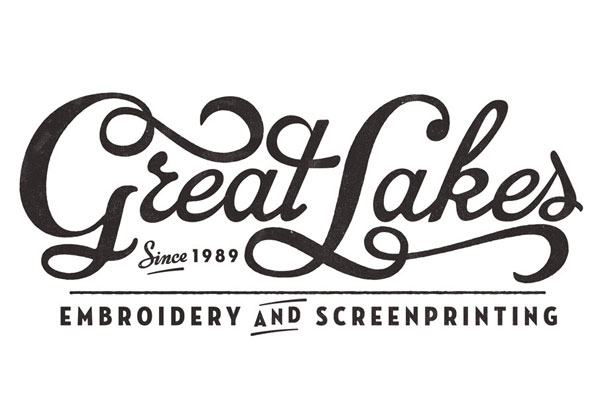
    Great Lakes

    You are best-known in the design community for your awesome lettering – Did you go into the industry hoping to carve out that niche for yourself, or did it just evolve? How important is it, do you feel, to have a niche in an industry so full of awesome designers?

    I knew I had wanted to do lettering from the get go after that typography class and I had hoped to carve out that niche for sure. I am still trying to find my own style and always trying to push to better myself. I think it is really important for you to find an area of design that you absolutely love doing. You will always be willing/enjoy putting in the hard work and practice. Those two things are a great recipe for really standing out amongst the crowd in any situation.

    Your lettering is distinctly retro, with beautiful swashes and perfect curves – Where do you get inspiration?

    I look at a lot of old type specimen, from books to anywhere when traveling and also on the internet. There is a ton of old lettering on Jeremy Pruitt’s Pinterest, from patches, signs, papers etc. It is the most beautiful stuff I have seen. I also love looking at Dribbble and see all the beautiful things everyone is making.

    Hawk Valley Wind

    If, in some Freaky Friday-like situation, you could live the life of another designer, illustrator or creative, for a day, who would it be, and why?

    Claire Coullon: I love watching her post pictures of her process online to the final versions, and she is the nicest girl. She will take the time on hundreds of Dribbble shots to give really helpful feedback and is always there to help/want you to succeed.

    What design tools could you not live without?

    Pencil and paper for sure, and Illustrator. A book called Scripts by Louise Fili is also one of my favorites, it has lettering from different countries, and a lot of really helpful knowledge in it.

    Fast Track

    And finally, what tips would you give to anybody who is looking to get started in design?

    Really look and try different areas of design to see what you really have a passion for. When you are doing something you love, you are willing to put in whatever it takes, and your hard work will meet many opportunities!

    Thanks Neil!

    Thanks a million to Neil for sharing his thoughts! I really enjoyed talking to him, and found his answers really interesting!

    Why not check out Neil’s site, and follow him on Dribbble and Twitter?

    Related Posts:

  4. One Minute With… Jeff Sheldon

    2 Comments

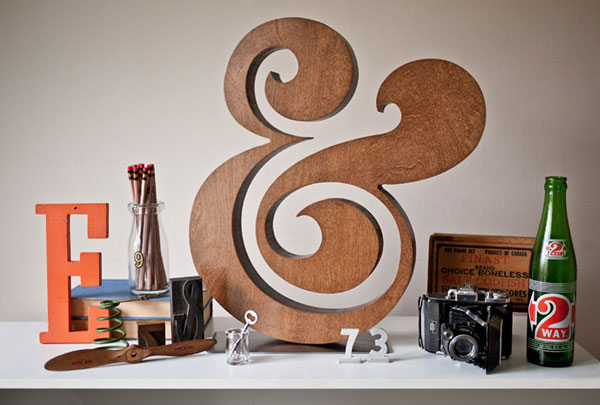
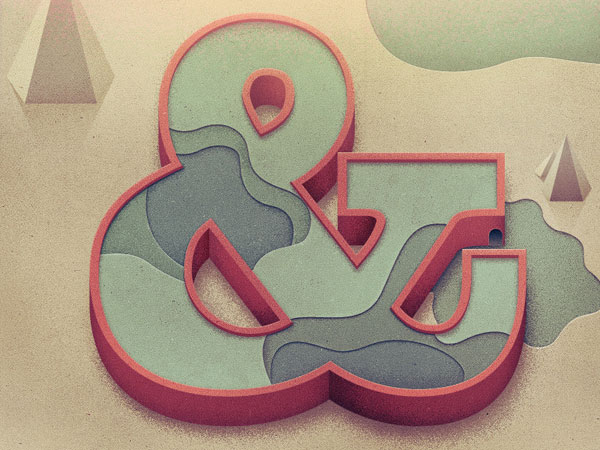
    Ampersand

    Hi Jeff, thanks for taking time to chat with One Minute With. Tell us a little bit about yourself and your work.

    Hey, I’m Jeff Sheldon and I’m the founder and designer of Ugmonk. Ugmonk started as a small side project to design and sell a few t-shirts, but quickly grew into a much bigger brand to the point where I was able to leave my day job to run the the business full-time. I now ship thousands of products to over 55 countries all around the world. I absolutely love running Ugmonk and am incredibly thankful that I get to do this full-time.

    Walk us through a typical day in the life of Jeff Sheldon.

    Wake up. Check email, Twitter, etc. Grab some breakfast and then make the long commute all the way upstairs (I work from home). Every day is different but I usually tackle any urgent emails first before diving into the rest of my to-do list. While design and product design is what I enjoy most, it usually only makes up a minor part of my day. On any given day you’ll find me doing a variety of things including working on new designs, product photoshoots, contacting suppliers, managing customer service, writing blog posts, ordering new products and lots of other miscellaneous tasks. I usually work till about 6 or 7 to take a break for dinner and spend time with my wife. Some days I continue working in the evenings but try to always get a good night’s rest. Every day is a little different.

    Jeff Sheldon

    How did you get into design? Was there a defining point in your career, and if so, how did it shape you as a designer?

    I grew up doing all types of traditional art (painting, sketching, sculpting) and it wasn’t until I got to college that I transitioned into design. A lot of people don’t realize how much crossover there is between art and design. The same principles of composition, color theory, shape and form all apply to both so having a foundation in art was a huge boost for me. After jumping into the world of design, I quickly fell in love with typography and realized how integral type is to all design. My interest in typography and minimal design is what led me to launch Ugmonk as a fun side project.

    How do you approach a new project? What’s your creative process like?

    Since I run my own brand I constantly have new ideas running through my head, sometimes to the point where it’s impossible to shut off. It’s less of a project-by-project basis and more of a constant stream of concepts and ways to improve and grow Ugmonk. When it comes to specific designs, I try to always start with pencil and paper to rough out my ideas. While most of the end products are recreated in a digital format before being produced, sketching is must less constrictive than jumping straight into Illustrator or Photoshop. You can read more about my process here:

    Ugmonk Behind-the-Scenes
    Designing Better Than I Deserve
    Inside My Sketchbook

    Jeff's Sketchbook

    You’re obviously best known for Ugmonk, your online clothing store. Considering that countless designers sell apparel on their online stores, why do you think that yours has taken off more than most others? Did you originally go into the project hoping to be able to make a living from it?

    I had no idea that I’d be where I am today with doing Ugmonk. I started it as a creative outlet while working at an agency where I was doing mostly production work. I never thought of it as a business or as something I could eventually do full-time, I just really enjoyed creating the products and getting feedback from people who appreciated what I was doing. I can’t pinpoint one specific thing that has made it take-off, but I like to tribute a lot of it to my passion and hard work that have kept it going. Most people see that success I’ve had and think it happened over night, but I’ve spent countless hours building the brand over the years to get it where it is today. Rather than partying on the weekends or watching hours of TV, I’m usually busy working on the next release :)

    Mini-Sketchbooks

    Your site sports designs that date back several years. When most fashion changes at a painfully fast rate, how important to you is it to create designs which can stand the test of time, and how do you go about doing that?

    Yes, that’s a good observation. My goal is to create products that are less focused on popular trends and more aligned with my personal design taste. The Ugmonk style will continue to evolve but I hope to keep the timeless design a main part of the brand.

    Ugmonk

    If, in some Freaky Friday-like situation, you could live the life of another designer, illustrator or creative, for a day, who would it be, and why?

    That’s a tough one. It would have been awesome to be a fly on the wall in the studios of the great American designers like Paul Rand, Saul Bass, and Herb Lubalin. These guys pioneered much of what design is today and much of their work still hold up today, decades later.

    What design tools could you not live without?

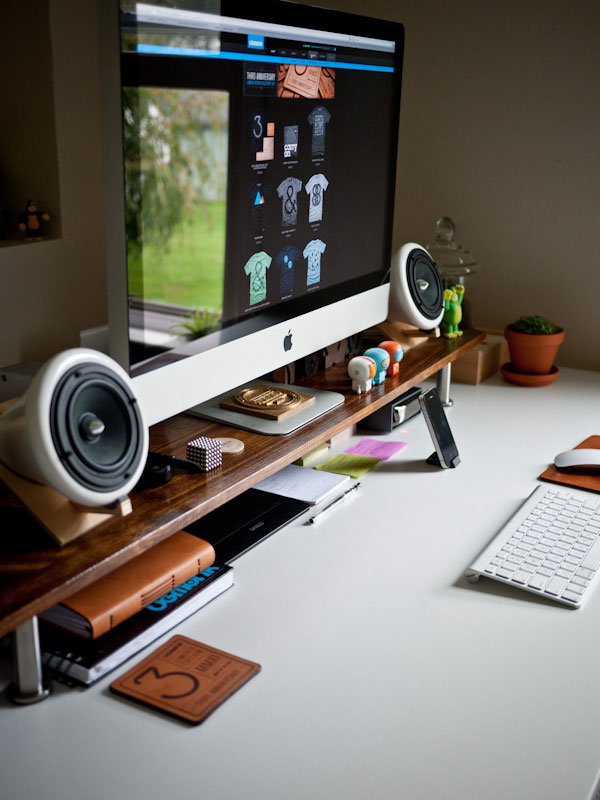
    The essentials: pencil, sketchbook, Illustrator, Photoshop and iMac. Other tools I use: Panasonic Lumix GF1, scanner, Macbook Air, Lightroom, and Wacom tablet.

    Jeff's Workspace

    And finally, what tips would you give to anybody who is looking to get started in design?

    Work really hard. Do more than the bare minimum or assignments or client projects. Also, do self-initiated projects. You’d be surprised what happens when you do good work and put it out there.

    Thanks Jeff!

    Many thanks to Jeff for talking to us. I really enjoyed his answers, and hopefully you did too!

    Why not check out Jeff’s site, and follow him on Dribbble and Twitter?

    Related Posts:

  5. One Minute With… Justin Mezzell

    Leave a Comment

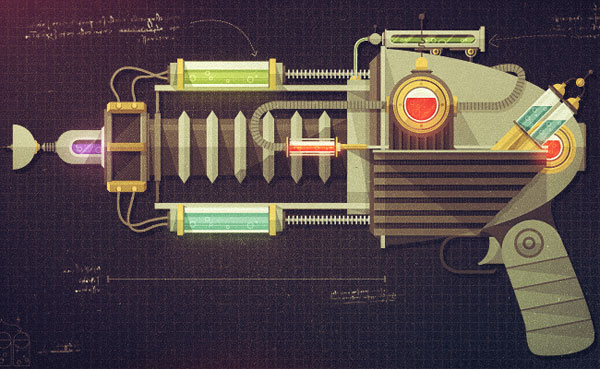
    Justin's Raygun52 Submission

    Hi Justin, thanks for taking time to chat with One Minute With. Tell us a little bit about yourself and your work.

    I’m a designer/illustrator living in Orlando, Florida. I bide my time between my wife, our dog Huxley, an incredible community, Disney theme parks, and do the occasional design here and sometimes there. Aside form calling the Sunshine State home base, I commute to San Francisco for part of every month so it wouldn’t be a stretch to say my office is often nestled in with the clouds. Other than that, I tend to enjoy a good film and/or an equally good – often better – book. My work is largely illustration with the occasional web and UI design.

    How did you get into design?

    I was always a doodler. My brother and I would scrawl notebook after notebook with sketches and concepts to stories and fake games. I had all but fallen out of any pursuit of art professionally when I was contacted by a local magazine, RELEVANT, while in college to start an internship. I didn’t feel like there was anything I was doing at the time that I was ultimately passionate about it, so I thought I’d give it a try. From there, it all happened really fast so I guess you could say I stumbled into it.

    Justin Mezzell

    How do you approach a new project? What’s your creative process like?

    I love storytelling. I think if I could actually write well, I’d pursue a career in being a novelist but it’s not a gift I have in my arsenal. I try not to let that stop me from telling stories. Most of my self-initiated pieces are created as a window into a larger story. Not necessarily one I’ll finish or write, but more a still from a narrative that is fully self-internalized. The creative process is scattered in the specifics. Inspiration is sporadic and the concepts strike at some of the most inopportune times, but I hunt down anything I can log into and save it until I can start breaking it down and bringing it to life. A lot of my illustration is influenced by my editorial background. You learn a lot about fusing the worlds of narrative and aesthetics – on a deadline. Music is another integral part of the build process. I usually seek out what artist I think best tells the story, put it on repeat and have at it.

    Liftoff

    You have quite a fun, retro feel to your illustrations. Where do you get inspiration from?

    It’s funny because I didn’t know that I really had a vintage flair to my work until a friend had pointed it out to me. Not being schooled in design or art, the history of it is somewhat of a largely uninformed blur. After doing a bit of googling, I was hooked. What started as a quest for simplification of complex objects and mechanics ignited a full-fledged romance of all things vintage. I love antique packaging and lettering, the reductionist art form of retro illustration and mid-century modern architecture. I’m inspired by people’s visions of the future. There is something beautiful about building a lens into the future from our own respective time periods. Retro futurism is probably the most inspiring worldview to me in its boldness to dream. I look to people like Jules Verne who existed as a man outside of his own time – drafting a world in fiction that did not yet exist in reality. Now, we can look back on his dreams as our past but it makes it no less awe-inspiring. It’s actually the near eradication of the NASA space program’s budget that concerns me most as a dreamer. The impact of a generation that won’t get to watch the pursuit of the seemingly impossible. It’s a great shame and, I believe, dangerous to ambition.

    Ampersand

    I understand that the worlds of illustration and graphic design are worlds apart. Have you experienced this? Which do you prefer, and why?

    Working in the freelance world will absolutely make you feel that chasm. A lot of clients approach me as solely one of the other. I’m either illustrating in tandem with a design environment already provided for or I’m providing design sans illustration. It’s not always ideal, in my opinion, but I can see where people draw the distinction. At the very core, both have the same ultimate goal – communication. As I continue to grow and develop, I seek to overall become a far more effective communicator. In that way, I hope to see those lines diminish.

    The Royal Tenenbaums

    If, in some Freaky Friday-like situation, you could live the life of another designer, illustrator or creative, for a day, who would it be, and why?

    Eric R. Mortensen works for NASA. I don’t know what exactly that entails or what specifically could even be shared, but it’s safe to say that out of all the professions friends of mine have, this one really blew my mind. It’s always an incredible experience to get to work on something that you care so passionately about. I think back to past projects where I’ve really been sold on the concept before the first pen stroke is laid down. It’s an awesome opportunity to believe in what you do and in the case of Eric, how could you not want to be part of that? Also, the dude is just an incredible illustrator and really has an eye for perfection.

    Fortune Illustration

    What design tools could you not live without?

    Coffee. More as a point of dependency but I suppose in some strange, addiction-riddled way, it’s a tool. Obviously, the Adobe Suite. But I’ll leave Flash out of that mix in a big way. Dribbble has been an incredible catalogue of inspiration and, more importantly, a real quarry of work opportunities.

    And finally, what tips would you give to anybody who is looking to get started in design or illustration?

    Get busy failing. Dream. Build. And Iterate often. Continually find new ways to do something that seems difficult. But more importantly, remember that life exists beyond your design career. It’s outside of your computer screen and it’s happening right now. Don’t let yourself get so wrapped up in who you are as a designer that you forget who you are as a person. The legacy you leave behind and the stories that you tell are so incredibly important – so tell them well.

    Thanks Justin!

    Many thanks to Justin for taking some time to talk to One Minute With. I really enjoyed interviewing him, and hopefully you enjoyed reading it!

    Why not check out Justin’s site, and follow him on Dribbble and Twitter?

    Related Posts:

  6. [CLOSED] Win a Pennant!

    Leave a Comment

    Update: This contest is now closed. So tough. Congratulations to Joseph Marsh for winning this fantastic pennant!

    ——————-

    Earlier today, we published a chat I had with Eric Mortensen, and in that interview, we talked a bit about his new project, The People’s Pennant. They’re producing stunning pennants from some of the best designers out there, and Eric was nice enough to donate one to One Minute With. Now, we’re offering you the chance to win this fantastic prize, with a simple tweet!
    The People's Pennant

    About The People’s Pennant:

    The People’s Pennant create awesome limited edition pennants, from amazing designers, with a new pennant released every single month. There are only 250 of each pennant produced, so with each purchase, you get a unique piece of design culture and join the People’s Pennant elite.

    But hey, what do I know about pennants? Here’s Eric and the gang to explain what they’re all about:

    Rally around the small things in life! Driving with the windows down. Lazy Sundays. A freshly sharpened pencil. Whatever it is that makes you happy, we want to celebrate it. So we bring you: The People’s Pennant. We elevate the pennant from the confines of sports to the awesomeness of the everyday. Our pennants are hand-printed and hand-sewn in the U.S.A. Crafted by folks who’ve helped shape the tradition since the early 1900s, they have produced felt products with care for home-town victories to world championships. Collect all of the pennants, and show some team spirit for the small things in life.

    What You’ll Win:

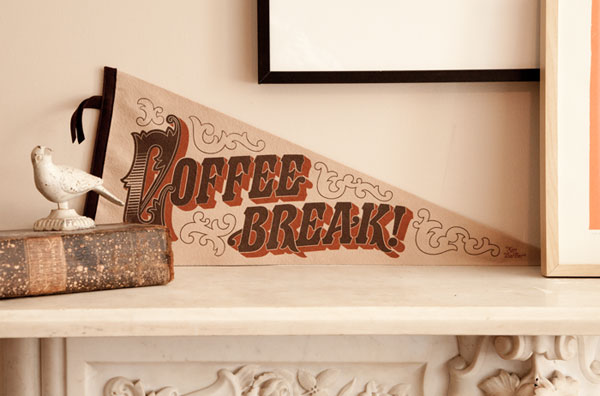
    Today, we have this beautiful pennant, designed by Ken Barber, up for grabs. If the idea of coffee isn’t enough to set your heart racing, the sweet, sweet lettering by House Industries’ in-house typography aficionado definitely will be.

    Coffee Break!

    Here’s what Ken had to say about his inspiration for the piece:

    I’m a coffee connoisseur’s worst nightmare. No Ethiopian Kemgin beans, private cuppings or pour-over Tonx for me; I prefer the nasty convenience store variety. Twenty-four ounces of burnt decaf with a few generous shots of hazelnut creamer and a handful of artificial sweetener packets is perfect when I need a late afternoon fix. But no matter how you take your coffee, enthusiasts of all types can appreciate this clarion call for caffeine.

    This design is priced at a very reasonable $35, but we’re giving you the chance to get it for the ultimate price of free!

    How to Enter:

    It really couldn’t be easier to enter. All you have to do is follow these three steps:

    1. Follow @PeoplesPennant on Twitter.
    2. Follow @ConorDesign On Twitter.
    3. Tweet from your account with a link to this page. Try to say something nice about either OMW or The People’s Pennant too. It won’t help you win, but it’ll make us feel all happy inside.

    To make it even easier, you can tweet directly from this page:

    Tweet to Win!

    We’ll collect up all the tweets on March 26th and randomly select a winner. The winner will be announced in this post, and on Twitter, on the 27th.

    A Few Rules:

    We hate rules as much as the next guy, but there a few bits and pieces we need to make clear:

    1. This competition is open to people from anywhere in the world. We’ll even throw in the postage for free.
    2. You can tweet as many times as you want, but you’ll only get one entry per person. Gotta keep this thing fair.
    3. This contest ends at 23:59 (Ireland time) on March 26th, 2012. Any entries made after then will be chucked in the bin. But we’ll still love you.
    4. We’ll be contacting you via Twitter if you win. If you don’t respond within 48 hours, we’ll give it to somebody else. So just check your Twitter.
    5. If you aren’t following both @PeoplesPennant and @ConorDesign, you won’t be entered into the draw. This isn’t because we want more followers, it’s because we’ll have to DM you. Also, we want more followers.

    Good luck, everyone!

    Related Posts:

  7. One Minute With… Eric R. Mortensen

    2 Comments

    Bell X1

    Hi Eric, thanks for taking time to chat with One Minute With. Tell us a little bit about yourself and your work.

    Thanks, Conor! Well… I’m Eric and I live in beautiful Baltimore, MD. I’ve bounced around the midwest in the last few years, residing in Detroit and Minneapolis, and after a brief stint in Nashville, I made my way out east for school. While I am finishing up my MFA in graphic design at MICA, I am also working part time as a designer for NASA, Goddard Space Flight Center. This year I launched a music distribution startup with my brother called Soundsupp.ly, and started a felt pennant print series with my friends, Jess & Tim, called The People’s Pennant.

    Walk us through a typical day in the life of Eric R. Mortensen?

    My partners and I have been working on The People’s Pennant for the last 5 months, so many of my days lately have been supporting the project – orchestrating with contributors, placing orders with vendors, designing the website – it’s a handful! Some days when I’m not in class I head down to Goddard Space Flight Center in Greenbelt, which is a short drive from Baltimore. I work on projects with NASA’s Biospheric Sciences branch, particularly Carbon Cycle studies, and have enjoyed using design to help scientists better communicate their research to the public. Being on campus is amazing, and I often leave time in my day for wandering through buildings I don’t work in. My favorite is building 29, where NASA is currently building the successor to the Hubble, the James Webb Space Telescope. Watching the engineers in cleanroom suits delicately assemble this multi-billion dollar instrument, thinking about it being able to look back to the beginning of the universe and tell us new things about ourselves and where we came from…it’s almost enough to make a bearded man choke up a little bit.

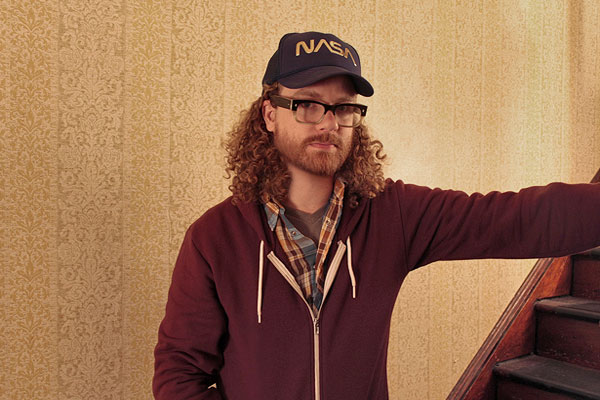
    Eric Mortensen

    How did you get into design? Was there a defining point in your career, and if so, how did it shape you as a designer?

    Our family got an Apple Performa in the mid-ninties and my uncle showed me how to draw the James Bond “007” logo in Illustrator using bezier paths. I was hooked right away! A few years later, like, every single one of my friends started a band. Or at least it seemed that way. I didn’t have any musical talent, but I still wanted to run with all these cool kids so I started designing them t-shirts and album covers. The internet became a popular thing and those bands wanted websites, so I taught myself how to do that. Sooner or later I accumulated a portfolio and design became a legitimate career path.

    Music really fueled my young passion for design at that time. I still think one of my defining moments as a designer was seeing that first album cover that I had labored over come back from the printer. I couldn’t believe it, it was so real now, all wrapped in cellophane! Truth be told, I still feel that sense of excitement when things come back from press.

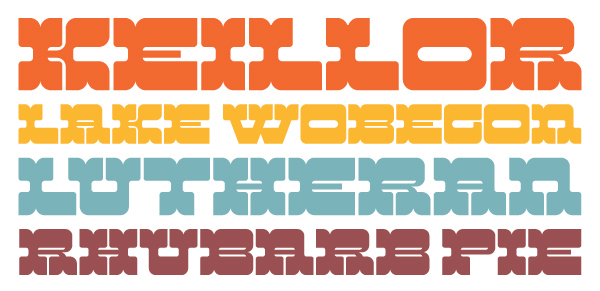
    Keilor

    How do you approach a new project? What’s your creative process like?

    I usually dedicate a fair amount of mental bandwidth to something, a project or a problem, up front and just let things sit. I try not to be in a rush to start pushing a pencil to paper. It’s less like waiting for that cliched lightning bolt of inspiration hitting and more like getting the slow burn of good chili dog going. When it is time to start cranking and making I tend to make fast decisions and generate a variety of options for myself. I think half of being a good designer is being a good editor.

    Your style is decidedly vintage, albeit with a geometric twist. Where do you get inspiration?

    I guess I owe the vintage influence to my mom. She is a big time collector of cool, mid-century advertising pieces and signage, so our home growing up was filled with the stuff. She’s an antique dealer now, so we bond over a shared aesthetic interest that tends to be more graphic and of that era. I think the geometric twist comes from those “Learn to draw” books I had as a kid, like “Learn to draw Disney characters” and whatnot. They always had you build the drawings from basic geometric shapes. I guess I just stopped after the first few steps, skipped the final details and stuck with squares and circles. I like when different forms of an illustration have a relationship to one another, it provides a sense of order…and makes aesthetic decisions seem less arbitrary.

    Laika

    You’re studying at the Maryland Institute College of Art. With the design industry changing at such a fast rate, how important is a formal education in design, do you feel?

    I think a formal education can be a part of a successful career path in design, but is certainly not a requirement by any means. For me, the decision to go to grad school was a decision to disrupt my 9-5, design-agency trajectory in a way that allowed me to re-evaluate what I wanted out of life and how I could achieve it. I needed an environment and a timeframe that would challenge me to put my work front and center. For some, that might not be necessary, but I think it’s just important for you to react to what you need. The best part about all these changes in the industry is that it is all up for grabs. I think if you have the passion and are willing to live that out to the fullest extent, you can make just about anything work. I never doubt the resourcefulness of a hungry bear. They will find a way into your garbage whether you hang it up in a tree or not.

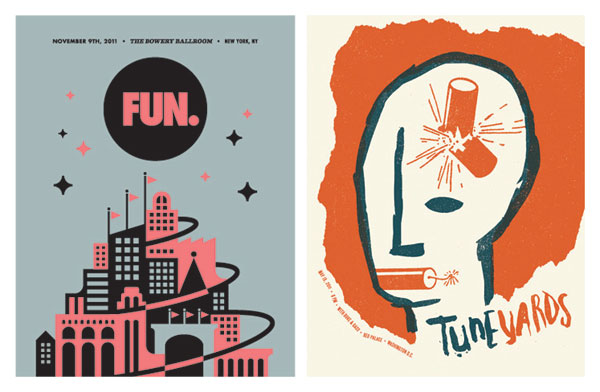
    A Few Posters by Eric

    If, in some Freaky Friday-like situation, you could live the life of another designer, illustrator or creative, for a day, who would it be, and why?

    I might be abusing this question by answering Alan Bean, but I’m going to say Alan Bean. Al was an Apollo astronaut who flew to the moon on Apollo 12. He was the first astronaut artist, and it is said that he sketched extensively while on the lunar surface. Can’t really beat that! I also think it would be neat to be Robert T. McCall, an amazing illustrator and visual historian at NASA during the birth of the program through the space shuttle era, as well as a conceptual artist for sci-fi films like 2001: A Space Odyssey and Disney’s Black Hole. While looking through a book of McCall’s space illustrations as a kid I decided I wanted to be astronaut. Re-reading that same book as I got a little older made me want to be an artist.

    NASA Icons

    What design tools could you not live without?

    I’ve recently taken to running just about everything I do through a Xerox machine. Rip it down from the screen and run it through the grinder, get a good layer of flavor on it! I love the surprise element, not knowing exactly what is going to shoot out on to that tray!

    And finally, what tips would you give to anybody who is looking to get started in design or typography?

    I think I would encourage anyone interested in pursuing design to think of it as a platform to express something you truly care about. Don’t get caught up in design culture, or portfolio lust – there is so much more out there! Love something and then share that with conviction through your work.

    Thanks Eric!

    Thanks so much to Eric for giving us an insight into his world! I loved talking to him, and found his answers really interesting!

    Why not check out Eric’s new site, The People’s Pennant, and follow him on Dribbble and Twitter?

    Related Posts:

  8. One Minute With… Jeff Rogers

    1 Comment

    Psst...

    Hi Jeff, thanks for taking time to chat with One Minute With. Tell us a little bit about yourself and your work.

    Thanks for having me! You know, I have been thinking about this question a lot lately. Some days I don’t really know who I am or what I do. HA! But I think I am a designer who does a good bit of custom lettering. I run my own 1-man business, which is to say I am a freelance designer. I’d say half the work I do is client work and the other half is self-initiated because that’s just what I have always done. As a junior designer with crappy “pay my dues” jobs, I would always go home and do the work I really wanted to do so it became a habit. Much of the client work is birthed from the self-initiated work but by the time I am doing it for a client, it’s “old” and I have moved on to something else. I actually love that flow. About 75% of my client work comes from personal connections here in NYC which I also love.

    Walk us through a typical day in the life of Jeff Rogers.

    I usually sleep too late (because I never can get myself to bed before 2 am), get up, make breakfast & coffee, clean up the apartment from the day before, take a shower, get dressed, put my shoes on and then go to my desk and tackle the day’s work always trying to not get distracted by Twitter, Dribble, etc. which is tough for me. If I don’t have plans in the evening I’ll usually work until my eyes are dry and red or until I am frustrated with the project. OR if I get on a roll.. I’ll just work until I’m done. I love to be “on rolls”. That’s always the goal. I never feel like I get enough done during the day but that’s OK. I make sure and spend time with my wife because she is awesome and I feel better when I’m with her. Right now we usually eat lunch together and watch an episode (or 2) of Breaking Bad before hitting the hay.

    Jeff Rogers

    How did you get into design?

    My grandmother was an amazing landscape painter and my dad can draw really well. Between the two of them, I learned how to make pictures and I fell in love with drawing and painting really early in life. I discovered graphic design in my junior year of college when I decided I needed to change my major from 2D Studio to Design in order to “learn the computer”. I came to the realization that I didn’t want to rely on painting to make a living. I figured I could always paint. After the first semester as a design major I was totally hooked and couldn’t get enough. I didn’t paint again for about 5 years after college, but I finally am again.

    How do you approach a new project? What’s your creative process like?

    First I decide if it’s something I really want to do. I get offers from people sometimes that just don’t make sense for me but usually I’ll do it. (I have a hard time saying no. Working on it.) After figuring out things like fees and schedule, etc. I get a pencil out and start sketching. I always start with pencil and paper because that’s the fastest way for me to get ideas out. Then the process takes whatever turn it needs to depending on what the project is. I like doing work in 3 rounds: sketches, roughs, and final. It’s a nice way to stay on track and keep the client in the loop. I like to avoid doing a bunch of unnecessary work so if I can get the client on board at all the stages, it usually works out better in the end… in general.

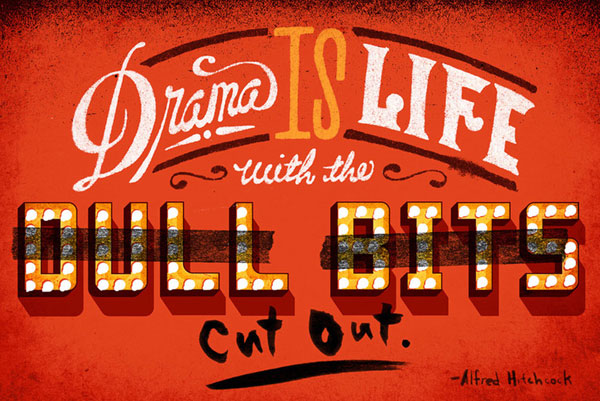
    Drama Is Life

    You’ve left a full-time position at SpotCo to go freelance – What made you make the switch, and how does freelance life compare to the 9-5? What challenges does it bring?

    I loved my time at SpotCo. It taught me so much and I wouldn’t be anywhere near where I am today without that experience. After 3 years there, my freelance work was picking up, my wife got a killer new job with a big fat paycheck, so I thought it was time to jump ship and see what would happen. It’s been about a year and so far so good. Like I mentioned before, I like to keep things fresh and new and I felt like I finally knew how to do theatre posters so I wanted a new challenge.

    Lettering

    An awful lot of your work is done by hand – How important is it, in your opinion, to keep the analog traditions of yesteryear alive?

    It’s extremely important. So much of a person’s humanity comes out when a piece is done by hand and I think people have a deeper connection with it. And I would say the same thing about starting ideas on paper instead of the computer. When you start at the computer, you are limited to to the confines of your knowledge of the software, etc. but letting ideas and form come right out of your hand is way more effective. And I’m not saying you have to be able to draw really well. Stick figures will do. But working out form and composition with a pencil is fast and you can get through a lot of variations until you find the best one. I never do 1 version. The first one is always the throw-away.. but it has to get out of the way in order to dig deeper.

    Illustration

    If, in some Freaky Friday-like situation, you could live the life of another designer, illustrator or creative, for a day, who would it be, and why?

    Probably one of those silk-screen gig poster guys like Jason Munn, A. Micah Smith, or the guys over at Aesthetic Apparatus or Heads of State. I LOVE gig posters and would love the space and ability to make them. It’s about splitting the time doing ideas/design and then getting your hands dirty with the print-making process. Also I am a musician so it would be great to connect with music in that way.

    What design tools could you not live without?

    My pencil and my paper… and also my tracing paper. Great for revisions and not having to erase and start over and working out compositions. Not copying work. HA!

    Jeff's Workspace

    And finally, what tips would you give to anybody who is looking to get started in design?

    Learn by doing. Do as much as you can and be around people who do what you want to do. Whether that is a college or a studio or a specific designer or design community. Like that Anthony Burrill poster says, “Work hard and be nice to people.”

    Thanks Jeff!

    Many thanks to Jeff for sharing his thoughts with OMW. I had a lot of fun talking to him, and I hope you love the interview as much I do!

    Why not check out Jeff’s site, and follow him on Dribbble and Twitter?

    Related Posts:

  9. One Minute With… Trent Walton

    Leave a Comment

    The Letter 'T'

    Hi Trent, thanks for taking time to chat with One Minute With. Tell us a little bit about yourself and your work.

    Howdy! I’m Trent. I work as 1/3 of Paravel with two of my best friends based out of the Texas Hill Country. I’m a husband and father of a 1 year old little dude named Henry. Oh, and my wife had to put me on a font allowance.

    Walk us through a typical day in the life of Trent Walton.

    Up at around 6:00 without an alarm, unless you count the 1 year old. I start with a big breakfast, then some exercise, and usually land in the office between 8:00 and 9:00. We just moved into a new home. I love it. The office is above the garage with the only door being an external one, so it helps me keep work time separate.

    Over the next hour I’m joined by my cohorts in our campfire chat room, all of us cleaning out inboxes and charting out priorities for the day. My favorite thing about my work is that from this point forward days vary greatly. Sometimes I’m writing and planning, others I’m coding or designing. I try to take a nice long lunch hour so I can enter the rest of my day (that lasts till about 5:00 or 6:00) with clear focus on one or two larger tasks. Occasionally, I’ll work evenings if I want to finish a personal project, of if a deadline gets tight.
    Trent Walton

    How did you get into design? Was there a defining point in your career, and if so, how did it shape you as a designer?

    I’ve always been focused on the web, and began to take web design as a career more seriously when I saw that technologies were evolving to give designers more control over things like layout and type. Early on, I was just happy to see how much could be achieved when abandoning table-based layouts.

    Going back further, I grew up around American muscle cars. I spent a great deal of time at races and swap meets and became obsessed with the design identities tied to the scene. I’d buy car badges, hood ornaments, and manuals just because they looked cool. I think that played a formative role in my design sensibilities and love for type.

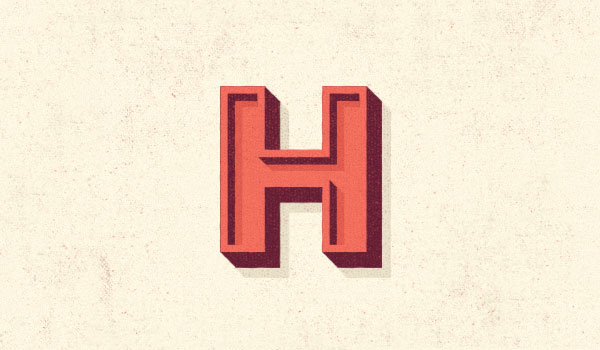
    The letter 'H'

    How do you approach a new project? What’s your creative process like?

    It’s different every time, but the projects I think turn out best are collaborative. I am usually in some version of a project management role, so I really begin by focusing more on the talent and personalities involved (clients and contractors). Paying attention to things like work environment, camaraderie, and communication (that aren’t usually project deliverables) makes everything better. Aside from that, we do a lot of sketching & candid arguing and I wouldn’t have it any other way.
    Just some awesome shape thing.
    On your site, you’re constantly experimenting with all-new web technologies and practices, from responsive web design all the way down to CSS hyphenation. Do you view yourself as a designer who also develops, a developer who also designs, or in a carefully-straddled middle-ground? If you give up one of the two, which would it be, and why?

    It’s hard for me to imagine separating the two. I call myself a web designer, and I try to be proficient at whatever it takes to make what I want (or what is needed). It’s nice to be able to conceptualize and execute. That being said, It’s also nice to have friends who are more talented than you are so you can get help along the way.

    On OneMinuteWith, I talk to a lot of designers about self-initiated projects. With Paravel’s work however, everyone else is effectively blown out the water – You’ve created projects such as The Many Faces Of, Lettering.js, FitText, and ATX Web Show, to name but a few. How much of your work is self-initiated projects, and how much is client work? Is there one you prefer over the other, and why?

    Client work is always there, but the amount comes in waves. From the beginning, we’ve had the goal at Paravel to do what we love. I find that what you share online is often what you’ll get hired to do. So, if you show people that you’re good doing rush jobs and work that doesn’t require innovation, then that’s probably what you’ll be hired to do. We try to take jobs that don’t have a clear point B and require newer technologies. Then, when we have to build tools to aid us in our efforts (like Lettering.js or FitText) we share them.

    A responsive flow. Or something.

    If, in some Freaky Friday-like situation, you could live the life of another designer, illustrator or creative, for a day, who would it be, and why?

    I think I’d like to set further outside the ‘creative’ file drawer and switch with someone who gets to work outside. I’d love to spend a day as a farmer or a rancher. I think life/nature has a timing that is artificially accelerated within the walls of my office. I’d love to do some work where content streams and email priority levels don’t impact the task at hand.

    What design tools could you not live without?

    I buy graph paper and pens in bulk. I love Coda, and hope there’s a version 2 on the horizon. Web-based tools like Dropbox for file storage, Harvest for accounting & time tracking, and Typecast App for typesetting & design have each equaled a quality of life upgrade ‘round these parts.

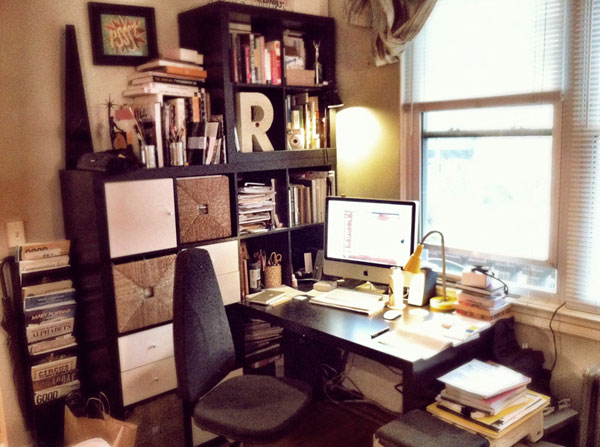
    Trent's Workspace

    And finally, what tips would you give to anybody who is looking to get started in design or typography?

    Focus on the basics. I’m always learning, and I think a common thread has been that I’m always surprised to realize how carefully considered the simplest elements can (and probably should) be. Thinking about type down to details like a baseline grid and clear hierarchy has become central to my process, while any random photoshop technique regularly proves to be less useful and applicable over time.

    Thanks Trent!

    Many thanks to Trent for sharing his thoughts with OMW. I had a lot of fun talking to him, and I hope you love the interview as much I do!

    Why not check out Trent’s site, and follow him on Dribbble and Twitter?

    Related Posts: