Author Archives: Conor O'Driscoll

About Conor O'Driscoll

Conor O'Driscoll is a designer and writer, who writes for AppStorm.net. He also enjoys writing about himself in the third person.
  1. One Minute With… Matt Kaufenberg

    Leave a Comment
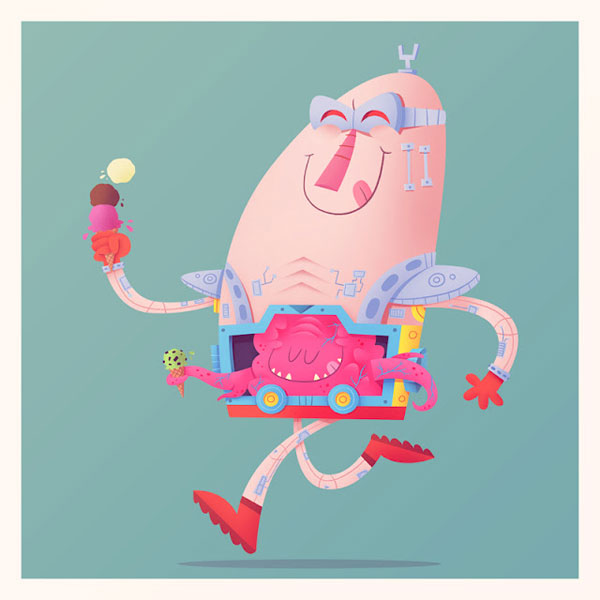
    Krang - Matt Kaufenberg Interview

    Hi Matt, thanks for taking time to chat with One Minute With. Tell us a little bit about yourself and your work.

    My pleasure! I’m a full-time freelance illustrator living in Minnesota with my wife and two kids. I used to work full-time as a freelance web/print designer, but eventually decided to pursue a career in illustration since that’s my real passion. I’ve been doing it for about a year and a half and it’s going great.

    Walk us through a typical day in the life of Matt Kaufenberg.

    Normally I wake up around 8 (although I’ve been working on getting up earlier), head downstairs and hang out with the fam for a little bit. Then, with some coffee, I’ll go through my new emails and follow up on any potential work. Then it’s time to start working. I normally work on 2-3 projects at a time (unless there’s a pressing deadline, then I’ll concentrate on that). Working at home, it’s nice to be able to take breaks and read books with the kids or play outside for a bit. I normally work until around 5. Then I’ll have dinner with the wife and kids and after that, depending on my work load, head back to work for another hour or so. Sometimes work keeps my up late, but I’m trying to create a more normal working schedule so that i can spend more time with my family and enjoy the evenings.

    Matt Kaufenberg Interview

    How did you get into illustration? Was there a defining point in your career, and if so, how did it shape you as a designer?

    I’ve always had a love for drawing. I filled NUMEROUS sketchbooks and went through many reams of paper as a kid. When I was fifteen, I won a local art scholarship and ended up being mentored by a fantastic editorial cartoonist by the name of Trygve Olson. It was an amazing experience and fueled my passion for a career in illustration.

    How do you approach a new project? What’s your creative process like?

    I start with research, looking for anything and everything concerning the topic I’ll be illustrating. Then I like to look around for inspiration. Although the internet is a great source of inspiration, I also enjoying looking through children’s books, vintage album art, listening to music, and anything else that might spark an idea for the project.
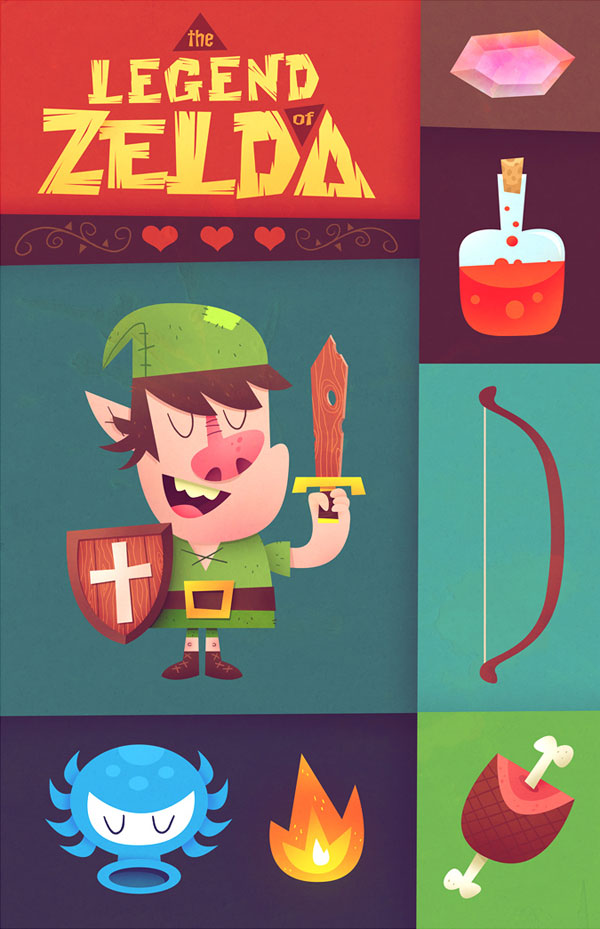
    The Legend of Zelda - Matt Kaufenberg Interview

    You’ve worked on some great personal projects (Most notably, your Illustration-a-Day blog) – How valuable is it, do you feel, to keep personal projects alive along with client work? Do they help in getting more client work, do you reckon?

    I’d say it’s extremely valuable to work on personal projects. Sometimes during client work you can hit a creative wall and working on something for myself often helps me break through it and reignite my passion for the project.
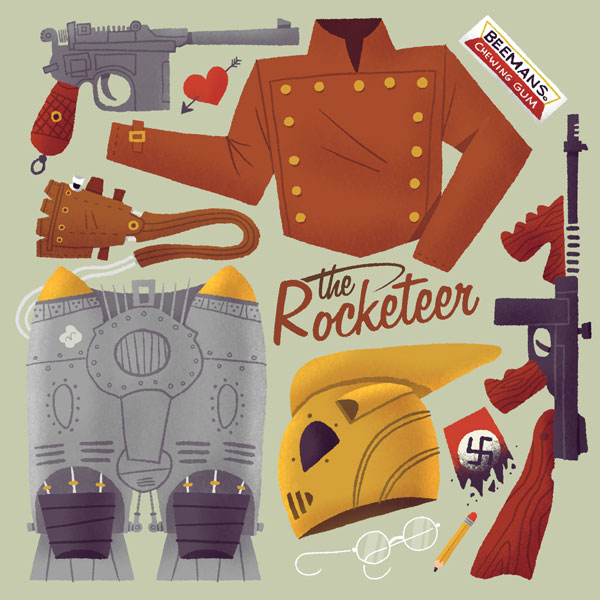
    The Essentials Of The Rocketeer - Matt Kaufenberg Interview

    You also do a whole bunch of collaboration work (The Essentials Of and Epic Armory, for example) – With a community so tight-knit as ours, how important is it, in your opinion, to constantly get involved like this?

    Very important! Freelance illustration can be a very solitary job, and at times leave you feeling worn-out creatively. I find that connecting with other creatives and collaborating on projects can really refresh your creativity and bring back that excitement of drawing, which can diminish when working alone.

    Doctor Who - Matt Kaufenberg Interview

    If, in some Freaky Friday-like situation, you could live the life of another designer, illustrator or creative, for a day, who would it be, and why?

    I’d love to switch lives with a Hollywood film editor for a day. Besides illustration, I love editing film. There’s such an art to it and I find it very enjoyable. If I could try that out professionally for a day, it would be the cat’s pajamas!

    What design tools could you not live without?

    I’d be lost without my Cintiq, it’s an amazing piece of hardware. I also couldn’t live without Photoshop or Sketchbook Pro since I use them every single day.
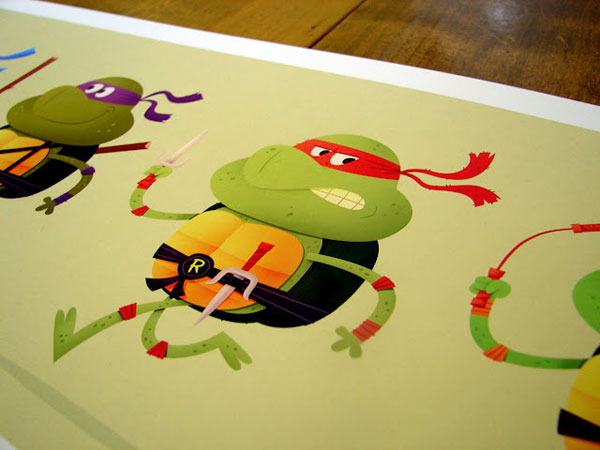
    Teenage Mutant Ninja Turtles - Matt Kaufenberg Interview

    And finally, what tips would you give to anybody who is looking to get started in illustration?

    Find things you’re passionate about and illustrate those things. When you’re passionate about an illustration, it shows, and potential clients will see that. Also, post on your blog or website on a consistent basis. Things get old fast on the internet and one of the best ways to get new clients is by posting new work.
    Thanks Matt!

    Many thanks to Matt for sharing his thoughts with OMW. I had a lot of fun talking to him, and I hope you love the interview as much I do!

    Why not check out Matt’s site, and follow him on Dribbble and Twitter?

    Related Posts:

  2. One Minute With… Erin Fuller

    2 Comments

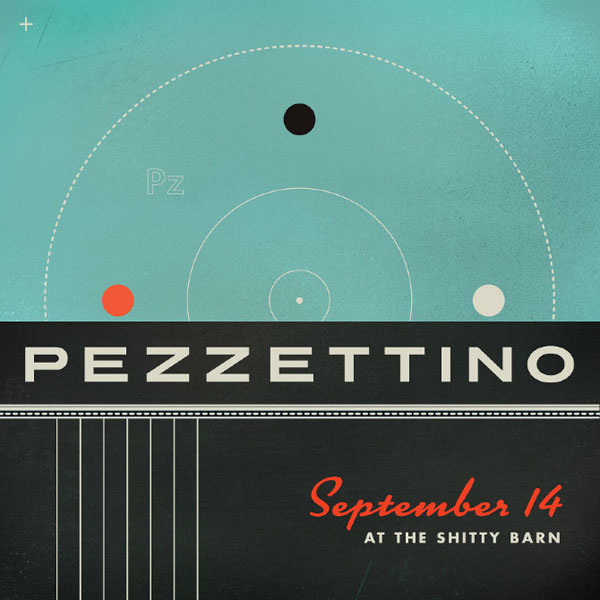
    Pezzetino - Erin Fuller Interview

    Hi Erin, thanks for taking the time to chat with OneMinuteWith. Tell us a little bit about yourself and your work.

    Thanks for having me! Humbled. Honored. Happy to be here.

    Whelp, my name is Erin Fuller – designer, music junkie, and last-but-certainly-not-least mom to a very busy 4yr old boy. I’m also a co-producer/founder and design maven for The Shitty Barn Sessions. I currently live in this magical little village nestled in the driftless area of Wisconsin called Spring Green – which is home to FLLW’s Taliesin, American Players Theatre, THE SHITTY BARN(!!!) and The House on the Rock. Been here for 9 years and love it… BUT, recently gave up the full-time independent designer gig and now commute an hour to Madison everyday for my rad job as a senior designer at Planet Propaganda. SO! This summer, I’m packing my bags and moving (back) to Madison to cut my commute to enable spending more time with my kid and be closer to stores that are open past 6pm.

    Walk us through a typical day in the life of Erin Fuller.

    I’m a single mom and get up when my son does (between 4:45 and 6:30am). He’s fairly suspect of getting dressed, eating breakfast and brushing his teeth most every morning so the aforementioned tasks can take anywhere from 5 to 50 minutes depending how cooperative he’s feeling. If you don’t have kids, imagine trying to put pants on a chicken…its kinda like that. When he’s taken care of, I make myself presentable and prep the both of us for the daily commute into Madison (about 1hr). After battling rural traffic (comprised of tractors and people who consistently go only 45mph ALL. THE. TIME.), I drop the kiddo off at preschool and make my way downtown to Planet Propaganda; eat breakfast grab a sip of coffee, check e-mails and start the work day. Its typically pretty busy so I usually eat something resembling lunch at my desk and am always surprised how quickly the 5 o’clock hour rolls around, which is when I battle city traffic back across town to pick up the kiddo, resume mommying duties and do the reverse 1hr commute back home. Then it’s dinner, bath, bedtime stories and cuddle time. After my son’s down – If I haven’t fallen asleep while tucking him in – I grab a glass of wine, listen to music and do one (maybe two, if I’m lucky) of 7,000 things that need my attention – which usually fall into one of the following categories:

    • house work (bills, cleaning, etc)
    • work work (anything I didn’t get a chance to finish at work during the day)
    • freelance work (Furthermore Beer)
    • Shitty Barn duties (poster designing and 2012 poster series curating/project managing, social media stuffs)
    • exercise
    • pick up my guitar & pretend I know how to write songs
    • go see live music
    • fritter away time on interwebs hangouts #fb #twitter #nprmusic #musicblogs #tumblr #flickr #last.fm

    Typically fall asleep between midnight and 2am every night. Rinse. Repeat.

    Of course, there are days when my son’s with his dad, in which, life is pretty much the same – except I get to reliably sleep past 6am, work a bit later, and tend to more than 1 or 2 things on my never-ending list of to-dos (all the while walking around like I’m missing a limb because I miss my kiddo something fierce).

    Erin Fuller Interview

    How did you get into design? Was there a defining point in your career, and if so, how did it shape you as a designer?

    I started out as a music major in college and never considered doing anything else with my life. Ever. Of course, then I got to college, was tempted by something called a social life and decided spending 25hrs a week in a practice room wasn’t for me. Because music had always been one of the most important parts of my life, I had already amassed a healthy collection of CDs, gig posters, and other music stuffs so, almost by osmosis, design already seemed pretty near and dear to my heart.

    Design is a VERY big part of my life, but to this day, music is still my no. 1 boyfriend. He gets all my free time on the rare occasion there’s some to spare. In an attempt to balance out that equation, 3 years ago, I started The Shitty Barn Sessions with a few friends, which, for me, perfectly marries my love of design AND music. As proof of concept, we had 5 shows the first summer and this year we’re up to 43(!!) so I enlisted the talents of a few local design friends to help out with the poster series. Its been great to see it all come together and the performing artists are always very appreciative and impressed by the work. Soon, I’ll be putting together a web page highlighting the art and designers participating this year in hopes to amplify the design component of the sessions (stay tuned). The barn gig is an absolute labor of love and I would do nothing but that full-time if we made any money on it. But, we’re breaking even(ish), slowly making our mark and the performers are consistently calling us some iteration of the following testimonial: “The best & most humble venue in WI right now,” and I’m pretty darn content with that.
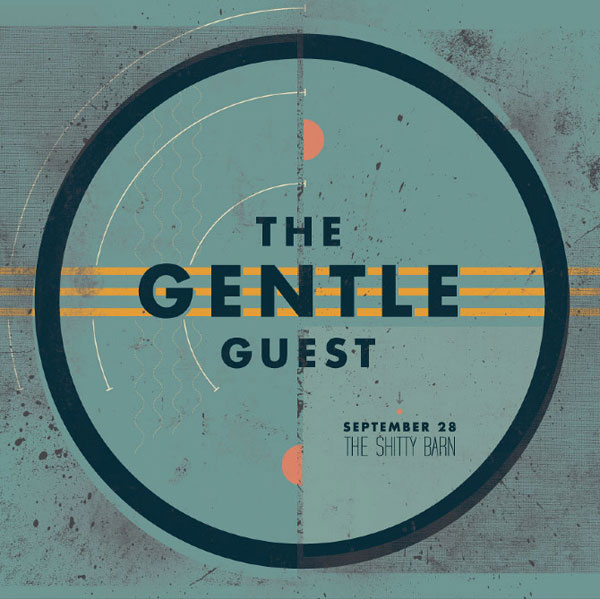
    The Gentle Guest - Erin Fuller Interview

    How do you approach a new project? What’s your creative process like?

    Depends on the project, but typically, I like to get the low down, do some initial research and then marinate for a while. I’ll pull any relevant samples from my Tumblr archive and seek out new sources of inspiration that are more relevant to the project. Then. Type. Ohhh beautiful type….(I normally don’t disclose this information to the general public but seeing that this is a design-centric site, fairly certain I’m not alone when I proclaim my serious lust of letterforms). Ok. So. Where were we? Yes. The best part, type. So. I try on a few typefaces/styles to see what fits the bill for the particular project. Then it starts to grow from there.

    I’ve been thinking A LOT about process in the past few years (particularly how the design process parallels/crosses over with creating music) but that’s gonna eat up at least 30 minutes…So, next time your in Madison, lets get a drink and discuss this topic properly.

    Communist Daughter - Erin Fuller Interview

    You work in numerous fields, from web, to print, to branding, to packaging. If, in a hypothetical universe that, for the sake of your career, we’ll hope doesn’t exist, you could only work in one of these fields, which would it be, and why?

    PRINT. FOREVS.

    The boundaries. Its tactile qualities. The nuances and artifacts exposed in the process. The smell of fresh ink….

    You have a marvellous typography-centric retro style, with many geometric elements – Where do you get inspiration?

    I pull a lot of my type-driven inspiration from vintage packaging, print ads and ephemera. If the internet didn’t exist, I’d be living in amongst a pile of ticket stubs, mid-century packaging, hand painted signs and postcards picked up from antique stores. Lucky for me there’s a healthy online community for such addictions so that’s where I go to source out points of inspiration. About 2 years ago (pre-Pinterest explosion) I started a Tumblr (mentioned above) as a place to store all my inspiration. It’s been, and continues to be, a great tool when I need a jump start or reference material.

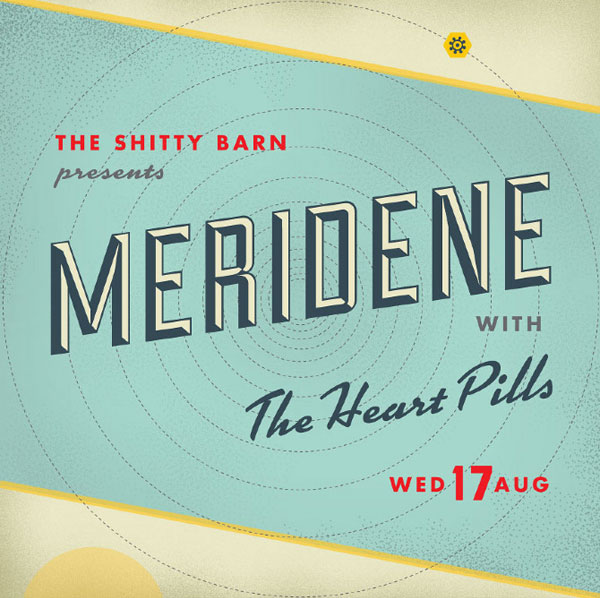
    Meridene - Erin Fuller Interview

    If, in some Freaky Friday-like situation, you could live the life of another designer, illustrator or creative, for a day, who would it be, and why?

    Honestly, I don’t know. Myself 10 years ago? I’d def. have a few words of advice for her like, “Have more confidence in your work,” and “trust your instincts,”…. alas. Did I just dodge that question??

    Ok, ok. If I could live another life and got to choose, I’d for sure skew music. Bob Boilen‘s got a pretty kick ass job…. Patti Smith? David Byrne? It’d be pretty kick ass to be Sharon Van Etten, Annie Clark or Leslie Feist at this point in their careers.

    What design tools could you not live without?

    ADOBE ILLUSTRATOR (and Photoshop), my Mac, a large monitor, reasonable computer speakers or headphones, music, volume control, the internet…

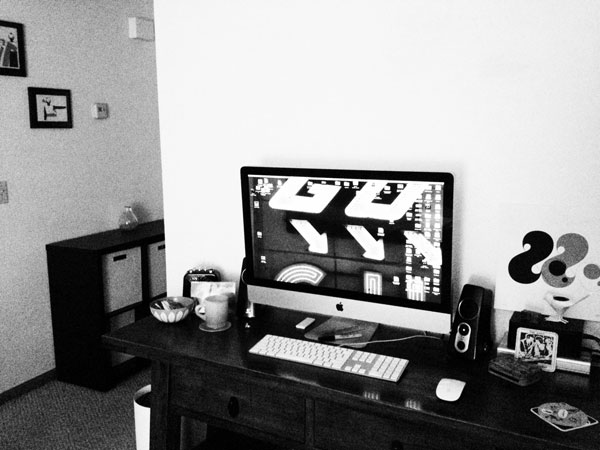
    Erin Fuller Workspace Interview

    And finally, what tips would you give to anybody who is looking to get started in design?

    Never stop learning. (And to borrow from above) Have confidence in your work. Trust your instincts. Be earnest. Don’t use Papyrus. Ever.
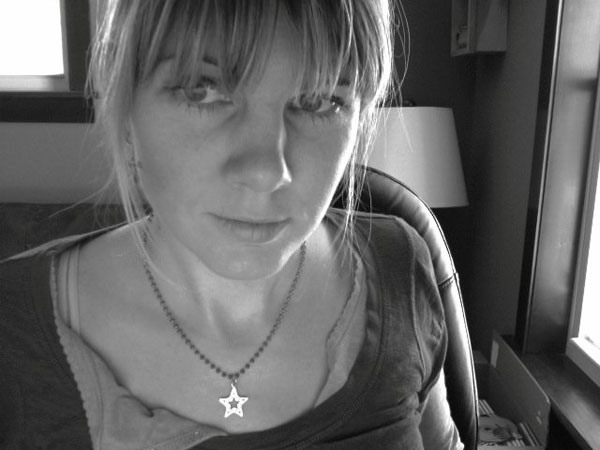
    Thanks Erin!

    Many thanks to Erin for taking some time to talk to One Minute With. I loved having the chance to interview her, and hopefully you enjoyed reading it!

    Why not check out Erin’s site, and follow her on Dribbble and Twitter?

    Related Posts:

  3. One Minute With… Kern and Burn

    Leave a Comment

    Kern and Burn Icons

    Hey Jess & Tim, thanks for taking time to chat with One Minute With. Tell us a little bit about yourselves and your work.
    We both recently graduated from MICA (Maryland Institute College of Art) from the Graphic Design MFA program.

    Jess: My background is in interior architecture. I decided to make the switch to graphic design when I was realized I loved to spend more time branding projects then drawing architectural details. I think I made the right decision :) I tend to bring a lot of the structured thinking, planning, organizing, emailing etc. to the team (probably a nod to my architecture background) and why I’m the most definitely the “Kern.”

    Tim: I’ve always made things and hopefully always will. I received a fine arts degree in undergrad and then ran a small design firm and gallery in Lancaster, PA with two partners called The Infantree. I left there to come to graduate school, and I’m really proud of how the partners have grown the business since my departure. I like to think about design as my way of providing opportunities for others. I like drawing, and getting things done while others are sleeping. I guess I’m the “Burn.”

    Walk us through a typical day in the lives of Tim Hoover and Jessica Karle Heltzel.

    We’re currently working on the Kern and Burn book while simultaneously job-hunting, running The People’s Pennant, and freelancing — just because we graduated doesn’t mean the work stopped! There’s probably no typical day for us. Grad school (and life shortly after) is probably the craziest, lack-of-routine lifestyle you can get. Our norm is us hustling to get a million things done each day while throwing in a slice of pizza and a beer here and there.

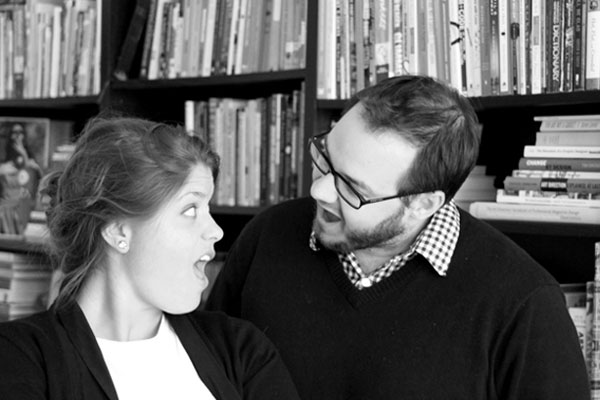
    Jessica Karle Heltzel and Tim Hoover of Kern and Burn

    Jess and Tim. I’m pretty sure that Tim’s the one on the right, but don’t quote me on that.

    With Kern & Burn, you set yourself the challenge of 100 articles on design entrepreneurship, in 100 days. Whilst you obviously completed this impressive feat, was it harder or easier than you had envisaged it to be? If you had to do it all over again, how would you do it differently?

    It was SO much harder! When we first started the blog it was more of an internal document for us, just a way to be disciplined and post all of our research. When it started to pick up an audience we found our posts going from 200 words to 800+ words a day. We love that people were reading everyday but that just made us want to make each post better than the previous one — which meant more writing, better editing, and more interviews. It took a solid 2-3 hours a day to do each post, which on top of the rest of our work was kind of crazy. But the success of the 100 days allowed us to Kickstart the book and for that we are grateful. It made the hard work of keeping up the blog all worth it.

    We timed the 100th day to land on our final exhibition opening. We were trying to write posts and install a grid of 100 images on no sleep. That was craziness. Looking back we’d probably build in a few days of padding!

    We’re excited to get the blog up and running again—we have some new interviews to share that we’re excited about.

    Kern and Burn is your thesis project for your Graphic Design MFAs in MICA. In an industry that changes so rapidly, how important do you think a formal education in design is?

    Jess: Because I switched fields I think getting a Masters degree has been very important to the path that I’m going to take next. I’m going to steal a bit of what we wrote about on Day 45 where we asked ourselves this same question. Here’s what we said:

    Getting a Masters degree is inarguably beneficial for a number of reasons. You get a chance to step back from your career and take a risk, a financial one of course, but also one that asks you to redefine yourself. You are given time to discover what you love to do, identify your strengths and weaknesses, and freedom to fail. There are also the practical benefits.

    With graduate school comes a group of talented peers and faculty, both of which continually push you toward improvement. You connect with mentors daily and are exposed to a network of creatives, and all-around smart people, who are there for you to use in the best way possible—to learn from and hopefully teach some things to in return. Ultimately, you emerge (we hope) as a more well-rounded designer and person.

    That being said, formal education is by no means a requirement to be successful in this industry. There are plenty of opportunities for self-motivated people to learn on their own outside of school walls. Online platforms like General Assembly and Codeacademy offer a range of great courses to learn from. Also, just starting side-projects has taught me so much about what it means to run a business and what it takes to work collaboratively.

    Tim: A talented community is essential, but I believe you can find that outside of a formal education. For me, without a formal education, I may never have realized what I love doing, or even known that this type of work existed. One of our goals with Kern and Burn was to extend the types of conversations we were having with our peers at MICA to an audience that may not have the same privilege. I am very grateful for the opportunity I’ve had. I’m less grateful for the debt, but it definitely keeps me hungry and working hard. I think its important to be uncomfortable—and my debt definitely makes me uncomfortable :)

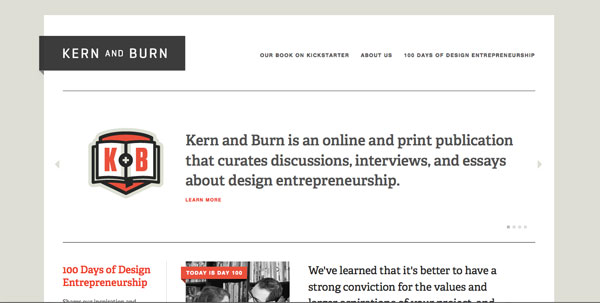
    Kern and Burn

    In 100 days of blogging, you must have heard dozens of designers’ stories and insights. What do you think the most valuable lesson you learnt was, and whose story did you find the most inspirational?

    Jess: That’s a tough one! Here are just a few of the lessons that we’ve heard over and over again:

    There are no rules.
    Everyone is making it up as they go.
    You can fail.
    You can create opportunities for others.
    You can learn as you go.
    You can do what you love.

    Tim: You can design your own career. I’ve always felt this way deep down, but its encouraging to hear the stories of real people who made it up as they went. The internet has really changed our profession and we can create our own momentum.

    Tad Carpenter quoted one of his mentors Gordon MacKenzie, and told us, “The only way to be original is by knowing yourself.” It’s tough to be ourselves when it may look like the industry is rewarding similar styles, perspectives, or experiences. But I completely agree with Gordon, the easiest and best way to differentiate ourselves is to be ourselves. Jess and I tried to show diverse perspectives on Kern and Burn.

    You’re currently working on the Kickstarter-funded Kern & Burn book, as well as having co-founded The People’s Pennant. What is it about real, tangible products that you so evidently love? Do you think it’s important to keep alive these traditions of yesteryear, rather than have everything be digitalised these days?

    Stepping back from the computer to make something real — something you can touch and smell — proves to be harder and harder these days as we’re so used to staring at pixels all day. It’s just fun to get your hands dirty. I love doing press-checks to watch the ink disperse over the rolls and I love watching the pennants come off the drying rack. I think it’s pretty satisfying to hold a finished product in your hand after months of it only existing on screen. I can’t wait for that to happen with the Kern and Burn book!
    It’s important if only because it forces you to think about design differently. You can’t do the same things in print that you can do on the web and ink on felt is different than ink on paper. Designing tangible objects is a welcome challenge.

    Tim: It’s hard to hold seven books at a time then browse seven tabs in our browser. Multi-tasking is way over-rated.

    If, in some Freaky Friday-like situation, you could live the lives of another design duo for a day, who would it be, and why?

    We’ve had the privilege of watching Abbott Miller and Ellen Lupton do amazing things, and balance their lifestyles, and family. We have a lot of respect for them. It’s hard to say who would be who, but we’d be happy being as talented and as wonderful as either of them. They are however married. Jess is married. Tim is not.

    Maybe the dudes from Mythbusters — but Tim’s beard is way better than Jess’.

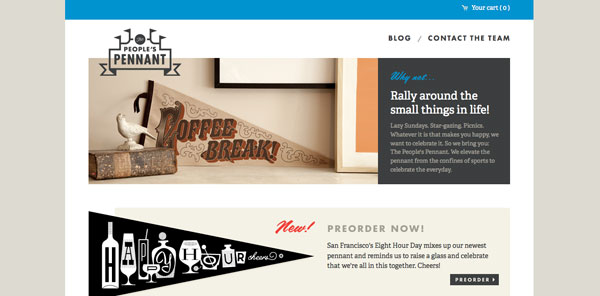
    The People's Pennant

    What design tools could you not live without?

    Jess: PaperMate Sharpwriter #2 Pencils. Hands-down the best pencils. I love them so much that I wrote a piece about them that you can read here.

    Other than that pretty much the standard: Adobe Creative Suite (although I kind of hate Photoshop …but Tim disagrees), Field Notes notebooks (unruled), and a pica ruler.

    Tim: Talented peers and my thinking couch.

    And finally, what tips would you give to anybody who is looking to get started in design?

    Jess: Do side projects, things that you really love. When you’re working on projects that you love it brings out the best, most uninhibited design. You don’t have to answer to anyone but yourself!

    Tim: Ask questions, but don’t listen to the answers. Be curious. Be serious about learning technical skills, but be playful in your approach. Work towards a balance of thinking and making—make to think, and think to make—think with your hands, make with your mind.

    Thanks Jess & Tim!

    Many thanks to Jess & Tim for taking some time out of their busy schedules to talk to One Minute With. I really enjoyed chatting to them, and hopefully you enjoyed reading it!

    Why not check out Kern and Burn, and follow Jess & Tim on Twitter. Similarly, follow Jess & Tim on Dribbble.

    Related Posts:

  4. One Minute With… James T. Edmondson

    2 Comments

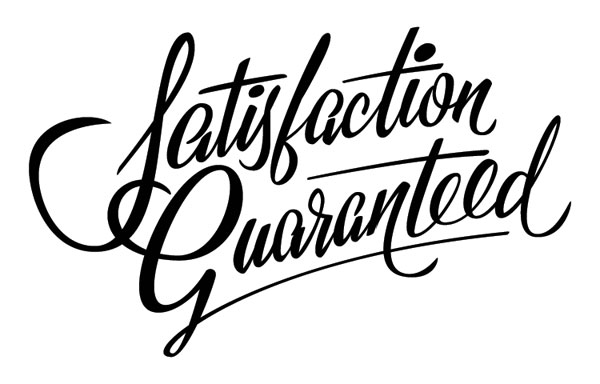
    Satisfaction Guaranteed - James T Edmondson

    Hi James, thanks for taking time to chat with One Minute With. Tell us a little bit about yourself and your work.

    No no no no no Conor. Thank YOU.

    I’m almost a graduate of California College of the Arts, living in San Francisco, and I’m the youngest of six boys. I design typefaces and work on lettering projects. I’m a virgo.

    Walk us through a typical day in the life of James T. Edmondson?

    This summer I’m not doing any summer school, or working for anyone. Lately, I’ve been interning with Erik Marinovich, but Erik encourages me to spend a lot of time working on my own projects than a normal intern situation would allow. I’m really lucky at the moment to not have too many client projects on my plate, so I can focus on all these typefaces I have going.

    A typical day probably consists of type design, lettering, client work, and some personal things too.

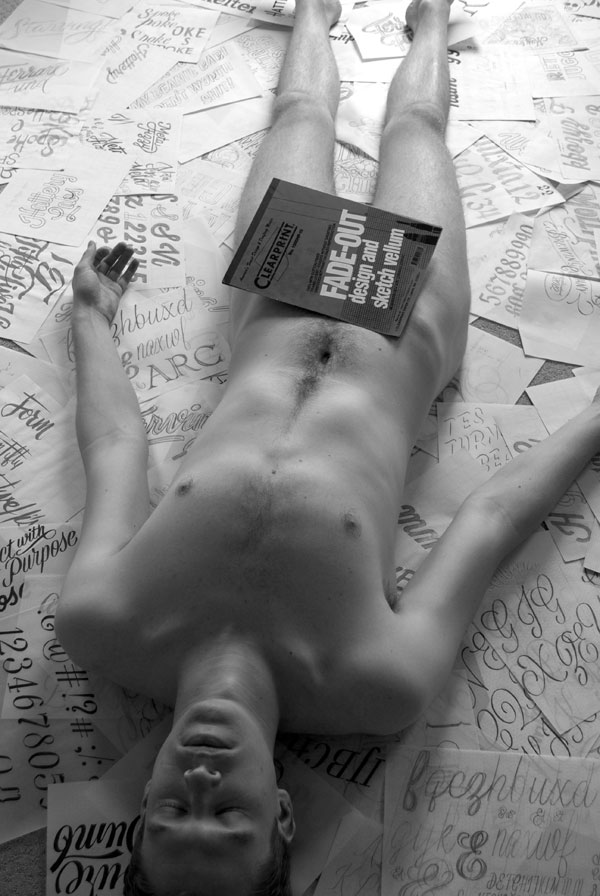
    James T Edmondson gets all naked.

    How did you get into design?

    This video explains that:

    How do you approach a new project? What’s your creative process like?

    Of course it varies all the time, and it never goes the way I think it will. A simplified way of looking at it is, doodles, research, sketches, refinement. It’s never as linear as that. My typography I teacher Angie Wang (whom I adore) always told us design is not linear. That’s one thing I love about this job.

    You’ve created some incredible fonts, namely Duke, Wisdom Script and Lavenderia, all of which you distribute on Lost Type. Is it a concern for typographers, especially when you’re allowing anybody to obtain the font for free, that your fonts may become overused, and eventually go the way of other overused fonts like Gotham and Bello (ie. still awesome fonts, but lost their edge due to oversaturation)?

    Thank you! I suppose that yes, it is a concern, but it doesn’t really concern me. Does that makes sense? I’m just trying to put out a higher and higher quality product with each release, and I don’t think too much about how the font will be used and abused. One reason for that is I have no way of predicting what’s going to happen, and if I focus on quality, everything will work out in the end. When my fonts are criticized, I try not to beat myself up about it. Wisdom Script was the first font I released—of course it ain’t perfect, but I’m getting better all the time. Gotham and Bello are great because they are nearly flawless designs. H&FJ and Underware sure as hell aren’t beating themselves up for creating something so useful and beautiful that thousands of designers adopt it.

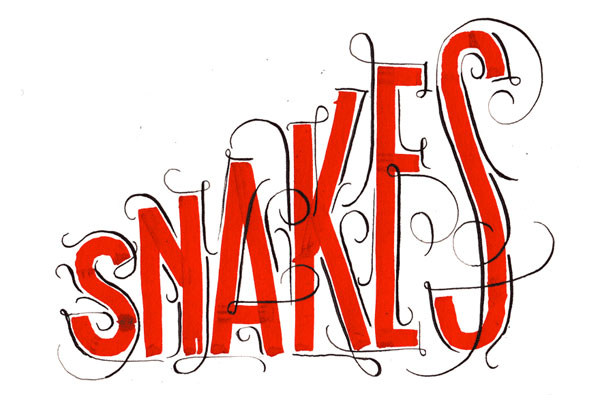
    Snakes - James T Edmondson

    You run a local “Lettering Club”, in which folk get together and draw letters. Have you noticed a resurgence of lettering and calligraphy in recent years? What is it about lettering and typography that appeals to you so much?

    Lettering Club might be defunct at this point, but I can say there is a growing number of kids in design school interested in lettering right now. Designers are once again aware of the shortcomings of fonts, and drawing is always going to be fun. Lettering Club was just a way of organizing a class that I wish my school offered.

    In school I was looking for a way of approaching a project that worked every time. Graphic Design I and II were really tough, because I’d do well on one thing, then totally eat shit on something the next week. It was an emotional roller coaster, and like everyone else in art school, I was stressed out. Once I started approaching projects the way a lettering artist would, everything worked out way better. I heard God saying, “Do more lettering you dummy.”

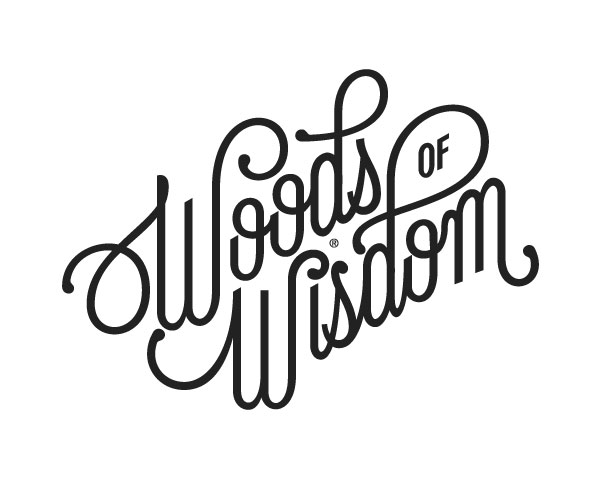
    Woods of Wisdom - James T Edmondson

    If, in some Freaky Friday-like situation, you could live the life of another designer, illustrator or creative, for a day, who would it be, and why?

    Jimmy Buffett. I’m such a parrot head.

    What design tools could you not live without?

    Moleskine notebooks. Faber Castell pens (all the widths, and the soft brush is my favorite). Clearprint design vellum. Soft lead. Scanner. KY. FontLab.

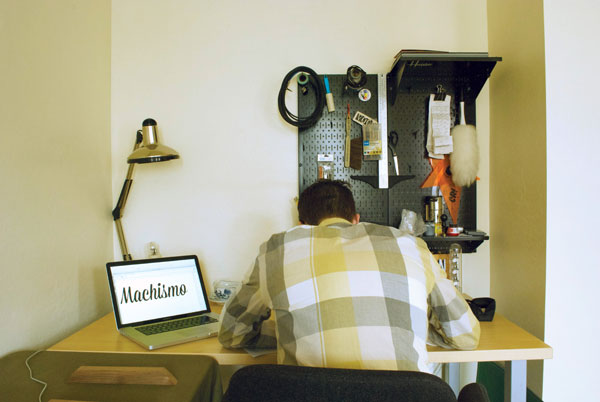
    The desk of James T Edmondson

    And finally, what tips would you give to anybody who is looking to get started in design or typography?

    Draw letters everyday. Merge lettering with your other interests. Experiment with various writing tools. Wear nothing but jorts. Study classic typefaces. Look at calligraphy books, old lettering books, etc. Learn the correct way of building letterforms, so you know how to break the rules.

    Make friends in the community. That has been my goal for the past year, and it has made things way more enjoyable. We are all truly lucky to be in this field with such encouraging and talented people to look up to.

    Practice if you love it. If you don’t love it, you probably won’t want to practice, and that’s fine! Just find what you love to practice.

    Thanks James!

    Thanks a million to James for sharing his thoughts! I really enjoyed talking to him, and found his answers really interesting!

    Why not check out James’s site, and follow him on Dribbble and Twitter?

    Related Posts:

  5. One Minute With… Simon Walker

    Leave a Comment

    Quality Seafood - Simon Walker

    Hi Simon, thanks for taking time to chat with One Minute With. Tell us a little bit about yourself and your work.

    It’s a pleasure! I’m a graphic designer currently working in the design department at GSD&M Advertising in Austin, Texas. I do a lot of freelance work in my free-time, which makes up most of what you see of my work online. I have a wife, one step-daughter, and a menagerie of animals in my apartment. I’ve been at GSD&M for 10 years now, but have also worked in San Antonio and Dallas.

    Walk us through a typical day in the life of Simon Walker.

    It varies, but in a nutshell: walk the dog, run, shower, tea, oatmeal, coffee, email, work, lunch, tea, work, dinner, TCM, coffee, walk the dog, bed. I’m English, so nearly every event in my life is punctuated with a hot drink.

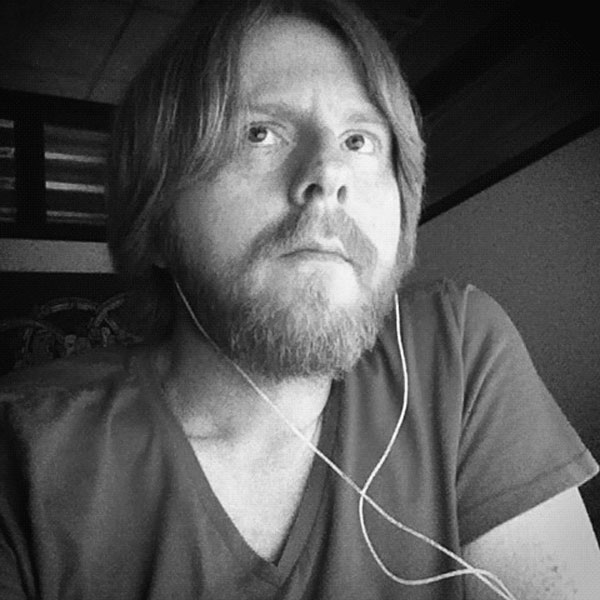
    Simon Walker

    How did you get into design? Was there a defining point in your career, and if so, how did it shape you as a designer?

    I drew constantly as a kid, but had always been interested in letters, and would find a way to put type into a lot of my artwork. In the 80s, hip hop and breakdance culture came to England, and I developed an obsession with graffiti that I feel to this day informs what I do as a type designer. I gained more of an interest in English and science in my late teens, but I always sketched letterforms in and around my notes. An art teacher in college noticed my tendency to work type into my drawings and told me I was making graphic design, which was something I’d never heard of before. But it was a revelation to me because I was feeling a little directionless at the time, and he was telling me I could make money doing something I was already halfway decent at. He gave me a brochure to the University of North Texas and within a year I was enrolled.

    How do you approach a new project? What’s your creative process like?

    I hate to say it, but I don’t think I have a very structured or useful process at all. Generally speaking I put on music and sit and stare at my blank white screen for as long as it takes (feels like hours), slowly forming a sort of amorphous version of what I want to do in my mind before making the mental leap necessary to start clicking out some vectors. It’s a matter of slowly coming to terms with the idea of a logo, rather than what it should look like. I might do some very rough sketches within that time, depending on the style of lettering I’m doing, but I’m really a lot more comfortable with my mouse than with a pencil. Probably not a good thing.

    Hega - Simon Walker

    Your lettering is most certainly your strong point – Would you ever consider creating a font? How different are the worlds of lettering and font creation, do you feel?

    I have one official font in the works, and the beginnings of dozens of others. It’s hard to say how it happened for other designers, but for me, my love of custom type flowed naturally into a desire to try my hand at font design. I’d be working on a logo with custom type and somebody would say “You should turn that into a font”. Other times I’d end up trying the same custom type style for multiple projects, and end up with nearly an entire alphabet of letters when I was finished. At first I was creating basic type styles – geometrically consistent sans serifs, mainly – but I inevitably ended up making serif fonts. It’s an exhilarating thing to jump into when you’ve never done it before, because you feel kind of foolish, like this is something only other people do, and so how could you ever truly make a legitimate go of it? But I found that I really started to learn quickly just by trying and failing and trying and failing until, at last, I actually had some success. I still have a lot to learn, but it’s a really rewarding process – one that I find just as cathartic as working on a good logo.

    The Electric Company - Simon Walker

    As well as all them delightful words you draw, you also write the occasional article, and maintain a strong presence on both Dribbble and Twitter – How important is it, in your opinion, to be involved in and contribute back to the community that has fostered you?

    I think it’s incredibly important – I owe everything to this community, and I take that pretty seriously. I’m actually kind of a shy person, and horribly afraid of public speaking of any kind, so it’s not likely you’ll see me doing any talks soon. But I do spend dozens of hours a week talking to people online, answering questions and emails and sharing resources. It’s humbling to know that there are so many people out there admiring and studying my work, so I think I have a responsibility to be as open and generous with those people as possible.

    Ausin East Ciders - Simon Walker

    If, in some Freaky Friday-like situation, you could live the life of another designer, illustrator or creative, for a day, who would it be, and why?

    Woody Allen. Granted, he’s kind of a miserable old guy with terrible fashion sense and a tendency to be inappropriately Freudian, but I love the way his mind works and would love to have access to that wit just for a day. Plus, he gets to make movies all the time and hang out with very cool people who all think he’s the cats PJ’s no matter what he does or says.

    What design tools could you not live without?

    Just my mouse. People try to convince me daily to give it up for the Wacom pad, but I’ve tried it and it does nothing for me. I’m sure there’ll be a cure for carpal tunnel by the time it becomes a problem for me.

    Hunter Sprague - Simon Walker

    And finally, what tips would you give to anybody who is looking to get started in design?

    Go to school, for sure. I realize there are people who’ve made it without going to school for design, but there are specific circumstances behind why those people were able to make it in design that I wouldn’t gamble on. Also, be patient. Most of the truly great designers in the world took years to get where they’re at. I’ve been doing this for twelve years and I’m still trying to get there myself.

    Thanks Simon!

    Many thanks to Simon for talking to us. I really enjoyed his answers, and hopefully you did too!

    Why not check out Simon’s site, and follow him on Dribbble and Twitter?

    Related Posts:

  6. One Minute With… Evan Huwa

    Leave a Comment

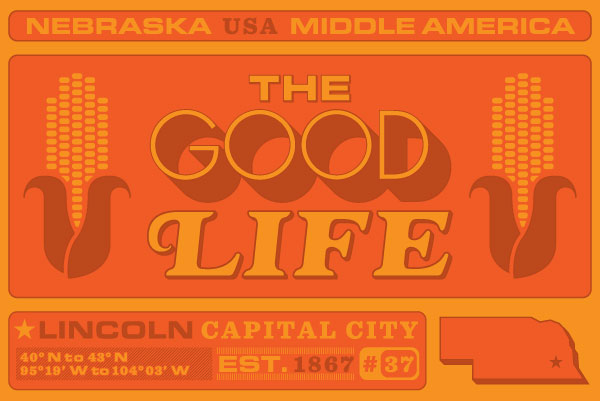
    Been Everywhere Project - "The Good Life" (Nebraska) - Evan Huwa

    Hi Evan, thanks for taking time to chat with One Minute With. Tell us a little bit about yourself and your work.

    Hey Conor, it’s a pleasure being here. It really is an honor to be alongside such great talent. So thank you for having me. Anyway, I grew up on a dairy farm in Northeastern Colorado, and spent countless hours doing random farm stuff: baling hay, shoveling you-know-what, driving trucks, feeding cows, etc. I guess I realized it wasn’t for me. That being said, I still love going home to spend time on the farm. I draw a lot of inspiration from vintage farm type, and logos. There is something so raw and honest about that work that speaks to me. I guess I would say that my work varies quite a bit, but you can find roots that tie it to the above inspiration. I love working with bold typography, fun color, and quirky illustration.

    Walk us through a typical day in the life of Evan Huwa.

    Right now my life is a little crazy. I am currently working at a screen print shop in Fort Collins, Colorado for my standard 9-5. It’s a great job with great people. We mainly handle merchandise for the big Colorado breweries, such as: New Belgium, Odell Brewing Co., Oskar Blues Brewery, Fort Collins Brewery, Left Hand Brewing Co., and a handful of other local breweries. Aside from that I have been trying to grow my freelance business as well. I have been waking up at 5:30-6:00am and work right up until I have to go to my day job at 9:00am. Then after I get off work at 5:00pm I come home and sit in front of my computer until it’s time for bed. So all that to say, I am at a transitional point in my life where I am days away from going freelance. I know life will remain crazy when I enter the world of freelance, but I am definitely ready for a change of pace.

    Evan Huwa

    How did you get into design? Was there a defining point in your career, and if so, how did it shape you as a designer?

    I grew up in a single stoplight town of 2,000 people. My graduating class had 39 people in it. I always loved drawing, but the only exposure I had to graphic design came in college. Funny enough I started studying architecture because I didn’t even know what graphic design was. I quickly changed my major and the rest was history. I absolutely fell in love with design from my intro class. I guess my defining point would be from something one of my college professors said. He handed around a copy of Communication Arts, and said “If this doesn’t get you excited you should probably change majors right now.” I was hooked. I went out and bought a subscription that day. I’ve know this is what I was supposed to do ever since that day.

    How do you approach a new project? What’s your creative process like?

    You know, every job is a little different, but my process remains relatively the same for each project. I start by asking my client a few questions such as: what’s your target audience, who are your competitors, etc. You know, gain an understanding of who I’m working with. From there I do research. I then make a mood board, which is a simple sampling of things like type, colors, patterns, basically anything that represents the project I’m working on. I show that to my client for approval, then start sketching. From that point I move to the computer to refine until I end with something that both my clients and I love.

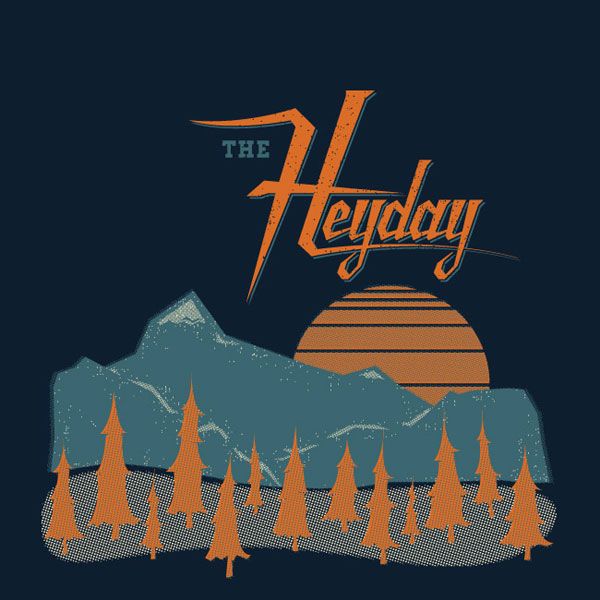
    The Heyday - Evan Huwa

    Your work has a crazy awesome retro feel to it, with perhaps something of a Midwest tang. Where do you get inspiration?

    I touched on this above, but yeah, I would definitely say that my work has a Midwest feel to it. I darn near grew up in Nebraska and spent most of my years on or around old farm equipment. One thing I remember loving was this stash of old trucker hats my dad had piled up in his work closet. Really cool old seed corn hats and semen hats. Yes, you did read that correctly. In the dairy business you actually buy semen to artificially inseminate cows. Yeah really weird I know, but they had beautiful type. Seriously, the closet was full of stuff that Aaron Draplin would love. My mom collected old milk bottles, and butter churns that all had beautiful custom script lettering. That stuff seriously still makes me happy every time I’m home. Love that stuff.

    W -  Evan Huwa

    Many people will know you from your font Ranger, which you distribute over at Lost Type. How different was this font creation process to your normal design workflow? What new challenges did it bring?

    Ranger was an incredible process. Riley Cran and I chatted about what I had in mind for the font, and from that point I started sketching. Then I refined and refined until I was happy. I am by no means a type expert, but I really enjoy doing custom type. It makes for something so personal and unique. That’s what I was going for here. I wanted something that reminded me of the farm, and Colorado in general. Biggest challenge was working in FontLab. I know I could have done a better job with the kerning, but that was the first time I ever used the program. It was a huge learning curve. I am so thankful for the opportunity that Riley gave me by allowing me to have Ranger on his site. I hands-down wouldn’t be where I am today without it, or at least have the confidence that I have now from seeing it used across many mediums. Really cool experience.

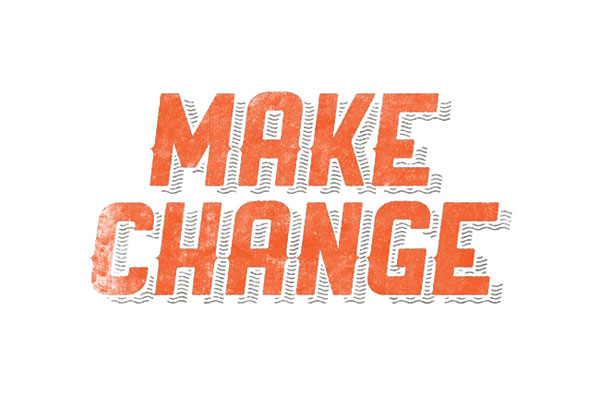
    Make Change - Ranger - Evan Huwa

    If, in some Freaky Friday-like situation, you could live the life of another designer, illustrator or creative, for a day, who would it be, and why?

    This is a really tough question. I guess I would have to go with one of my contemporaries, like Aaron Draplin. The guy just radiates cool! His design knowledge is incredible. His experience working with big clients would be very insightful at this point in my career. His storytelling ability would be a great skill set to have too. The list could go on and on, but it would be a pretty cool day to live in the life of Draplin.

    What design tools could you not live without?

    I would be screwed without Illustrator. Hands-down, that program is key to my success. Other than that I love my pencil and notepad.

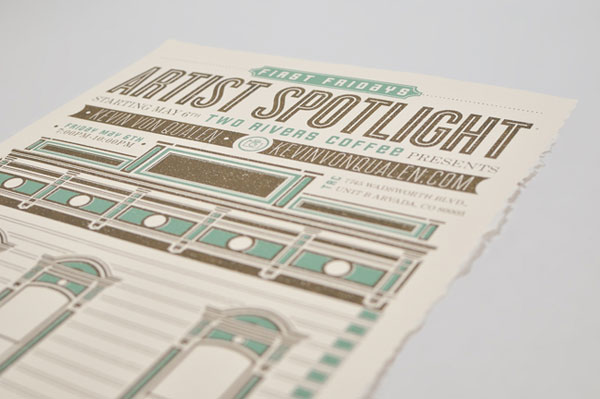
    Two Rivers - Evan Huwa

    And finally, what tips would you give to anybody who is looking to get started in design?

    I would say work hard. I’d follow my professors lead and show them a design annual and if they didn’t get much from it, I would say try something else. It’s been really sad to see only a handful of my college classmates stick with design. I guess if I think back to those classes, I’m not that surprised, because only a handful of students actually cared. Hard work has carried me thus far, and I’m not gonna stop here. So keep your nose to the grindstone and you’ll be fine.

    Thanks Evan!

    Many thanks to Evan for taking some time to talk to One Minute With. I really enjoyed interviewing him, and hopefully you enjoyed reading it!

    Why not check out Evan’s site, and follow him on Dribbble and Twitter?

    Related Posts:

  7. One Minute With… Ryan Hamrick

    Leave a Comment

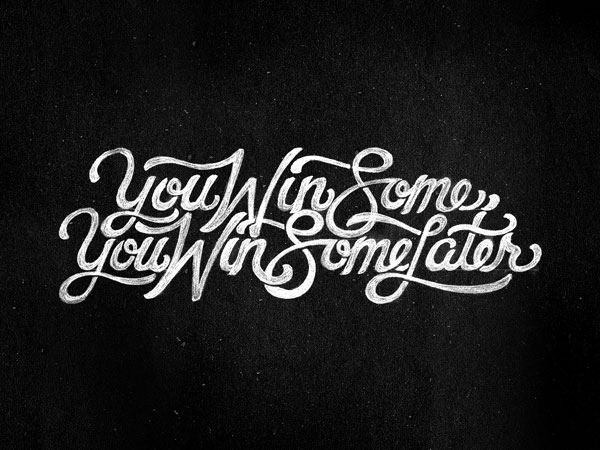
    You Win Some, You Win Some Later - Ryan Hamrick

    Hey Ryan, thanks for taking time to chat with One Minute With. Tell us a little bit about yourself and your work.

    Hey, thanks for considering me interesting enough to interview!

    My name’s Ryan Hamrick, and I’m a designer, letterer, illustrator and writer based in Pittsburgh, Pennsylvania. I have a beautiful wife, two amazing kids and a brand new Shiba Inu puppy, who, if you follow me on Instagram or Twitter, you know about as well as I do.

    My work has taken me on a kind of interesting path, actually. Throughout my career, there’s always been a lot of branding work in my mix, but early on, UI projects were typically what I spent most of my time with. At some point though, I really fell in love with custom type and lettering, and started spending all my free time with it. My first few personal experiments with it, like my Pittsburgh Sketch for instance, went over fairly well, and kind of kick-started me on a path to actually making a little money doing it. Which is awesome yet a bit inconceivable still to me.

    With UI design, you’re designing what is ultimately a product, which seems a little easier to allocate value to, but with lettering, I sometimes still catch myself thinking like, “Wait, people will actually pay me to do this stuff?!” It’s pretty incredible.

    Walk us through a typical day in the life of Ryan Hamrick.

    Oh man, okay. So, I typically get up at 4:30 every morning, throw some clothes on and stumble downstairs to flip the switch on the coffee maker.

    I know a lot of designers out there stay up all night burning the 3am oil, and I used to do the same thing. At some point, though, it was like a switch was flipped, and suddenly, I couldn’t stay up as late anymore, nor could I make myself sleep in. Like ever. So I decided to stop fighting it and start going to bed earlier with my wife (which is totally what I should have been doing all along, because guys, there’s an unfathomable amount of value there), and getting up earlier to get that work time in. When you have kids, quiet, alone time in the house is precious, so sometimes that means out-earlying them to get it.

    Anyway, back on track, I get a couple hours of work in until it’s time to wake my wife up with coffee and breakfast (do this, your significant other is so worth it). We chat for a bit, and then it’s time for everyone to get ready. She gets herself to work, I get the kids off to school/preschool and then it’s work time again. The pup will pretty much sleep in his little bed in my office for the majority of the morning, which is awesome. I try to bust ass until the kids get home or need picked up in the afternoon, because after that, counting on getting quality work done is like expecting a storm cloud to produce whiskey.

    Soon, it’s time for dinner, picking up, and catching up with my wife and talking about our days. Hers is always more interesting with talk of other adults and such, but mine is always more entertaining.

    Ryan Hamrick

    How did you get into design? Was there a defining point in your career, and if so, how did it shape you as a designer?

    I’ve always been “designing” in one way or another. A friend and I were going to be comic book artists in grade school until we were certain our skateboarding careers were going to take off and put that on hold. Probably for the best, since those comics were so horrible.

    From the age of about 16, I started playing with Photoshop when I could and really just messing around trying to teach myself the software. I’d do a logo here or there for friends and family, but nothing too serious. I think I always thought it would be really cool to use those programs for a living, but that never seemed very feasible. Out of high school, I went to a local college to study graphic design, but dropped out half-way through my second semester to work more — at Cracker Barrel. Yeah, I don’t know.

    I slowly progressed from job to job and at one point I was even managing an entire eight-store district of Sprint stores. I’d design print collateral to keep in my stores, a few logos here and there, but didn’t really have a ton of time for anything else.

    If I had to pinpoint one “defining moment” in my career, it would only have been a little over a year ago. I was working full time as Editor in Chief of knowyourcell.com as it were, and my wife had just accepted an amazing new position at the company she’s with now. Things had positioned themselves just perfectly, and we were in a good enough place financially for me to take the leap and begin designing full time as a freelancer.

    The extra time and effort I’ve been able to put in since then has allowed me to learn so incredibly much. If I hadn’t had the time to force myself to learn the things I’ve learned or meet the people I’ve met, I’d still be designing shitty logos on the side.

    How do you approach a new project? What’s your creative process like?

    Well, my creative process varies quite a bit depending on the project. Plus, I’m constantly learning and trying new things. Actually, now that I think about it, I don’t think I’ve approached any of my last five or so projects in the same way.

    With lettering and branding work, there’s a lot of sketching at first, of course. Almost always with pencil, but then lately, I’ve been really trying to force myself into actually stroking things out with some sort of brush pen, which is super new to me. I find that I really get the most out of a project when I completely throw myself out of my comfort zone and try something fun and different.

    With UI projects, I’m not much of a paper & pencil wire-framer. I tend to jump straight into pixel-perfect mockups after I get an idea in my head, just because this amazing software we have to work with these days makes it so easy to modify and iterate quickly.

    I’ve also joked on Twitter before that my creative/iterative process goes a lot like: Hate it. Hate it. Hate it. Hate it. Perfect. Funny, but usually that’s totally the way it goes.

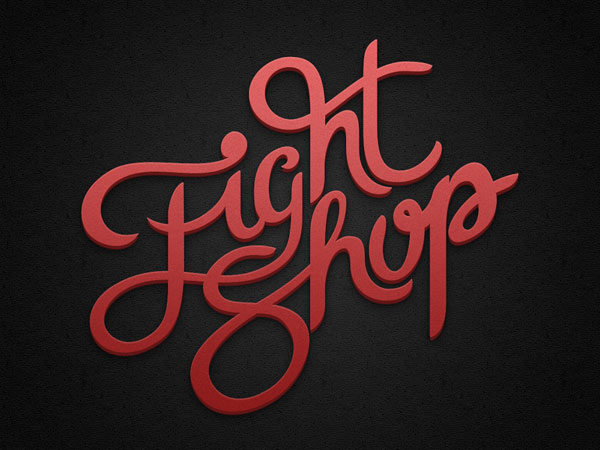
    Fight Shop by Ryan Hamrick

    When you’re not designing awesome stuff, you write about design and your design processes on your blog – How important is it, do you feel, to contribute back to the community which fostered you as a designer?

    I’m not sure how helpful I am to the community yet, but I’d really like to be. When I first started working on my lettering for example, I was pretty shocked at just how little was out there in the way of helpful resources for getting started. I wondered if there was some sort of secret pact among letterers to not share the secrets of the craft with outsiders or something, haha.

    I’m at a spot right now where I feel like I’ve come up with some pretty solid formulas for making these things, but then at the same time, I don’t quite feel like I’m to a level of expertise yet where I should really be telling other people how they should do it, if that makes sense.

    At the end of the day, though, I feel like it is really important to help and share any tips and tricks I’ve found or come up with. I’m not precious about any of these ideas or anything, and if someone else can benefit a bit from my trials and errors, then I just think that’s pretty dope.

    You are, as you put it, a “stay-at-home dadsigner”. How do you balance work and family life?

    That’s awesome that you picked that up, I think I’ve only said that like twice before, lol.

    It’s really easy to do a terrible job separating your work and home lives when…you work from home. If you’re not careful, you can quickly find yourself working all the time, which is a very bad hole to get into.

    I’ve found that having very separate spaces for where I work and where I spend time with my family is extremely helpful in mentally dividing the two. I’m fortunate enough to have room in my place for a studio that I can allow to just be a studio and not have to use it for anything else. So when it’s family time, I’m not in there.

    If at all possible, have a place where you only do work, and stay the hell away from it when it’s time to “punch out” for the day.

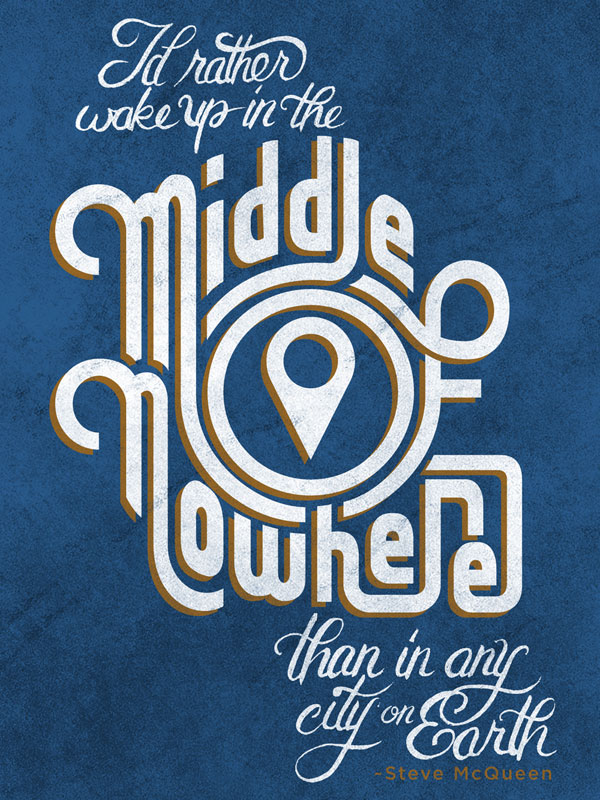
    Middle of Nowhere lettering for OnWander - Ryan Hamrick

    If, in some Freaky Friday-like situation, you could live the life of another designer, illustrator or creative, for a day, who would it be, and why?

    Wow, great question. So many talented people doing such incredible stuff right now.

    As a guy with a family and a full house, I guess the the typical go-to response would be to trade places with one of these kids that are killin’ it out in the Bay Area, busting their asses and working day and night designing stunning products for the biggest names in Silicon Valley.

    But honestly, I don’t think I’d give up even a day with these people I’m lucky enough to call mine. I guess I’ll just take the easy way out and say that it’d be particularly cool to spend a day as one of the many astoundingly talented designers living and working in beautiful Brooklyn. I love New York in general, and if it weren’t for the whole Winter thing it shares with my current climate, it would be at the very top of my list of places I’d love to finally settle into for the long haul.

    What design tools could you not live without?

    Of course, I’d be kidding myself if I didn’t give a ton of credit to the almighty Photoshop and Illustrator. As creative and innovative people, we’re often pretty hard on Adobe for its shortcomings, but dudes, imagine doing the things we do in a program as limited as Paint or something. We’re pretty fortunate to have these tools.

    As far as non-digital stuff goes, a couple of fairly recent additions to the arsenal that are really making things tons of fun are the Dot Grid sketchbooks from Behance’s creativesoutfitter.com, and the amazing Tombow dual brush pens. Awesome for quickly roughing out lettering ideas and practicing my stroke work.

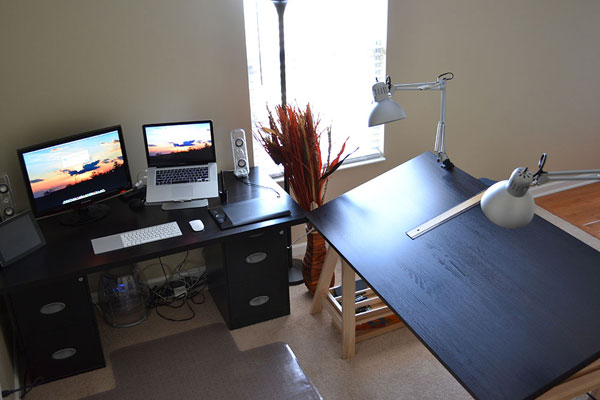
    Ryan Hamrick's workspace

    And finally, what tips would you give to anybody who is looking to get started in design?

    Try everything. I had no idea how to draw letters a year ago (like, for real, at least). In fact, I even wrote on my Tumblr recently about how I used to absolutely despise handwriting in school, lol. But I just decided one day that I wanted to try it, so I did. It took me a while to get comfortable with it, but if I’d never tried, not only would I have missed out on what’s become a real passion in my life, but my branding and other design work would’ve struggled for it.

    The only other thing would be to always keep learning. No matter how established or good you become, you can always still learn something from anyone. Keep an open mind and don’t be a dick to people. If you don’t respect what others bring to the table, the thing you might learn from them is that you’re not as big of a deal as you think you are. :)

    Thanks Ryan!

    Thanks so much to Ryan for giving us an insight into his world! I loved talking to him, and found his answers really interesting!

    Why not check out Ryan’s site, and follow him on Dribbble and Twitter?

    Related Posts:

  8. One Minute With… Dan Gneiding

    1 Comment

    Fingers

    Hi Dan, thanks for taking time to chat with One Minute With. Tell us a little bit about yourself and your work.

    No, no, no… Thank YOU Conor. Its an honor to be amongst such an exceptional group of designers here on OMW, thanks for having me. Well, my name is Dan Gneiding (The G is silent) and I live and work in Philadelphia with my wife and three year old daughter. My full time gig is designing for Urban Outfitters, and I also do a fair amount of freelance design and illustration on the side under the Grayhood banner. And when I’m not doing that, I design typefaces and other various things as part of the Lost Type Co-Op.

    Walk us through a typical day in the life of Dan Gneiding.

    I get up around 7:30, shower, dress, skip coffee and breakfast, and pack my daughter’s lunch for the day including a custom drawn cartoon character on her lunch bag. Then it is off to UO with a quick pit stop to drop off my daughter at nursery school. I roll in at UO around 9ish, do the typical email/job list checks, and then get to work. 12:30 lunch with coworker buddies. The UO Inc offices are a bit like a college campus, complete with a gym (I’ve never used), cafeteria, etc… so we don’t have to roam to far to get some grub. Continue working until 5:00, then split. Pick up my daughter, dinner at home, chill with the wife, then some freelance until bed. Unless its a Friday… On Fridays, my pals come over and drink beer and jam playing crappy punk covers in my basement. As musicians we pretty much suck, but nothing takes care of the work week stress like screaming Misfits lyrics at the top of your lungs. (My wife is very understanding/forgiving/tolerant of the commotion – Love you Babe!!!)

    Dan Gneiding

    How did you get into design? Was there a defining point in your career, and if so, how did it shape you as a designer?

    I was a compulsive doodler, to the extent that my studies in every non-art class were effected. I had a few moments in life that made me think this whole doodling thing might just work out. In 1st grade a bunch of kids gave me their lunch money to draw them pictures of Voltron, after seeing a sketch I tried to pass off as my math homework. I think that was my first official paying job. None of the pre college schools I went to had much in the way of art classes. At 16, I started going to night & weekend art classes at a place called Barnstone Studios. The founder of the school is amazing. He taught color theory, life drawing and foundation design using golden section grids. He opened my eyes to much of what I was missing as an artist and designer, and helped expand my perspective.

    As far a career turning point goes I think it would be the Misfits Ramones pie chart print I made a while back. That was the first self initiated project I ever invested in, produced and sold as a product. The success of that print got the ball rolling for other Grayhood ventures, and gave me a boost in both my confidence and my pocket change.

    How do you approach a new project? What’s your creative process like?

    As soon as I get the project parameters, before doing any research, I like to purge as many ideas as I can onto paper. This helps me clear some of the more obvious ideas out of my mind. Once the ‘off the top of my head’ well runs dry, I will start some more rigorous research/brainstorming. I try to sketch until I can make my self laugh. I figure if I am not having any fun making something why should anyone else be delighted by it?

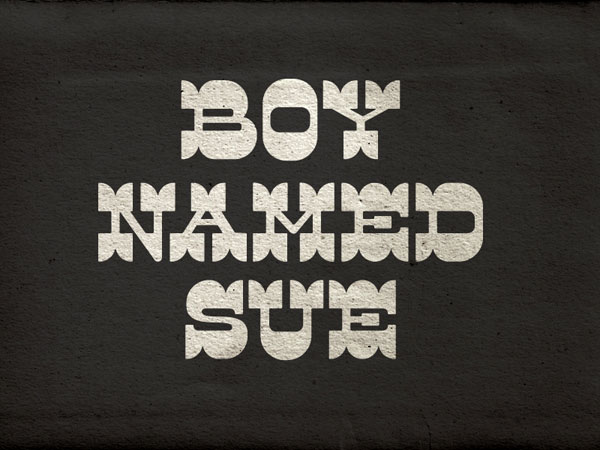
    Boy Named Sue

    A sneak peek of an upcoming typeface from Dan.

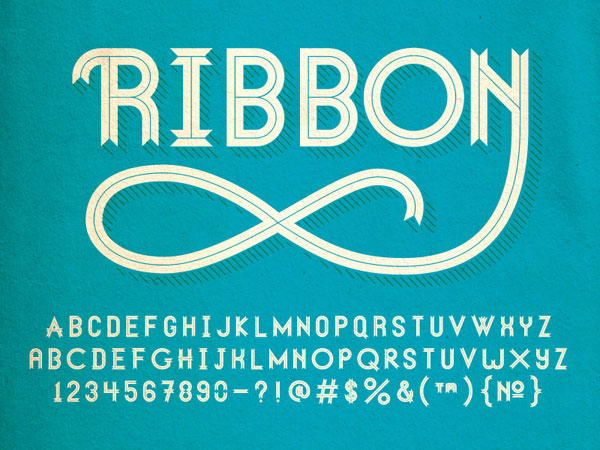
    Whilst a lot of your work is lettering, you also designed the fantastic Ribbon font for Lost Type – How did the process of designing a font compare to the lettering process? What new challenges did it bring?

    Designing a typeface is waaaaaaaay more involved. You can think about it like cooking: both lettering and typeface design use similar ingredients (the alphabet, numbers, punctuation, etc…) but they are about as different as making your friend a sandwich and opening a restaurant chain.

    If you make your friend a sandwich, you probably already have an idea what they will like, if not you can resort to asking them directly. With this information, you can usually trust they they will enjoy what you made for them and not do anything crazy like take the sandwich apart, put the bread on the inside, mayo on the outside, then wear it like a hat. But if you are opening a chain of restaurants, you will likely never meet the person ordering the sand-o. Heck, you probably will not even know the names of most of the employees taking the orders. So even though in the end it still all looks like bread and cheese, the restaurant owner has to deal with this whole other layer of thinking about how other people are going to use these ingredients. You are several steps away from the end use. Personally I would never put maple syrup on tunafish, but someone out there might, so now I have to make a maple/tuna kerning pair.

    Does that makes any sense? It’s pretty late, and I’m hungry.

    Ribbon

    Your style is very much retro-influenced, but with a fun, organic twist. Where do you get inspiration?

    I have been very lucky to be surrounded by extremely talented and entertaining friends, family and co-workers, I draw most of my inspiration from them. Nothing motivates me like a little friendly competition.

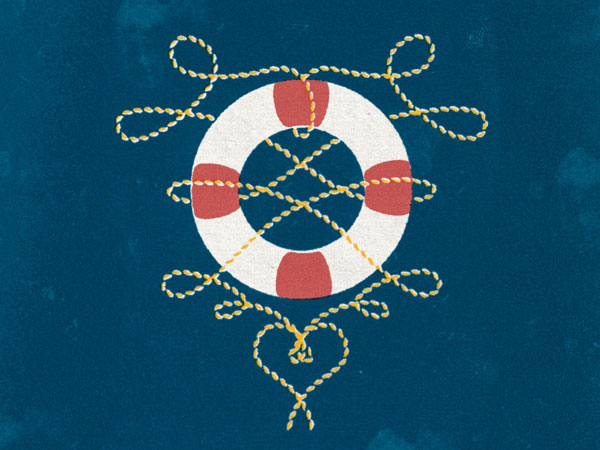
    Life Preserver

    If, in some Freaky Friday-like situation, you could live the life of another designer, illustrator or creative, for a day, who would it be, and why?

    As long as we are playing with the laws of the universe I want to be Johnny Cash, and I’d like it to be on one of the days he stomped out the lights of the stage, then when back to the hotel and partied with Elvis all night.

    What design tools could you not live without?

    Pencils/pens/markers/paint and paper, a black and white photocopier, beer, scanner, Illustrator, Photoshop, FontLab, beer.

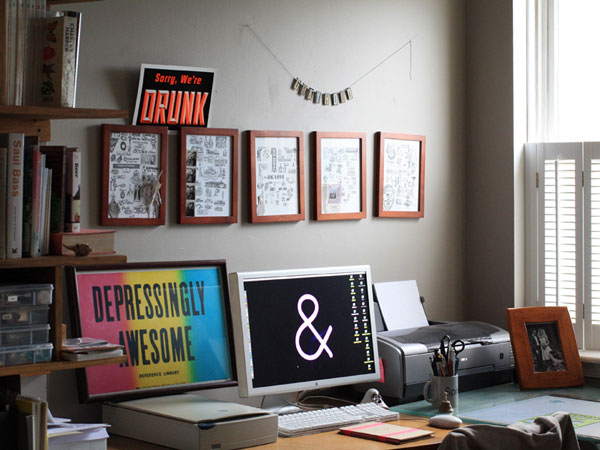
    Dan's Desk

    And finally, what tips would you give to anybody who is looking to get started in design?

    Self. Initiated. Projects.

    Its been my experience that doing work for yourself is fun, helps you evolve your style, take risks, meet people, create new opportunities, keeps you balanced, makes you a better employee, keeps you sane, and improves ones overall quality of life.

    58, 59, 60. Thanks for sharing my minute!

    Thanks Dan!

    Many thanks to Dan for sharing his thoughts with OMW. I had a lot of fun talking to him, and I hope you love the interview as much I do!

    Check out Dan’s site, and follow him on Dribbble and Twitter?

    Related Posts:

  9. One Minute With… Bennie Kirksey Wells

    Leave a Comment

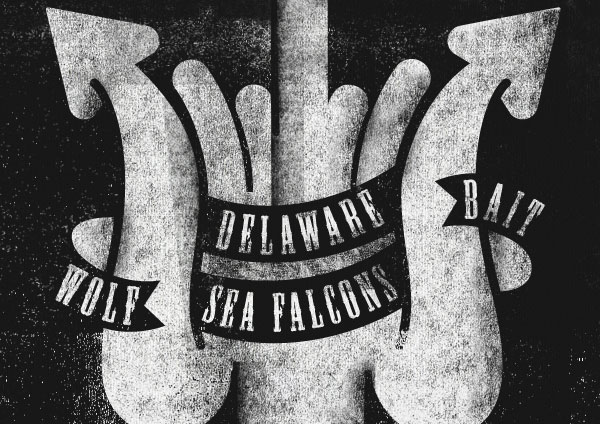
    Delaware Sea Falcons

    Hi Kirk, thanks for taking time to chat with One Minute With. Tell us a little bit about yourself and your work.

    Thanks for having me. I am very honored.

    Lets see, well my full name is Bennie Kirksey Wells but most people call me Kirk, with the exception of strangers and good friends who either call me Bennie or Kirksey. Occasionally I get “chicken” but that’s another story. I currently live on City Island in the Bronx but I’m originally from Riverdale, Georgia. I played football at the University of Florida where I graduated with a degree in graphic design in 2002. I brew beer in my basement and have the smallest closet on the eastern seaboard.

    Walk us through a typical day in the life of Bennie Kirksey Wells.

    Most mornings I try to wake up early, around 6 am. I make my first pot of coffee and read for a couple of hours, usually about one of the presidents (I’m currently on Franklin Pierce). Then I make a to do list, queue up some Twilight Zone episodes to listen to while I work and sign on to IM. I work remotely for a place in Atlanta, so I stay in touch with them throughout the day via email and IM. About noon I fire up the second pot of coffee and eat at my desk. When 5:30 rolls around I start to wind things down and close out for the day. Then, depending on the weather I try to go get in a pick-up basketball game or two at the park, or maybe go for a run. When I get back heat up the leftover coffee and get started on any freelance projects I might have to work on and usually get to bed sometime around 11 or so.

    Bennie Kirksey Wells

    How did you get into design? Was there a defining point in your career, and if so, how did it shape you as a designer?

    I liked to draw a lot as a kid, and my parents were very supportive of that interest. In middle school my drawings started moving away from still-life sneakers and ninja turtles to words and letters, especially lowercase “g” for some reason. I just thought it all fell under the label of ART. In high school I visited the University of Florida on a recruiting visit and talked with Maria Rogal, a professor for the graphic design program. I was sold. I wanted to be a designer.

    Defining moment. That’s a tough one. Maybe moving to Austin in 2009 to try my hand at design in the Lone Star State and falling absolutely on my face. I don’t know what I expected to happen, but I was not prepared for the difficulty in trying to break into the Austin design market. There are some awesomely creative people down there combined with the fact that it’s a great place to live, so the job market was rough. Going jobless for 6 months was a sort of wake-up call for me. I got motivated and began cranking out projects. I re-worked my portfolio and adopted a new philosophy of not letting the absence of a client prevent me from making cool stuff.

    How do you approach a new project? What’s your creative process like?

    Research, sketch, re-sketch, start over, beer, sketch, freak out, push though, hate the result, more beer, slowly come to love it and finally resent myself for my own vanity.

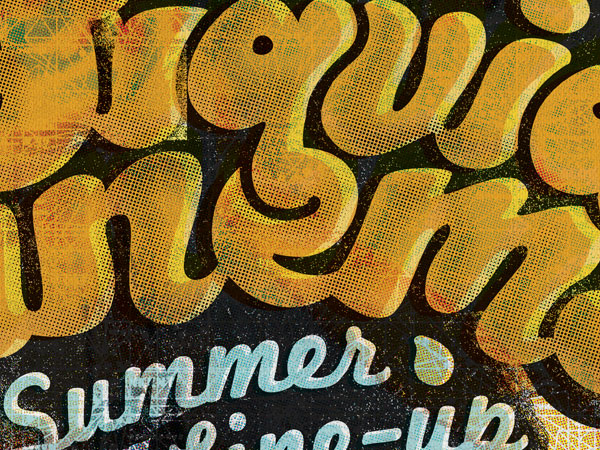
    Summer Line-Up

    You work in a variety of fields, from logo design, to print, to illustration, and so on. If you could only do one of these for the rest of your career, which would it be, and why?

    Illustration. Definitely. I mean, it would break my heart to have to choose one, but I don’t think I’ve gone a week of my life since the age of 10 without doodling, drawing, sketching something. My style has really evolved over the years and I’d be very interested to see where it would go with 20 years of dedicated illustration focus.

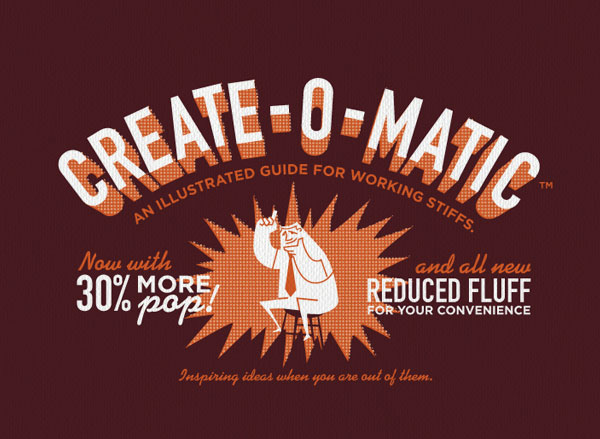
    Create-O-Matic

    Your work has a very retro feel, with lots of geometrical elements, and perhaps a dash of David Carson thrown in for good measure. Where do you get inspiration?

    Ha ha. Well, if I’m at all honest, I was a bit of a Carson fan back in college. Then I moved away from that and became a little obsessed with Charles Spencer Anderson. I am mildly embarrassed about my affinity for David Carson’s work and I’m not sure why. But yeah, retro would accurately describe my aesthetic I’d say. The house in Georgia in which I grew up was a shrine to late 60s early 70s kitsch. A different color of shag carpeting in every room, hallways covered in half wood-panel and half peeling wallpaper with disturbing paintings of owls and deer in heavy wood frames lurking around every corner. What seems retro to others just feels like home to me.

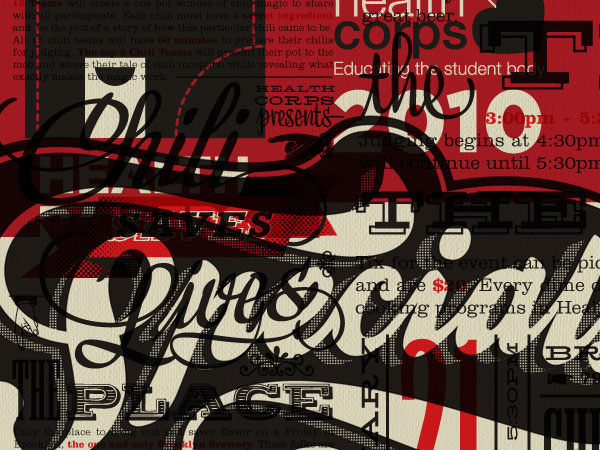
    Special

    If, in some Freaky Friday-like situation, you could live the life of another designer, illustrator or creative, for a day, who would it be, and why?

    Chris Ware, if only to be in his workspace for 24 hours. I don’t understand how he creates the things he does, especially with the amount of detail and precision he’s known for, but I’d love to see where he works and how he comes up with stuff.

    What design tools could you not live without?

    Sketchbook. I take than thing to the bathroom with me. Uniball vision pens, mechanical pencil and fat erasers. And I guess Adobe Illustrator, Photoshop and InDesign. The typical designer tools.

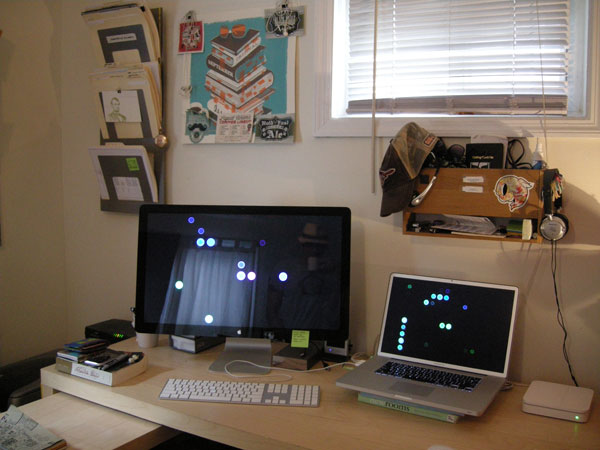
    Kirk's Workspace

    And finally, what tips would you give to anybody who is looking to get started in design?

    That’s a tough one. I honestly don’t think I’ve been designing long enough to qualify for passing on pearls of wisdom. Maybe the only advice I would give is to not be limited by the work you are able to get at first. I think a lot of talented young designers beat their heads against the wall trying to get the dream project or attempting to land a gig at the most amazing firm out there. Of all the design there is to do out there, most of it’s shit. It’d be nice to think that every other gig is going to be a show poster for a band called Titties and Dynamite or an awesome information graphic about Bill Murray’s personal grooming habits or a great interactive site for antibacterial fungal cream, but they’re not. It’s 50 Powerpoint slides, a banner ad and a couple dozen one-hour logos that you’ll hate. At least, that’s been my experience. So I guess the point is not to wait until Titties and Dynamite comes knocking, if you wanna make a poster featuring a Polar bear Lifeguard drinking lighter fluid; do it. Design that info-graphic for all the places you’ve vomited in the continental U.S. Those are the projects that you’ll try your hardest at, and that will ultimately make you better. You need clients to pay the rent, but you don’t necessarily need one to make good work.

    Thanks Kirk!

    Many thanks to Kirk for sharing his thoughts with OMW. I had a lot of fun talking to him, and I hope you love the interview as much I do!

    Why not check out Kirk’s site, and follow him on Dribbble?

    Related Posts: