Author Archives: Conor O'Driscoll

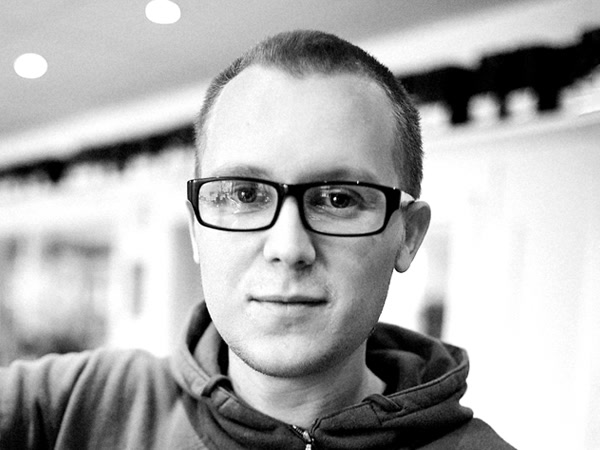
About Conor O'Driscoll

Conor O'Driscoll is a designer and writer, who writes for AppStorm.net. He also enjoys writing about himself in the third person.
  1. One Minute With… Jon Contino

    Leave a Comment
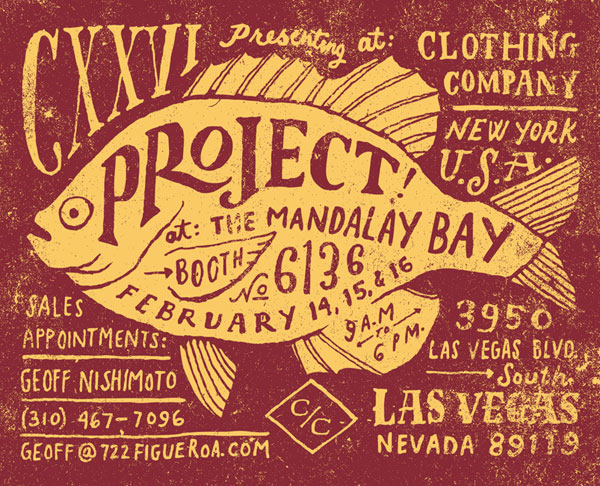
    Project at the Mandalay Bay

    Hi Jon, thanks for taking time to chat with One Minute With. Tell us a little bit about yourself and your work.

    Thanks so much for having me. I’m a lettering artist, illustrator, and brand consultant and I own my own menswear brand called CXXVI Clothing Co. The majority of my stuff tends to have a very old world feel to it and I love taking a hands-on approach to projects. Anything that can communicate character and human personality really.

    Walk us through a typical day in the life of Jon Contino.

    Man, a day in my life is a crazy one. I tend to wake up around 8 or 9 in the morning, roll out of bed, and go right to my desk. I gave up the studio and work from home now. A lot of people tend to have trouble doing that, but I’ve figured out how to discipline myself enough to do it. From that point on, it’s a marathon. I’ll start with urgent emails, get on my first priority job, and then just go for it. I’ll typically work on whatever’s around until 1 or 2 when I take a lunch break, then back into the grind. I usually have to split up my days between CXXVI and taking care of my client work, so it’s always a juggling act. I tend to get as much done as humanly possible until around 2 or 3am. Later nights might take me to 4 or 5am and good nights usually end around midnight. I work too much, sleep for a few hours, then do it again.
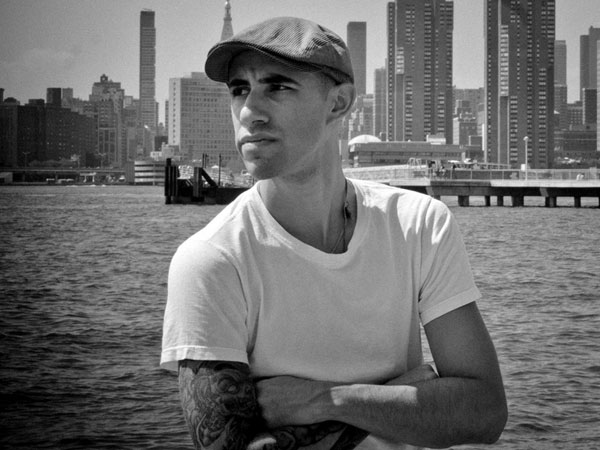
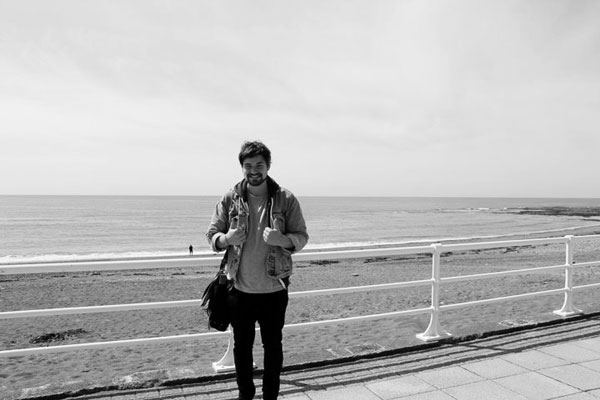
    Jon Contino

    How did you get into design?

    I’ve been doing design for as long as I can remember. As soon as I could hold a pencil, my mother had me drawing. She’s an artist as well, so I guess it came pretty naturally. The thing that really made me pay attention to art though was being in hardcore bands in high school. Shirts, flyers, and demos were the best ways to flex my creativity and as time went on and friends’ bands kept getting bigger, I got better jobs working on music packaging and merch design. Web design helped me break into intense freelancing and I basically did all web and music package design through high school and college. Unfortunately music package design isn’t what it used to be and web design is just plain hell, so over the past 5 years or so, I’ve carved a nice little niche for myself in the illustration and apparel industries.
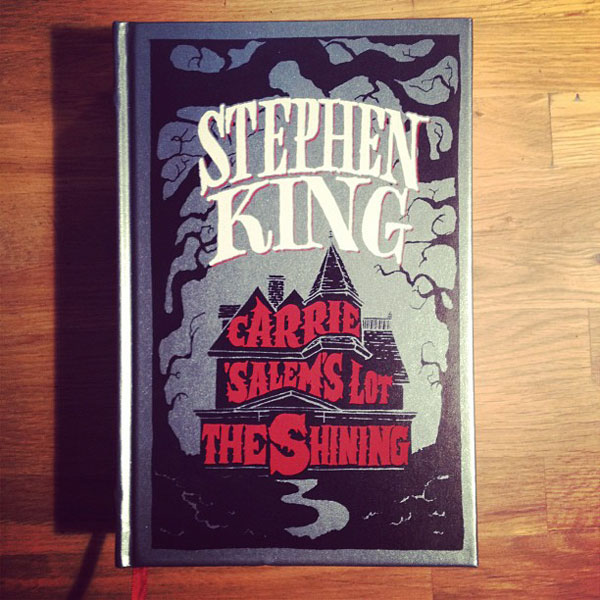
    Stephen King book

    How do you approach a new project? What’s your design process like?

    Every project is pretty special and unique, but I’d be lying if I said that any one stands out as having a different process. I tend to do research first on whatever the topic is. This could be online, in books, or out in the world. Whatever will put me in the mindset of the what the project calls for. After that it’s pretty smooth sailing. Pencil sketches lead to inked drawings and it all gets put together on the computer via Photoshop and Illustrator. That’s typically where the job will end unless there’s some sort of special printing technique that I need to consult on or manage.
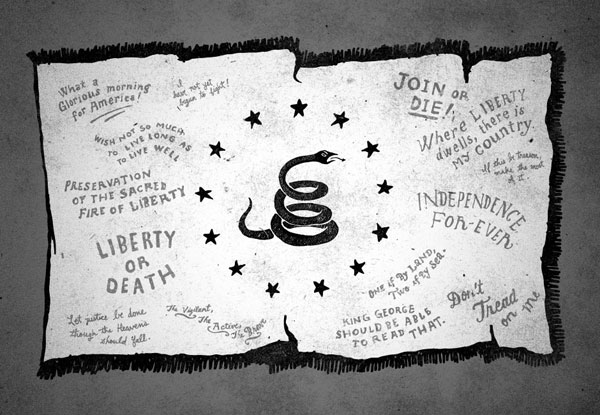
    Jon's Momentus piece

    You grew up in New York, and continue to live there. How does living in a city with both a great design community, and so steeped in design history, influence your life?

    I’d have to say that being born here and living out every single day here has been the main influence on my work. Honestly, I never even noticed the design community here until a couple years ago. I’ve always been so enthralled with what I see that I never really bothered to step outside of myself and talk to anyone. It’s been years of inspiration building up and building up and it never occurred to me how inspirational some of the people here are until I actually stopped and thought about it. I honestly can’t even comprehend what kind of artist I would be had I not spent my entire life in New York. It’s such a strong part of who I am at this point, that it just makes sense.
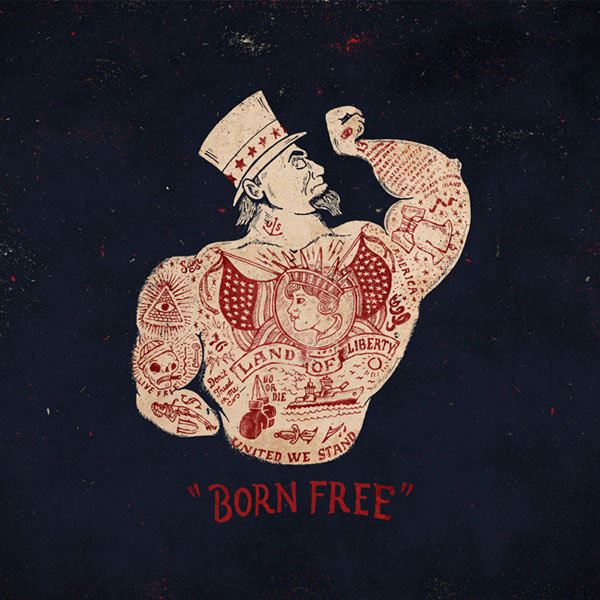
    Born Free

    You run, as you mentioned, CXXVI Clothing. How do personal projects like that compare to client work? Which do you prefer, and why?

    That’s a tough call. I can’t really say I prefer either. The freedom of CXXVI is great and the ability to lead a trend is such an amazing thing, but at the same time, the amount of work and stress that goes into it gets overwhelming at times. On the other hand, working with different clients throughout the day gives me the opportunity to stretch out and take on different types of projects; stuff that I might not be able to do within the defined brand boundaries of CXXVI.

    If, in some Freaky Friday-like situation, you could live the life of another designer, illustrator or creative, for a day, who would it be, and why? (And since another interviewer asked, time travel is accepted)

    I honestly don’t think I’d choose anyone, not even with time travel hanging over my head. There have been, and are, so many amazing designers in space-time that all I can ever really want is to work within that same stratosphere. There’s nothing that I envy of anyone else that I shouldn’t be able to do given enough hard work and ambition. Now if you’re forcing the time travel thing on me, then what I’d really want is to apprentice with someone like Leonardo DaVinci. I wouldn’t want to be him, but I’d just love to watch his brain work on a daily basis.
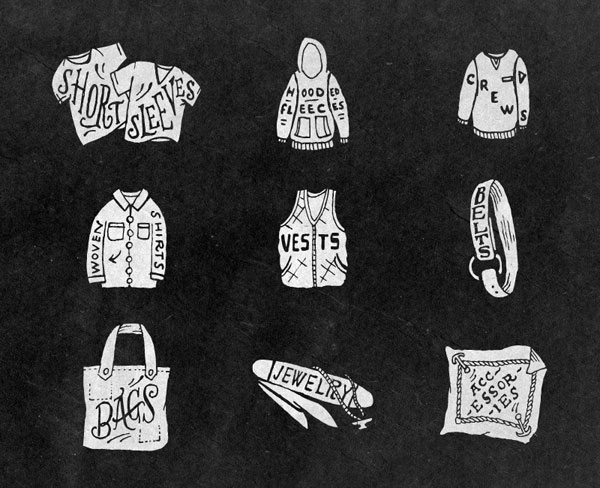
    CXXVI Icons

    What design tools could you not live without?

    It’s tough because I need at least two of them together to survive, so I’d say Micron pens first and cheap printer paper as a close second.

    And finally, what tips would you give to anybody who is looking to get started in design, illustration or lettering?

    It’s really easy to get started in this kind of creative career. All you have to do is just go for it. That’s it, that’s all it takes. Of course you’ll need some sort of skill and a whole bunch of ambition, but if you want to make it, you just have to want it.
    Thanks Jon!

    Thanks so much to Jon for giving us an insight into his world! I really enjoyed talking to him, and found his answers really interesting!

    Why not check out Jon’s site, and follow him on Dribbble and Twitter?

    Related Posts:

  2. One Minute With… Luke Beard

    5 Comments

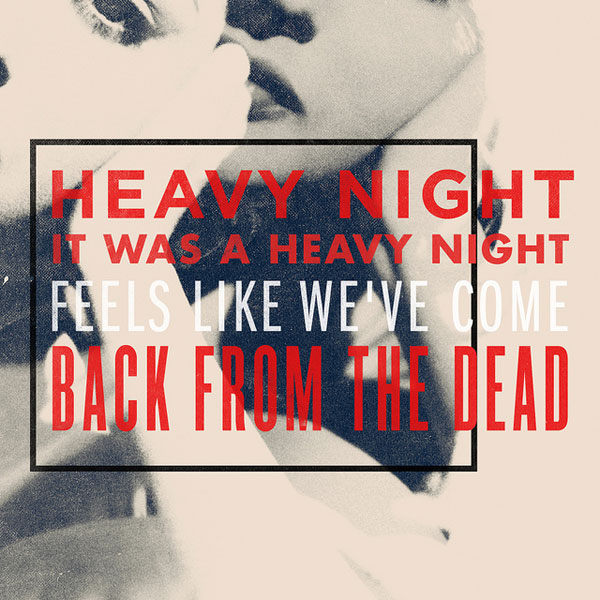
    Heavy Night from ALAD

    Hi Luke, thanks for taking time to chat with One Minute With. Tell us a little bit about yourself and your work.

    No problem at all. Well, I’m Luke, I’m 24 years old and have been trying to be a designer for almost 6 years. I started off doing some CD layouts for friends’ bands and getting to grips with the tools of the trade, so to speak.

    I spent 3 years at a tiny local web firm where I learned a lot about clients and the industry (mainly on my own initiative) before taking a risk and spending 5 weeks in Silicon Valley and start up life at the start of 2011 with Zerply. I’ve been with them ever since.

    I try to keep my side projects up when I can like my print store and my type project ‘A Lyric a Day’ along with a few others I can’t mention right now for super secret reason.

    I also help out my girlfriend with her online vintage store.

    Walk us through a typical day in the life of Luke Beard.

    I wake up the same time as my girlfriend who I live with, so I get up around 8:30-ish. I make us coffee and skim over the tweets I missed overnight. I try to walk her to work when I can to get some fresh air nice and early.

    I can’t say I do “work” all day as I enjoy it too much to be called that but the rest of the day is spent trying to consume all the news and posts about industry stuff before really cracking down to what I need to get done that day.

    If I have any prints orders to send, I pop up the road to local post office and usually grab some lunch.

    Evenings are spent watching films and generally taking it easy. I’m not a fan of working crazy late unless I *need* to. I think sleep is important to a designer and is undervalued as a tool for keeping sharp. And now I’m nearly old, I get to go to bed at 10:30pm. Like a true party animal.

    Luke

    How did you get into design?

    I did a BTEC national in ICT at college and there was two small modules on using Photoshop and simple web design. From that point on I was hooked.

    How do you approach a new project? What’s your creative process like?

    To be perfectly honest, the only time I do hardcore planning for a project is when I can’t see the big picture. I prefer to get straight at it and use initiative. I work pretty fast and can iterate even faster. I need to be able to see and use things as soon as possible to get the best out of it.

    You work for Zerply, the up-and-coming professional network. What were the challenges that came with designing a social network?

    Zerply is the first web product I have ever worked on so it’s all pretty new ground but thankfully the team are awesome. The biggest challenge has been to create value and get people coming back and engaging with other users. Social networks are complex beasts and creating addiction and the need to come back is a big part of it.

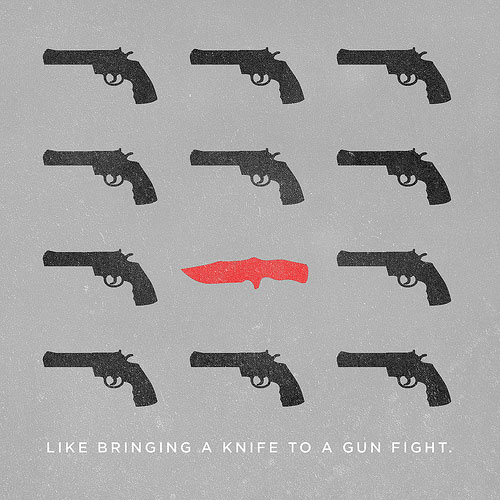
    Knife

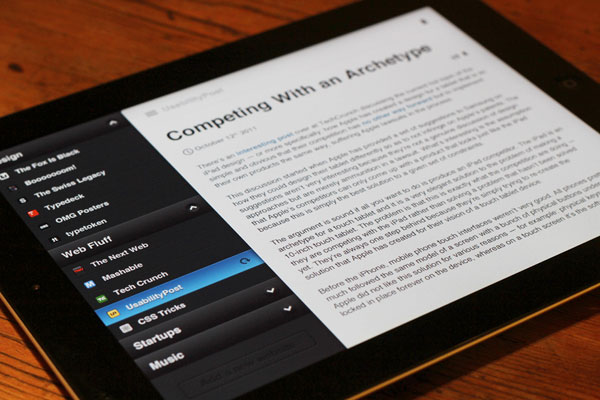
    If following you on Twitter is anything to go by, it seems that every couple of weeks, you take on a new exciting project (At the time of writing, that project is Skimn, a fascinating new iPad feed reader) – What compels you to constantly create something new? Do you think you will ever be able to rest on your laurels?

    Ha! It’s not every week but I hate staying still. It almost pains to me to stagnate as a designer. It could almost fall under self improvement I guess. I consider myself a novice at everything and, to put it simply, I just want to get better.

    The only time I will rest from this mindset is if I get a family one day. That’s the only thing I can think of.

    A preview of Skimn

    If, in some Freaky Friday-like situation, you could live the life of another designer, illustrator or creative, for a day, who would it be, and why?

    Tim Boelaars – His new workspace looks awesome and he makes & draws the coolest things.

    Eli Rousso – of Girlfriend NYC

    Matty Mo – From Alpha Boost and 500 Startups mentor. Follow him on Instagram, his life looks nuts….with helicopters.

    Peter Vidani – Designer at Tumblr

    Erik Spiekermann – I’d love to be an angry German who loves type.

    Dieter Rams – Just because. (You never said anything about traveling back in time)

    Diego Zambrano – Again, his Instagram is always filled with awesome stuff daily to get envious over.

    William Wilkinson – Super cool

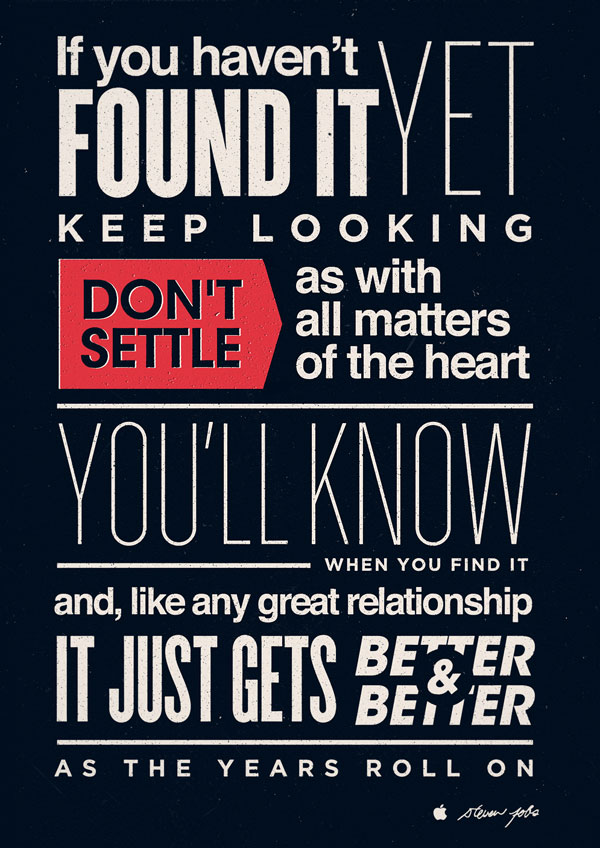
    Steve Jobs Quote

    What design tools could you not live without?

    My MacBook, Photoshop, Textmate, Spotify and coffee. Few web sites I visit too much

    The Verge
    WebAppers
    UsabilityPost
    The Fox Is Black
    Swiss Legacy
    Boooooooom!
    The Next Web
    Typetoken
    Daring Fireball

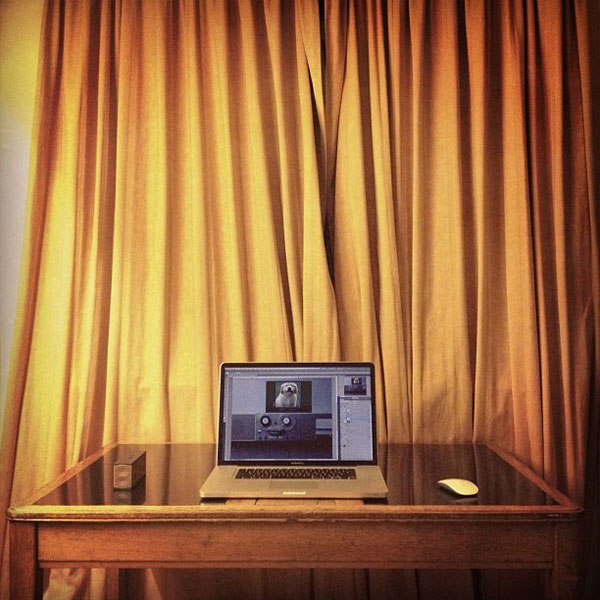
    Luke's Workspace

    And finally, what tips would you give to anybody who is looking to get started in design?

    Don’t jump on trends too much. Learn some core skills and consume a lot of inspiration. Be honest and don’t ever think you’re better than you are.

    Thanks Luke!

    Thanks a million to Luke for chatting to OneMinuteWith! I loved talking with him, and hopefully you enjoy his answers as much as me!

    Why not check out Luke’s site, and follow him on Dribbble and Twitter?

    Related Posts:

  3. One Minute With… Ross Moody

    Leave a Comment

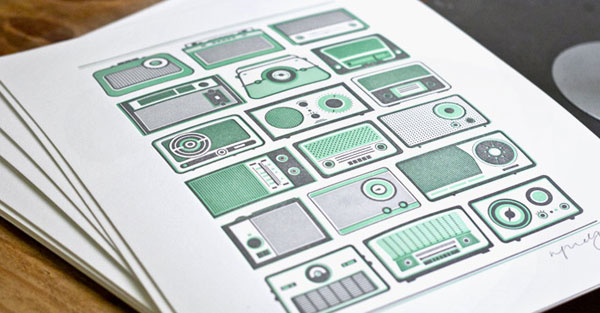
    Radio

    Hi Ross, thanks for taking time to chat with One Minute With. Tell us a little bit about yourself and your work.

    My name is Ross. I’m a Taurus. I own and operate a company called 55 Hi’s where I create and sell paper creations. This normally being greeting cards, prints, calendars, journals, and miscellaneous stationery items.

    Walk us through a typical day in the life of Ross Moody.

    Right now, a typical day is as follows:
    7am – 8am = Cocoa Pebble time.
    8am – 4:40pm = Working for the man doing spec ads for the Foodservice channel. This is usually the time I spend spacing out and thinking about new ideas.
    5pm – 6pm = Processing and packing orders.
    6pm – 7pm = Eating something while answering emails.
    7pm – 9pm = Production time. This includes screenprinting new designs, packaging cards or stationery, trimming, numbering, folding, etc.
    9pm – 1am = Designing new items and getting ready for Cocoa Pebble time.

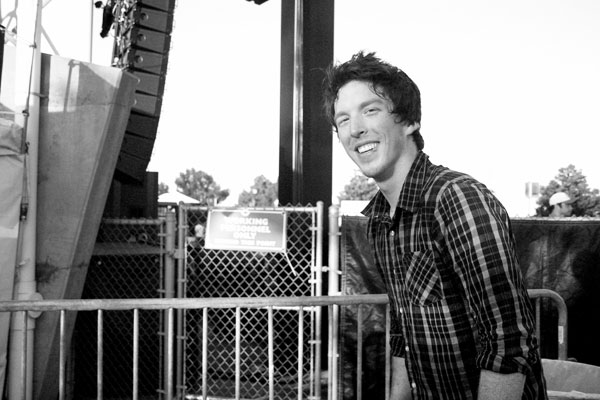
    Ross

    How did you get into design?

    I accidentally fell into design while attending college at Kutztown University is Pennsylvania. I was an undeclared student who wanted to be an artist, just not a starving one. I started sitting in on design classes while trying to transfer in and eventually they just let me stay.

    How do you approach a new project? What’s your creative process like?

    This is a tricky question because it’s never really the same. Ideas come out of nowhere throughout the day and I write them down in no particular order in a Moleskine. Some times it’s something I find on the internet, something a friend says, and some times it’s just something I think is funny or inspirational. It’s amazing how many great ideas are prefaced with the words “Wouldn’t it be funny if…” Then when I’m ready to start a new project, I go back in to the Moleskine and find the idea I think is the strongest at that time. Then I sketch and obsess over that idea for a few days before I start designing.

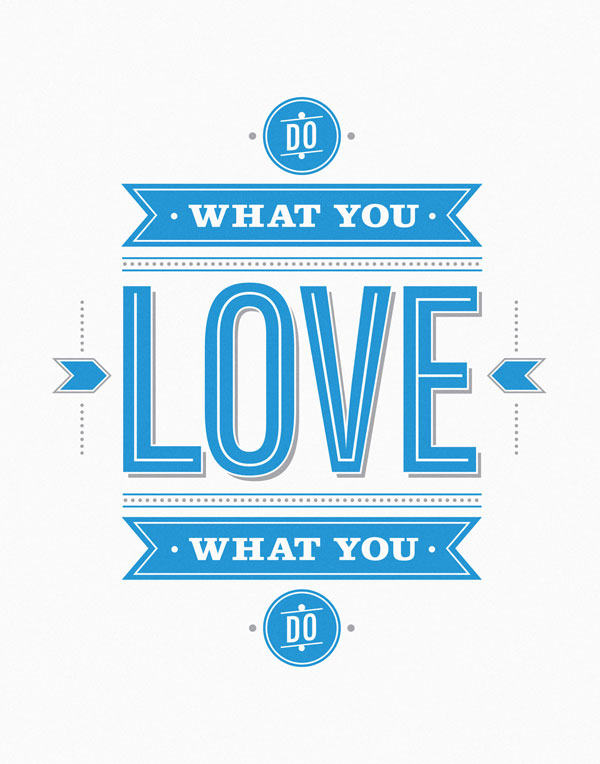
    Do What You Love

    You run 55 Hi’s, a much-beloved “greetings collective”. How do personal projects compare to client work? Which do you prefer, and why?

    I don’t take on client work anymore. Well that’s not completely true but it’s rare. I technically do “client” work all day at my day job and when the day is over, I would much rather take on work I find rewarding than have more work and stress waiting for me at home.

    This particular subject is a little touchy for me. I could rant for days but I say that because I have developed a jaded view of the graphic design role from working for an advertising agency after graduating. It’s difficult to explain, but basically, I have found the amount of talent that is wasted, thrown away, dulled down, unnecessarily changed, and not respected in advertising is disgusting. It’s commonplace to work on something for weeks and have a design-by-committee respond with, “It just doesn’t…. pop, ya know? It doesn’t have the WOW factor.”

    So long story short, I prefer my own work, but I think most people do. It’s much easier to work for yourself.

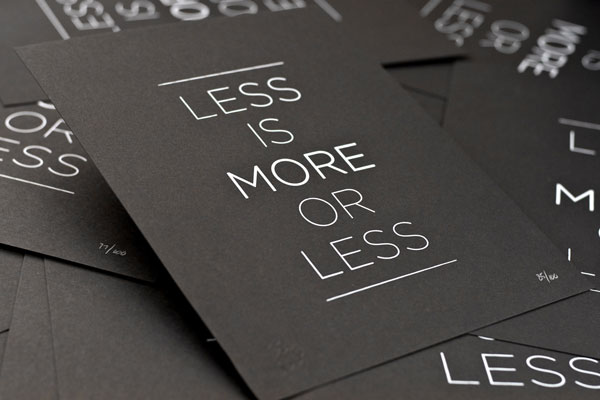
    Less Is More Or Less

    You hand-print all of your 55 Hi’s gear. In a world where everything is going digital, how important is it, do you feel, to keep print as alive as possible?

    I think print will always be alive to a certain degree. There is something intrinsically valuable about a hand printed item. It’s the same principal for why people are still giving paper greeting cards. It means more. The action of thinking about someone, going to the store, picking a card, writing your message, and putting it in the mail is almost more valuable than the card itself. Would it be the same if you sent that same card with a typed message in an email? I think not good sir.

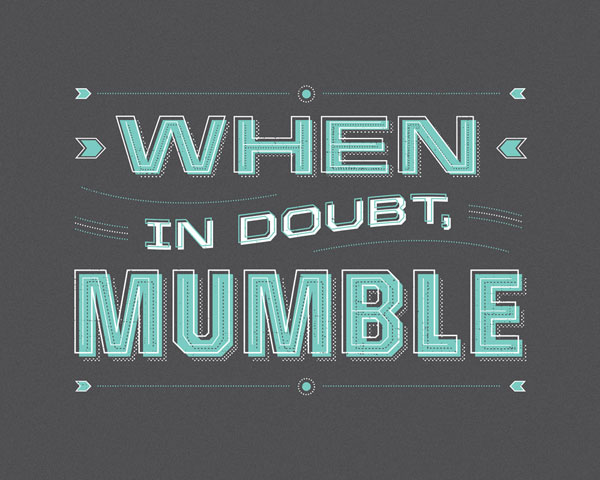
    When In Doubt, Mumble

    If, in some Freaky Friday-like situation, you could live the life of another designer, illustrator or creative, for a day, who would it be, and why?

    Good question. I wouldn’t really want to take over the body of another designer, but if I could anonymously hang out in someone’s brain for a day and investigate their creative process, it would be Stefan Sagmeister. A close second is Ji Lee.

    What design tools could you not live without?

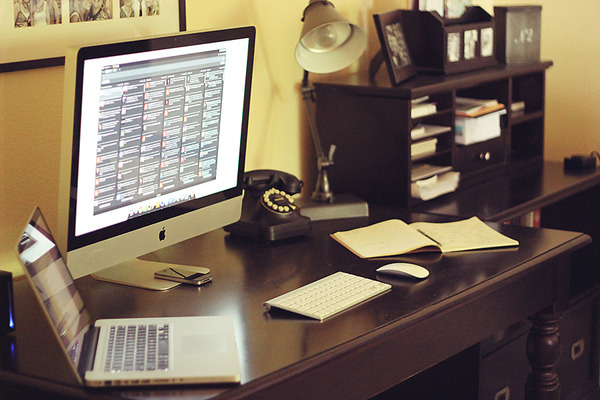
    I’m pretty married to my Moleskine. I forget ideas 4 seconds after I have them so that would be pretty detrimental to my workflow if I lost it. A close second is obviously The Creative Suite. I spend 80% of my life inside Photoshop.
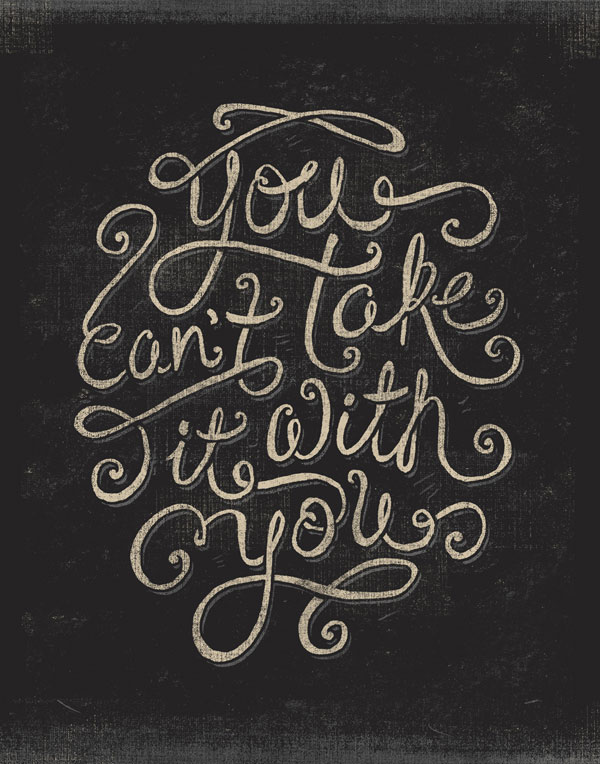
    You Can't Take It With You

    And finally, what tips would you give to anybody who is looking to get started in design?

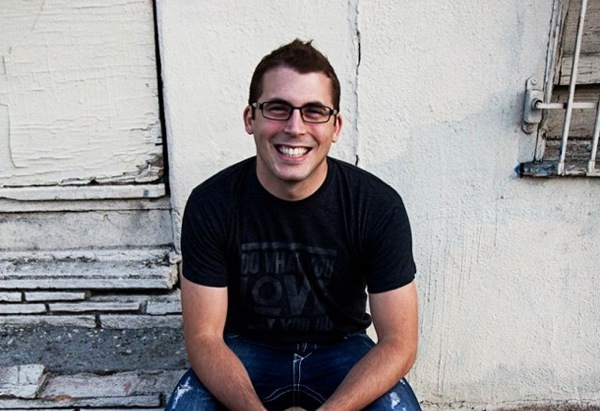
    I think one of the most important things (and difficult things) any designer can do is be honest with themselves about the value of what they are creating. In the beginning, I thought my work was so much better than it actually was. I wouldn’t experiment or investigate, or ideate. I would get fixated on one idea and one execution and be offended if anyone didn’t think it was the best. This is so hurtful to the value of your work. Recognizing when an idea is amazing, but the execution is sub par is so important. Why waste an unbelievable idea on a shitty wrapping? I have ideas that I have been designing for 7 years. The idea is amazing but I just can’t get it to feel right. This can get tricky sometimes because it can create a circle of inaction, but I trust that when I have the right feel, I’ll be excited and ready to release it. So basically, be honest with yourself about your work. Even if it’s just ok. Acknowledging that it’s ok and striving to be awesome is so much more commendable than being ok and presenting yourself as the best thing since sliced bread.
    Thanks Ross!

    Thanks a million to Ross for talking to OMW! I really enjoyed talking to him, and found his answers really interesting!

    Why not check out Ross’s site, and follow him on Dribbble and Twitter?

    Related Posts:

  4. One Minute With… Igor Ivankovic

    Leave a Comment

    Some boats

    Hi Igor, thanks for taking time to chat with One Minute With. Tell us a little bit about yourself and your work.

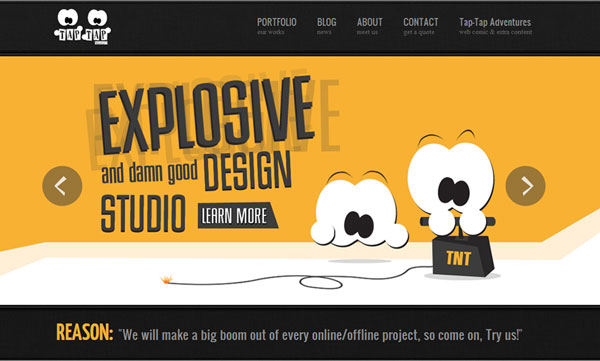
    Hi, thank you for having me, it’s a real pleasure. Well I’m a simple 26 years old, married, and down to earth guy. I’m currently working in my small design studio Tap-Tap Design delivering great looking web design, graphic design, motion graphics and branding.

    I love comic books, so I when I started learning 3D that’s when everything clicked and I created a unique 3D web comic with my characters Tap-Tap Adventures . They were in fact the inspiration for everything Tap-Tap Design related :).

    We also recently just founded a new web site that focuses on wedding inspirations for women, Zimbas. Let’s just say I’m versatile because I’m drawn in to design through every medium my eyes see. Oh, did I mention that I’m self-taught? Well, I am :)

    Walk us through a typical day in the life of Igor Ivankovic.

    Every day is different. It consists of waking up before noon, putting up some relaxing music and working late in to the night. Oh yes, I always cook lunch with my wife and do the dishes afterwards so I can focus on something else rather than my ideas and current projects. It amazes me how many times I find myself stuck in some coding problem at 2am and couldn’t go to bed before I figured out the solution. I just can’t relax until everything works out the way I planned.

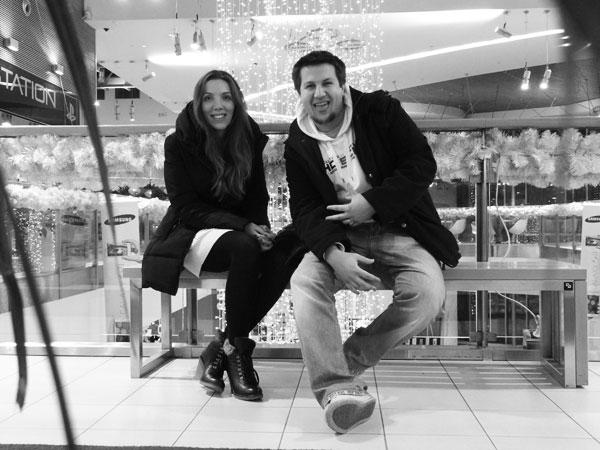
    Igor with his wife Ines

    How did you get into design?

    I studied Philosophy for 4 years in college and in that time I was very involved with student activism and student council decisions, so in some cases there were a few happenings that required a web presence and, of course, flyers, posters and graphics-related materials. To cut on the funds, I said I would do it. Of course, design blogs started to get my attention because of their fast practical learning curve, and I was very focused on showing of then :) It looked really bad, design-wise, when I think about it now, but back then I got a lot of praise, go figure. So it felt good to do something that other people praised and said looked good.
    Afterwards, I met my wife and she loved interior design and that brought me to another level of combining design elements, 3D architectural mockups and really playing around with design.

    How do you approach a new project? What’s your creative process like?

    First of all I create a big panic and freak out my art director (my wife Ines) with questions about the projects requirements and expectations. LOL What we do as a team in the studio is to brainstorm about the project, I always picture it in my mind for example: Can we do something creative with this project, What technology will we use, how to combine the design and code into one usable product. I don’t drink coffee, I just sit on the couch, turn on my TV and chill.
    The ideas and the creative process is always different, so I approach every project differently, talk it out with Ines. She always focuses me in the right direction because sometimes I overdo some design elements.

    Tap-Tap Design

    You spent some time freelance before forming a design studio with your wife Ines. What made you make the switch, and how is working with your real-life partner?

    Well, I worked a lot freelancing, I also worked in a media agency. What I can tell you is that nothing compares to working for yourself. I never worked so much in my life, and I never felt like I was employed when I freelanced and now. When you freelance people usually take advantage of you and you spend time on working way too much than agreed for way less money you agreed for, but still you don’t have a boss who doesn’t see the difference between a design you stand behind and you are proud of, and design that is everything else than design. There is papirology and bills, but other than that I feel it’s the same, just a natural progression in showing off professional work, and telling people that I have my own business :).

    Everything works excellent with my wife in the design studio because we complete each other with design ideas, and it’s also good to have someone snap you out of some some crazy ideas and complicated experiments. We work hard and we have fun doing it, so it always comes out as a product of our both imaginations and love for the design.

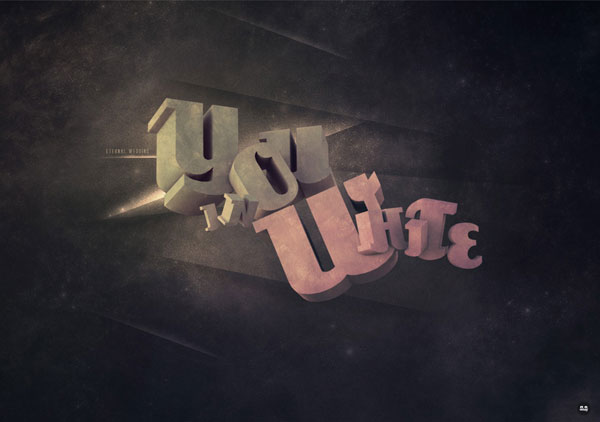
    You in White

    Along with graphic design, you also do work on motion graphics. How does that differ from graphic design, and what parallels can be drawn?

    We just started doing motion graphics, and it’s a whole new world of understanding the principles of what is going to show up in the next frame, next second, and will it have the visual and emotional impact as you hoped for. Working on motion graphics tends to take longer because you need to view things over and over, the content changes dynamically and it tends to render for ages, soon to find out that you made a mistake on 1min and 12 seconds to start fixing the process over and over.

    Standard graphic design has similar issues but in the end, these are two different types of media. Usage of plugins, ideas, 3D animation programs and a complete new array of logic functions that come with motion graphics is something you need to have, along with lot of time and focus to spare if you want to combine it to create something really special like we try to.

    If, in some Freaky Friday-like situation, you could live the life of another designer, illustrator or creative, for a day, who would it be, and why?

    Maybe Fabio Sasso from Abduzeedo. As I see, he loves experimenting with design styles and inspires other designers with awesome tips, tutorials, and gives a lot of exposure to great looking design.

    What design tools could you not live without?

    Adobe suite, Autodesk Maya, Learning Autodesk Maya 2009 book, WordPress, iPhone, pasta bolognese, my PC, Dribbble, my guitar, my wife’s support…

    And finally, what tips would you give to anybody who is looking to get started in design or illustration?

    There will be time when you work like crazy and there is no cash flow to insure you did a good job. It doesn’t mean that you failed, it means that you are a designer at the beginning. Time, practice and persistence will give you the necessary tap on the shoulder. Never stop believing in yourself, and don’t think of it as work: if you do, then please do something that isn’t design-related because you are probably the reason why the industry keeps pumping out questionable designs. Love what you do and do it as best as you can for every project that you are given. This is the only way you will grow as a designer and a person!

    Thanks Igor!

    Thanks a million to Igor for sharing his thoughts! I really enjoyed talking to him, and found his answers really interesting!

    Why not check out Igor’s site, and follow him on Dribbble and Twitter?

    Related Posts:

  5. One Minute With… Simon Ålander

    1 Comment

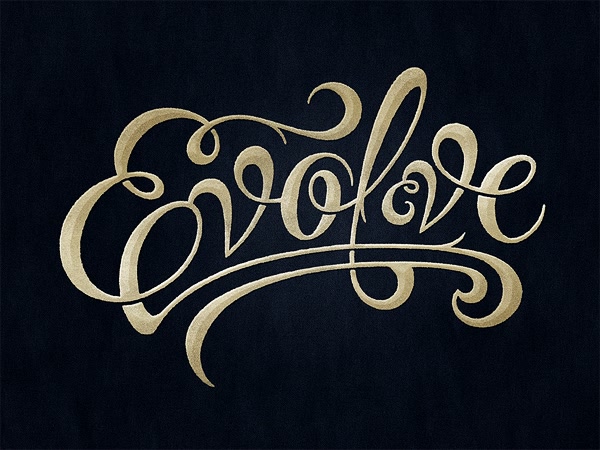
    Evolve

    Hi Simon, thanks for taking time to chat with One Minute With. Tell us a little bit about yourself and your work.

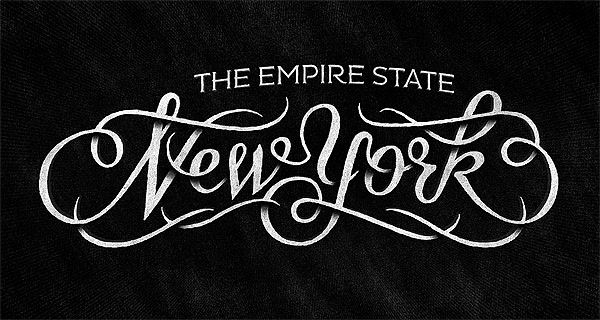
    Hey, the pleasure’s all mine! Well, I’m a guy from Sweden who enjoys coffee, lettering and the simple things in life. I’m obsessed with letters,swashes, ligatures, loops and textures – and that pretty much explains my work and style I think.

    Walk us through a typical day in the life of Simon Ålander.

    I wake up at 7:00 and then I run to get on the bus. When I finally arrive at the office I start my day with a lovely cup of Aeropress coffee. Preferably a Kenyan or Ethiopian.

    My ritual continues with reading emails, blogs and stuff like that. I can’t start working without my daily dose of design inspiration in the morning.

    I spend the rest of the day working with various projects at the office and drinking more coffee. When I come home it’s time for freelance stuff aka. the really fun stuff and some cooking to get relaxed.

    Simon Alander

    How did you get into design?

    Hmm, that’s a good question. I think it was my interest for music with all the fantastic album artworks, tour posters and merchandise. Another big influence that made me interested in typography and lettering was graffiti and street art.

    How do you approach a new project? What’s your creative process like?

    After a few emails back and forth the creative process looks like this: 99% of my projects begins with just plain papers and a pencil. I want to find a perfect interaction between the letters/words so I’m playing around for a long time without any clear visions. After a while I see in what direction I want to continue. The final sketch goes into Photoshop for tweaking, further into Illustrator to get it vectorized and then back to Photoshop for texture and a magical touch.

    New York lettering

    Lettering is clearly a strong point of yours. Do you see a clear distinction between lettering and type design, and would you ever consider releasing fonts professionally?

    After all, it’s just letters, words and phrases. For me personally it’s about the process itself – to explore and find unique and playful ways to combine letters/words.
    Creating a font is so damn time consuming, but who knows, one day it might happen…?

    Your lettering style is pretty distinct, with prominent swashes and awesome ligatures. Where do you get inspiration?

    Everywhere; on the subway, conversations, my own peace of mind, music, old signage and packaging. And of course on the almighty Interwebz.

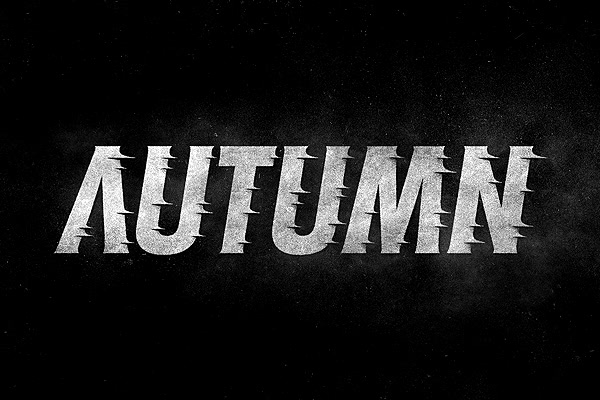
    Autumn

    You’re studying at Hyper Island, a centre for learning which is quite different to any traditional education. Tell us a bit about it, and do you feel it is providing you with a better education than a traditional university would?

    If you compare to a traditional way of education it’s much more connected to reality. We get briefs from real clients, so the gap between school and working life isn’t that big. I think Hyper Island is a little bit too digitally driven for me, but I’ve learned a lot about the power of social media and the importance of building your own solid network.

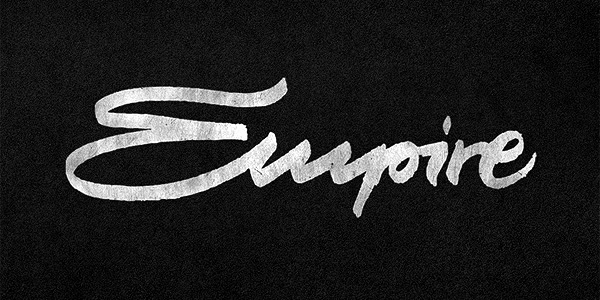
    Empire

    What design tools could you not live without?

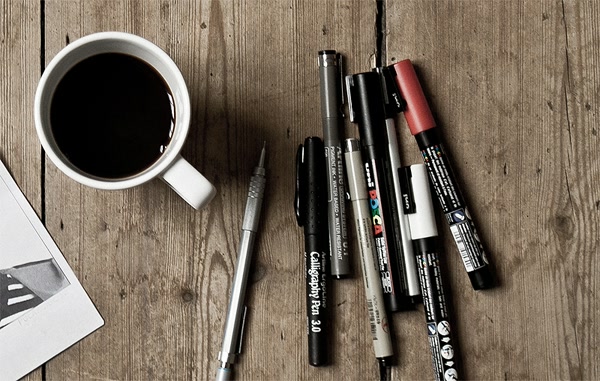
    My Pentel Graph Gear 500 pencil and the obvious things like Illustrator, Photoshop, Wacom tablet and Spotify. Is coffee a design tool?

    Simon's gear

    And finally, what tips would you give to anybody who is looking to get started in design or typography?

    Study different kind of typefaces, letters, styles etc. and try to see what makes them distinctive. Step away from the computer and find some pens and pencils you like and start sketching! Practice, practice and practice. Last but not least – never forget the negative space. It’s as important as the letters itself.

    I want to end this interview by quoting the amazing Boris Pelcer: “Typography is what language looks like. Language itself is a reflection of intellectual, emotional and spiritual aspect of the human mind.”

    Thanks Simon!

    Thanks a million to Simon for talking to me! I really enjoyed talking with him, and hopefully you love his answers as much as I do!

    Why not check out Simon’s site, and follow him on Dribbble and Twitter?

    Related Posts:

  6. One Minute With… Mackey Saturday

    1 Comment

    Sparkies

    Hi Mackey, thanks for taking time to chat with One Minute With. Tell us a little bit about yourself and your work.

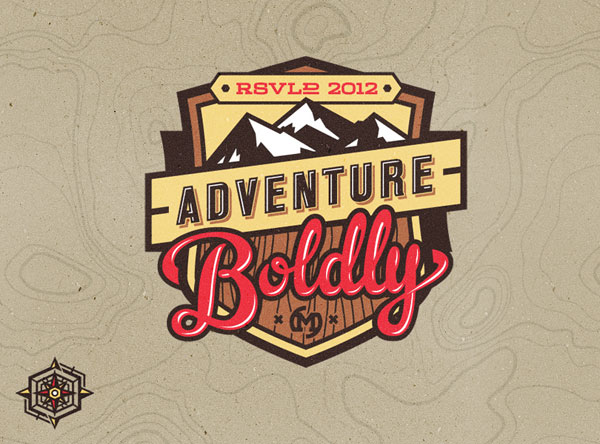
    First off, thank you for having me and allowing me to contribute alongside such great talent. As for a little about me, I’m an independent multidisciplinary designer based out of Denver, Colorado. My work spans a lot of genres and I’m honored to get to work with clients on a multitude of levels. I’ve always been a big fan of the outdoors from mountains to oceans, campsites to cityscapes, it all amazes me and I love to spend as much time as I can adventuring into the vastness that is out there. Living like this has played a huge role in my design aesthetic and also my pursuit of staying independent in my career. I continue to see daily the value of chasing after what you enjoy most and then figuring out the logistics later.

    Walk us through a typical day in the life of Mackey Saturday.

    I’m not sure if there is really a typical day for me. Living in Colorado the seasons help dictate what any given day may look like, between long and short days, fresh snow or summer sun, it all plays into what my days look like. Right now it’s the middle of winter so I basically have 2 schedules I like to follow.

    The first and primary looks schedule some like this: 6:30-7:00am wake up, catch up with the world in bed using Flipboard, check the weather, grab some breakfast, make some tea, read the Word, and then head off to the studio. The morning is always for immediate needs, getting any meetings out of the way, and clearing any of those things that may cause anxiety or poor productivity, then onto my design tasks. My office is only a few miles from the Denver skatepark, so at lunch I like to head over there and get a quick session in. Skateboarding has long been something I love and has molded me heavily into where I am today. Getting out and skateboarding helps refresh me, refocus my creativity, and keep perspective when I head back into work. The afternoon is then dedicated to designing, drawing, building, or whatever creatives tasks I’m tackling. I’ll work until about 7, then it’s time for a work out, followed by dinner and after that really depends on my work load and my wife’s schedule (she’s a nurse so she works 12hr shifts starting at either 7 am or 7pm.) So this could be time to get together with friends, or time to head back to the studio. I’ve been more recently trying to call it quits earlier and get home and to bed by 1-1:30 a.m. compared to a lot of my past that was full of 4 a.m. bed times.

    The second schedule (if there’s good snow in the mountains) starts out the night before by heading up to our condo that we share with a few fine folks. I’ll wake up, eat a hearty meal and then usually head over to Keystone or Breckenridge to get on the mountain while the snow is its best. If I’m lucky I’ll have some friends to ride with and we’ll usually ride until 3ish. After this I’ll get some food and head back to the condo to fit in emails and immediate tasks that couldn’t be handled on my iPhone while on the lifts before the “official” work day is over. We’ll grab dinner somewhere, and then it’s back for an evening work session. I’ll usually sit by the fire/TV (we don’t have cable at our loft in Denver since we rarely watch anything outside of Netflix) and work until about 2 a.m. while my wife gets in her dose of crafting and watching of criminal minds.

    There are obviously lots of ways things can play out but at this time, this is how my days are looking.

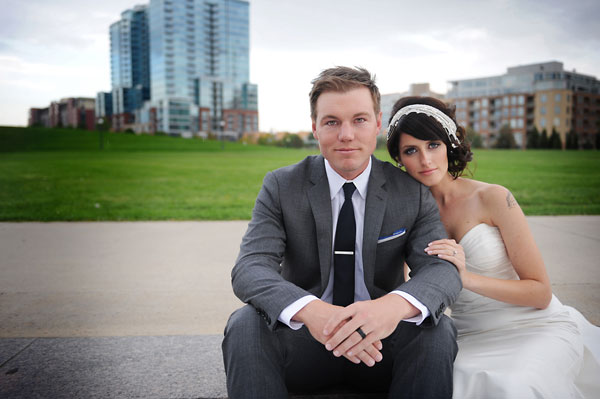
    Mackey with his wife

    How did you get into design?

    I’ve loved drawing longer than I can remember. My parents still tell me stories about when I was a little child how I would sit for hours on end, head down, drawing every last meticulous scale on a fish and then abruptly crumbling up the paper and throwing it in the trash because “it didn’t look like what was in my head,” just to start the same process over again. I continued to love art throughout my childhood and then at about 14 or 15 one of my father’s clients (my Dad was a financial consultant at the time) saw some of my work while in his office for a meeting and asked if he could set up a meeting with the designer. My Dad proceeded to tell him that all the work was just done by his young teenage son and yet the man still insisted on meeting with me. He ended up hiring me on a contract basis to help design his product ideas for new products. We would meet up, he would tell me his ideas that he could only see in his head, and then I would interpret them and put them onto paper. This was all by hand, he then had a team that would render out everything on a computer and produce the real specs to make the products happen. This was my first foot in the “design” door but I jumped around for the next 7 years within the more traditional arts from mural paintings to metalsmithing. Then post college graduation, I started making some work for a skateboard park I volunteered at and skateboard companies that I was touring with over the summer. That allowed my work to reach a larger scope of people and started gaining me more opportunities which has now grown into what I do today.

    A grenade

    How do you approach a new project? What’s your creative process like?

    I approach new projects with enthusiasm and hope. Establishing if I’m excited about the project and if I can see its potential for growth and positive change is my first and most valuable step. With this secured I start asking any and all relevant questions that I can as well as establishing lines of communication for us to best communicate during the length of the project. For certain cases, primarily logo and web based projects, I have some pre-made studies that I send out for clients to answer that cover all the basics. Next is web-based research, hitting the books, exploring, adventuring, and starting to let the ideas become a part of my daily life. In most cases, my best solutions don’t come when they’re forced or calculated, but rather when lying in bed, traveling, or out to dinner with friends. The only way these random experiences can provide solutions is if the questions are actively a part of my daily interactions. Needless to say, as I’m sure is true for most, rushed deadlines are rarely my best work. This all coincides with lots of sketching which is then turned digital and I’ll push everything around, line it up proper, and produce some work for presentation.

    If you don’t mind me saying, your name is a somewhat unusual one – Do you feel that having a recognisable, different name is actually a benefit to you in an industry so large?

    Working within such a large industry, that is also so tiny at the same time, I would say that my name may be a benefit on some scales. But at the end of the day, I believe the caliber of the person and quality of work are really what prevail. I would much rather people know and respect my work than be excited about me. I’d rather play the background honestly, however working so heavily in identity development I find myself constantly addressing myself as a brand which tends to push my name more heavily. I am happy to identify with something that I think very well communicates my lifestyle and goals while educating potential clients on the basics of my values and perspectives.

    The Fun Wedding

    You have described your style as having “retro ethics”, but a “modern aesthetic”. What do you mean by this, and where do you get inspiration?

    The saying came about when I was doing some planning for future growth. I was trying to clearly identity how I worked, my values, and what clients could expect without a lengthy confusing amount of text.

    The “retro ethics” describes my values and how I will treat both clients and projects. Integrity is of the utmost importance to me far above money, popularity, cool projects, or opportunity. I want everyone I work with to know and trust my word as truth and that it will be delivered on. I believe this mentality has more recently been abandoned and that our trust in people is degraded heavily. To me, my word and integrity is much more valuable than a contract and I want people to know that as well. Secondarily, I worry that work ethic has suffered more recently in an era where people think the deserve things and often lack the passion to fight for what they want. My father once old me when we were installing a sprinkler system together “I’m not worried about what you choose to do with your life, just make sure and go after it harder than everyone else.” This has stuck with me and the very driven work ethic is something I hope to never abandon. That all to be said, to me, fall under “retro ethics.”

    The counter side “modern aesthetic” is meant to convey my approach to the visual side of my work. People know that I’ll be working hard, and in that dedication I’m consistently focused on new trends and pushing the envelope for my clients. Living daily in such ever-changing cultures like the action sports and the street wear industry, trends are ever evolving and there’s a fine line between brilliance and looking like a fool. I desire to always be on the forefront of trends, while still creating pieces that are as timeless as possible. This balance is very valuable to me and the phrase ‘modern aesthetic” is meant to communicate that I will continually pursue creating pieces that are relevant and impactful to modern society.

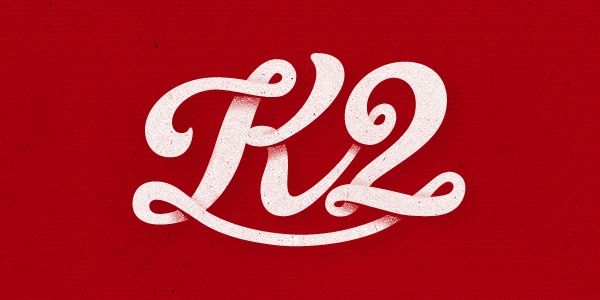
    K2

    If, in some Freaky Friday-like situation, you could live the life of another designer, illustrator or creative, for a day, who would it be, and why?

    There are so many people in all kinds of professions and time periods that would be amazing to experience. Picking just one for now, I would love to have a day in the life and mind of Saul Bass, as unoriginal as that may be. A life lived from New York to Los Angeles, film to print, plus everything in between would have to be inspirational if only for a day even. That vastness of knowledge, creativity, and understanding of human response and interaction would be quite the joy to jump into.

    What design tools could you not live without?

    I’m a big fan of classic pencil + paper creation. After that if I had to live without all design programs but one I would have to save Illustrator, I probably spend 95% of my time in it. Finally, some sort of board (skate, snow, or surf), I would have a hard time living without at least one of them, and yes, I consider them design tools. I do have a lot of books, cool sketch pads, and a Cintiq that I use heavily, but if we’re talking minimums here, that’s what I “need”.

    Mackey's "To Resolve" piece

    And finally, what tips would you give to anybody who is looking to get started in design or illustration?

    To offer up a few small nuggets of wisdom for somebody just getting started I would say to first, make sure you love what you’re getting into, be that design, illustration, or anything else for that matter. If you’re gonna be great at something, it’s not going to be because it looks like an easy career or you’re just doing it to get by. Love it, live it, evolve it.

    Work on building your relationships before building your portfolio. You’ll get more work, from better clients, based on personal recommendations than people seeking you out through a design site or google search any day. I’m not trying to undermine the value of a great portfolio, that will also get you great opportunities, I’m simply saying, start with relationships, they’ll last longer and produce better if you treat them with the value and respect they deserve.

    Do free work. I am not proposing you do spec work, I hope you can avoid that at all costs in fact. I am however saying, find something you love or believe in deeply and offer your skills to help make it greater and better the world. The scale of this organization, product, or person is irrelevant, but I can’t stress the value of doing this enough. Working like this removes one of the most stressful parts of the job, money, and allows you to work better, more creatively, and benefit society simultaneously.

    Lastly, be loyal, to both yourself and your clients. Value your integrity, remain above reproach, share, and never forget why you started and where you came from.

    Thanks Mackey!

    Many thanks to Mackey for talking to us. I really enjoyed his answers, and hopefully you did too!

    Why not check out Mackey’s site, and follow him on Dribbble and Twitter?

    Related Posts:

  7. One Minute With… Mary Kate McDevitt

    Leave a Comment

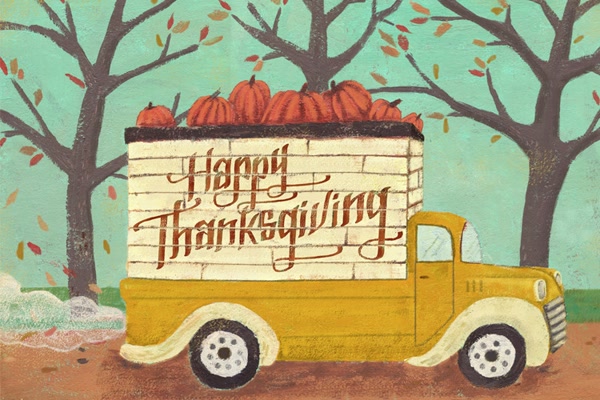
    Thanksgiving Illustration

    Hi Mary Kate, thanks for taking time to chat with One Minute With. Tell us a little bit about yourself and your work.

    Anytime! I’m a freelance illustrator with a focus on hand lettering. I work from my home in Portland, OR.

    Walk us through a typical day in the life of Mary Kate McDevitt.

    I’m up around 7:00 and read emails in bed and browse Pinterest a bit, then I get up for real. Shower, coffee, and reply to some emails and re-read some of the emails that I couldn’t make sense of while I was all sleepy. I take a glance at my to-do list and work on the projects by urgency or the ones I’m really psyched about and re-write my to-do list for the day. Then I workout or run errands on my bike. I address and stamp a Handwritten Letter, a new daily project I’m doing which you can read about here, and scan in or draw a new on for the day. At around 11:00, I realize I skipped breakfast and eat lunch. Once a week my boyfriend Fred (who is a designer and printer) and I meet about new projects, deadlines and supplies. It helps keeps our freelance careers a bit more professional and organized. After lunch I pack orders from my Etsy shop and get to the post office before it closes or schedule pick up for the next day. It’s around this time in the evening I will get really into a project and make lots of progress which may continue to 2 in the morning or I wrap it up around 8pm before dinner then me, my cat Peppy Mew Mew and Fred watch an episode of Twin Peaks or something and sketch or read till it’s time for bed.

    How did you get into design?

    I went to art school, Tyler School of Art and it was between painting and graphic design. But I found early on that I was more excited and challenged by my design assignments than my painting assignments. Around my junior year of Art School I was working illustration and hand lettering into a lot of my design projects and found I was more interested in my illustration assignments than my design projects.

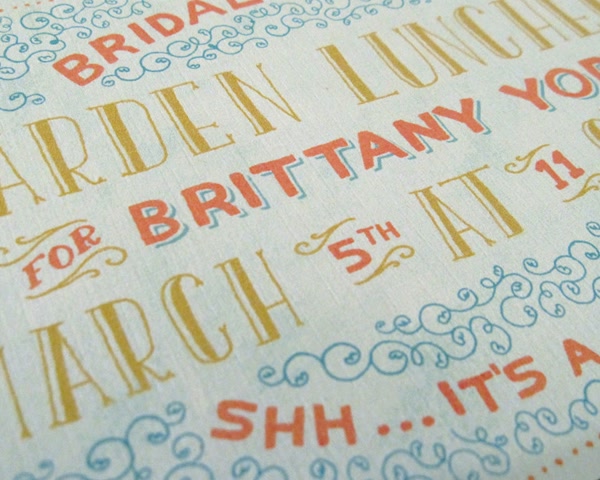
    A stunning invitation

    How do you approach a new project? What’s your design process like?

    After getting the brief I do some research about the project, make a mind map that might lead me to a new path creatively and get some concepts and directions together. Then I start drawing super rough thumbs in my sketchbook and choose compositions and idea, then I take them to cleaner larger sketches. I do all my sketches in pencil sometimes on tracing paper sometimes drawing paper scan them in and clean them up a bit in Photoshop. I send 2-3 ideas to the client.

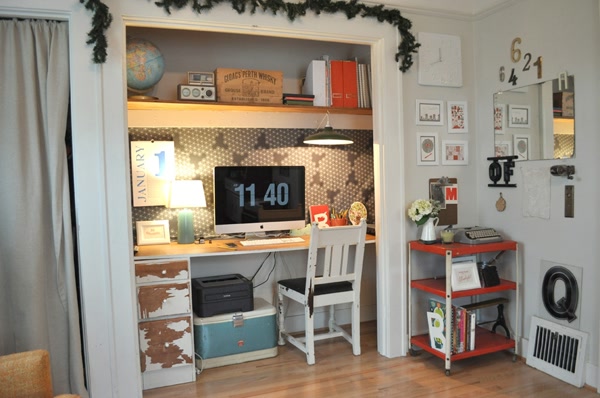
    Mary Kate's workspace

    Your work has a quirky, handmade, ever-so-fun feel to it – Where do you get inspiration from?

    Vintage posters, collectibles, tins and packaging, sign painting, folk art and has always been a big inspiration for my lettering work. But I’m also inspired by my bike rides around the city, thrifting and hanging out at the park.

    Lettering is obviously a massive part of your work, and you are a master at it. Have you ever considered going into the field of type design and making a font?

    While type design does tickle my fancy, I don’t have any real plans to make a font. I’ve made a few alphabets for my own amusement but when I get the idea that it could make a good font, I diverse my attention to something else. Perhaps one day though.

    Handwritten letters

    Where do you see yourself in 5 or 10 years? Are you still hoping to be doing lettering and illustration, or do you want to have moved onto to something bigger (or perhaps smaller)?

    Hopefully still doing lettering and illustration and working on some larger projects: Children’s book, murals, book covers. I’d also love to do some more shows solos and collaborations.

    What design tools could you not live without?

    Sketch books. I go through a new sketchbook every 2 weeks.

    Beautiful lettering

    And finally, what tips would you give to anybody who is looking to get started in design?

    Work hard and then work even harder. Try all options and take note of what works and what doesn’t. Have an honest voice and expand your inspirations.

    Thanks Mary Kate!

    Many thanks to Mary Kate for taking some time to talk to One Minute With. I really enjoyed interviewing her, and hopefully you enjoyed reading it!

    Why not check out Mary Kate’s site, and follow her on Dribbble and Twitter?

    Related Posts:

  8. One Minute With… Sean Farrell

    3 Comments

    Good Witch logo

    Hi Sean, thanks for taking time to chat with One Minute With. Tell us a little bit about yourself and your work.

    My name is Sean Farrell and I am a creative kid in a grownup body living in Ann Arbor, Michigan. I work from home and I primarily focus on logo design, application design, and web design. When I’m not designing I’m usually hanging out with my wife and family or eating ice cream.

    Walk us through a typical day in the life of Sean Farrell.

    My typical day starts around 9am where I spend a good hour reading my Bible before I hop on the computer. It’s a good time to reflect on the ultimate creator and give him thanks for being able to have the best job in the world. After that I usually answer emails for a good hour. From there, I go back and forth with sketching, scanning, and digitizing comps and wireframes. Sometimes during the middle of the day I take a break and watch a flick or take a walk with my dog.

    Sean

    How do you approach a new project? What’s your creative process like?

    Well, every project starts very similar for me, I’ve kind of gotten into a good routine that seems to be working well with me and my clients. For the sake of time, I’ll explain my logo process. Each logo project starts off with a questionnaire that I send to my client. It’s all about discovery for me, making sure I can pinpoint what the clients needs/wants/desires are. After I get the questionnaire back, I go over it with the client and fill in any holes or clarify and talk through each of the different answers. Once that’s done I do a lot of word mapping. I find keywords that specify the industry and values the client wants to portray in the logo. From there I research, sketch, brainstorm, research, and sketch some more… all before hitting the computer. After I have some sketches that I like, I scan them in and start digitizing them. Send to the client and hopefully the approval ;)

    You don’t exactly have a unified style across all of your designs: Do you feel that having a style is beneficial, or, in branding in particular, is it better to do something completely unique to that client, unlike anything you’ve done previously?

    Yes and no… I’ve been told I have a specific style although it’s hard for me to tell what it is :) I just design what I think will work well with the clients needs and the demographic that they are trying to reach. I think it’s important for designers to step out of their own head and step into the body of who the client is trying to reach. I’ve said it before, but a lot of times you see designers designing things for other designers’ approval, not the clients’. I try to be as unique as I can for each of my clients, but I’m sure my ‘style’ or ‘mark’ can be seen in each of them.

    Zao logo

    Before you got into design, you ran an ice-cream business. What led you from one to the other? With many designers starting their careers in design, do you think some “real world experience” is useful in this line of work?

    Yes, I did run an ice cream business, but it would take me a novel to write how much that changed my life and how it led to design. I will say that even if people can design, you still have to be able to run a business. Freelancers need to know about finances, customer service, talking to clients, selling your clients, email etiquette, etc. My ice cream business taught me a lot about those things and I believe it’s helped me grow a strong freelance business.

    If, in some Freaky Friday-like situation, you could live the life of another designer, illustrator or creative, for a day, who would it be, and why?

    Well, if I were able to inherit their skills, there’s quite a few I can think of but ultimately I think I’d have to choose Dave Mott. His sketching/illustration skills are just out of this world. He is someone I constantly am impressed with.

    What design tools could you not live without?

    Well I am a weirdo when it comes to software – I like starting my logos in Photoshop (letting the boos quiet down)… but ultimately all my logos end in illustrator. For some reason I just love the interface of PS vs. AI. Something about an infinite canvas scares me :)

    I also have to say that for books, I enjoy all the Logo Lounge books, as well as some others like Logo Design Love and Designing Brand Identity.

    I have to have a Moleskine sketchbook

    And lastly, my Intuos 4 Wacom tablet.

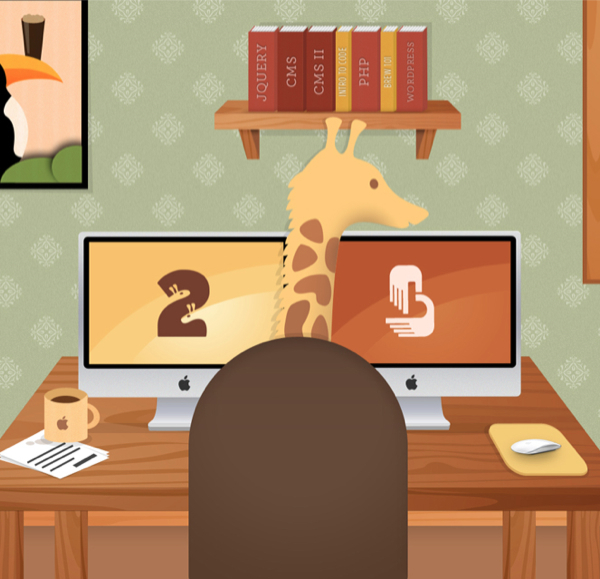
    Just a giraffe

    And finally, what tips would you give to anybody who is looking to get started in design?

    I think it’s important for new designers who are trying to break into the industry to find their style and stick with it. Don’t try to be like everyone else or you’ll just get lost in the shuffle. It’s important to have your own sense of style and people will notice you for it.

    Thanks Sean!

    Many thanks to Sean for sharing his thoughts with OMW. I had a lot of fun talking to him, and I hope you love the interview as much I do!

    Why not check out Sean’s site, and follow him on Dribbble and Twitter?

    Related Posts:

  9. One Minute With… Ryan Putnam

    Leave a Comment

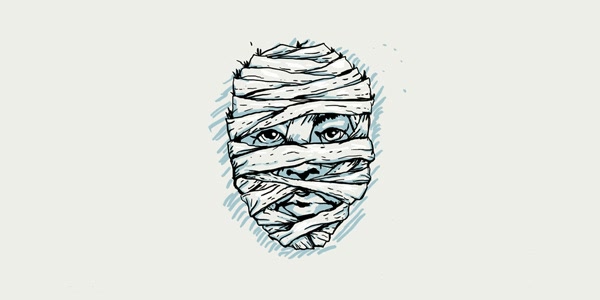
    Ryan as a Mummy

    Hi Ryan, thanks for taking time to chat with One Minute With. Tell us a little bit about yourself and your work.

    Thanks for the chat! I’m a designer, illustrator and blogger. I run the design studio Rype Arts, the blog Vectips, and the online shop Vector Mill. I have always sketched, doodled, and created things. I dabbled in fine art in high school and received a BFA in Graphic Design from Colorado State University. After college I worked for a print shop and a small design studio before becoming a full-time freelance designer, illustrator, and blogger.

    Walk us through a typical day in the life of Ryan Putnam.

    To get the juices flowing, I start with some coffee. Once I hop on the computer, I read through a bunch of feeds and do my first round of communications consisting of mostly emails, Tweets, and Facebooking. After that, I have to turn off all distractions or else I couldn’t get anything done. I usually do the most intensive work in the morning. Usually this is client jobs, a long tutorial, or working on some stock illustrations. I do another round of communication before lunch, do lighter work in the afternoon, another round of communication at the end of the day and I’m done! I have some days set for specific tasks. For example, Fridays are bookkeeping and administration type of work.

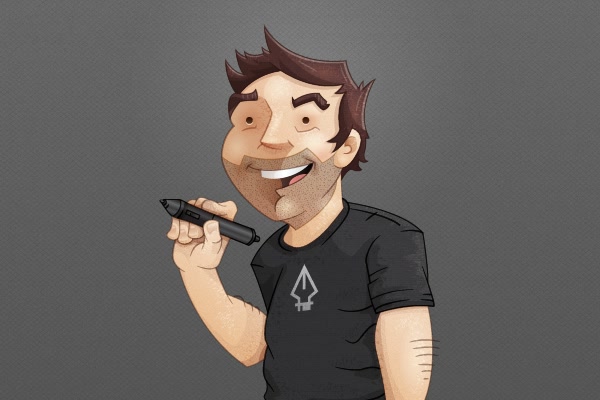
    Just Ryan

    How did you get into design?

    It was just a natural progression from the art I was doing in high-school. I was always nervous about relying on the salary of a fine artist so I thought a career in graphic design would suffice financially. It wasn’t until I started taking design courses I realized how much I loved design and illustration. I have always valued the utilitarian side of art and design offers so much more than pure aesthetics. Design is a balance between usability and aesthetics. It’s fun and challenging.

    How do you approach a new project? What’s your design process like?

    It really depends on the project. For clients, I have a specific set of steps to take them through. For me, having specific steps make the process faster, easier, and less confusing. For a client, the specific steps usually makes the process less confusing, creates a sense of contribution, and they are usually happier with the end product. The process is a little different depending if it is a branding project, illustration, or web design, but they all start with a questionnaire. The other steps can include a round of sketches, round of mood boards, live examples, and other similar stuff.

    Most of the personal work happens a little more organically. It usually starts with an idea or doodle. From there I just expand on the idea. I don’t really have any specific steps on how to take the idea from beginning to end. It just kind of happens. Now that I think about, maybe I should have more a process.

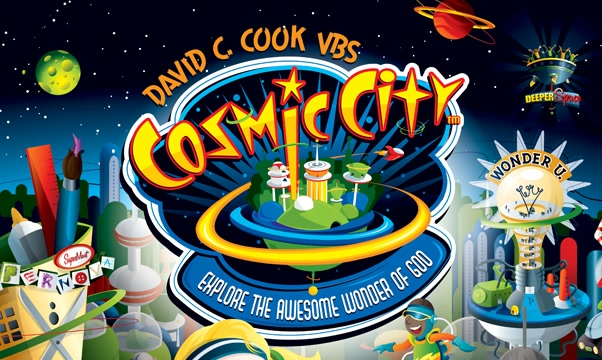
    Cosmic City

    When you’re regularly writing tutorials, do you feel it is important to diversify your style as much as possible, to keep things fresh? How do you keep as much variety in your work as you have, to avoid getting stuck in a rut?

    Yeah, I think it’s really important to alter my style. I started writing tutorials to help other people and to become more knowledgable myself. If I stick to one style I really wouldn’t be helping anyone. It’s also in my nature to try different styles and techniques. I really just get bored if I do the same thing over and over again. If I see a style I like I try to incorporate it in my work or try to recreate it for a tutorial.

    Some leafy type.

    You’ve been involved in a few high-profile self-initiated projects, such as VecTips and Vector Mill. How much of your work is self-iniated projects, and how much is client work? Is there one you prefer over the other, and why?

    My time is probably split 50/50 between client work and the self-initiated projects. Both have their positives and negatives. Sometimes with client projects, you get to work with experiences, ideas, products and people you would never have otherwise. On the flip side, when working for a client, you are hostage to their taste, requirements, and schedules. But if you are a good designer, you can give your client a great product while keeping your integrity.

    To be honest, I much prefer the personal projects. I love the freedom of taking an idea from the foundations to fulfillment. Even though I can be my own worst client, I hope in the future I can be financially sustained by personal projects alone.

    Vector Mill

    With the previously mentioned projects of yours, VecTips and Vector Mill, you contribute an awful lot to the design community, in terms of resources, tutorials and articles. How important is it to be involved in the design community?

    It’s pretty important to me to stay involved. The design community provides great education, feedback, and support. Even if I wasn’t doing Vectips and Vector Mill, I would participate in the community in some way. It’s awesome to connect with people that are just as excited about design and illustration as I am.

    What design tools could you not live without?

    I guess the most obvious one is my iMac with Illustrator, but it would be pretty hard to get by without the internet, my Moleskine, a pencil, and my Wacom Intuos4. The second tier of stuff would be Evernote, OmniFocus, Reeder, and Dribbble. I don’t want to sound too cheese, but I couldn’t do any of it without the support of my wife. I definitely wouldn’t be doing what I love without her.

    Awesome Bird is Awesome

    And finally, what tips would you give to anybody who is looking to get started in design?

    Never stop learning, have an open mind, get a thick skin, and always read and scrutinize anything you sign.

    Thanks Ryan!

    Thanks so much to Ryan for giving us an insight into his world! I loved talking to him, and found his answers really interesting!

    Why not check out Ryan’s site, and follow him on Dribbble and Twitter?

    Related Posts: