Author Archives: Conor O'Driscoll

About Conor O'Driscoll

Conor O'Driscoll is a designer and writer, who writes for AppStorm.net. He also enjoys writing about himself in the third person.
  1. One Minute With… Mike Rundle

    1 Comment
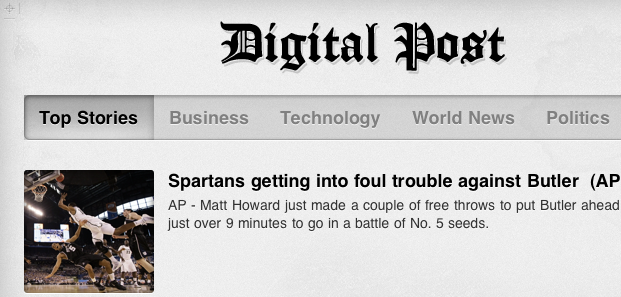
    Digital Post iPad App

    Hi Mike, thanks for taking time to chat with One Minute With. Tell us a little about yourself and your work.

    Sure! I’m a designer and software engineer living in Raleigh, NC with my wife (who’s also a software engineer) and my dog (who’s just a dog.) I’m the User Interface Architect at Bronto Software where I lead visual design and frontend architecture for their suite of marketing and analytics web applications. In the evenings and weekends I design and build iPhone, Mac and iPad apps, and write about iOS interface design at Design Then Code. In the mid-2000s I was the co-founder of the design firm Business Logs and the blog network 9rules.

    Walk us through a typical day in the life of Mike Rundle.

    Mike Rundle
    I wake up around 8am, roll over, and check Twitter, blogs, Reddit and email on my iPhone for a few minutes. After I get to work I settle in and start working on the next big features that we’ll be rolling out at Bronto. I typically spend my day evenly split between writing JavaScript, PHP, HTML and designing in Photoshop. After work I usually have a variety of projects that I’m working on and I try to put at least a little bit of time into them. Right now I’m splitting time between some interface design work I’m completing for Sublime Text (an excellent code editor, heir to the TextMate throne), a redesign of Flyosity.com, finishing my presentation for Swipe Conference, and some iPhone apps I’m in the early stages of developing.

    How did you get into design?

    When I was much younger I was really into baseball cards and I used to have large, 8.5×11″ sheets of graph paper where I’d design my own baseball card designs. These would be really elaborate and I’d color them and hand-emboss them like they were a special edition insert in a pack. I’d also design sneakers and, when I was older, golf courses. I was never really an artist, but the more technical and exacting nature of drafting/designing really appealed to me. When I was 13 I started building websites for myself and my friends, and that’s when my love of hand-drawing met the logical side of my brain and I started writing little programs in AppleScript and JavaScript. I’ve been working on the web ever since, and in 2007 I started also designing and coding apps for the Mac and iPhone.

    You’ve been involved in a few high-profile self-initiated projects and blogs, such as Flyosity and DesignThenCode. How much of your work is self-initiated projects, and how much is client work? Is there one you prefer over the other, and why?

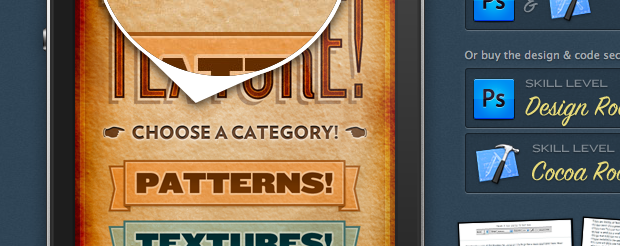
    I did design consulting work full-time for about 3-4 years, and since then I’ve been really cutting back and trying to work on my own projects as much as possible. Because I have a full-time job, I don’t need to take on any outside consulting work, but I do take on interesting projects from time to time. I greatly prefer working on my own apps and projects because I have full control and they’re a lot of fun to work on. I am planning to take on more outside design work soon though, after the redesign of Flyosity is finished. I’ll mostly be focusing on smaller, quick-hit projects as they tend to be more interesting to me than long, huge projects.Design Then Code
    Where do you see yourself in 5 or 10 years? Are you still hoping to be making tutorials and writing for blogs, or do you want to have moved onto to something else?

    Five years ago in 2006 the iPhone hadn’t come out yet and I was building websites for clients full-time. Now I’m mostly working on iOS apps and user interface design for web applications. So many things have changed in the industry in the last five years that I really can’t venture to guess what I’ll be working on five years from now. I’m sure I’ll still be designing and building software for Apple products, but whether those apps will run on the Mac, iPhone, iPad or some yet-unseen device I just can’t say. The only thing I can say for sure is I’ll still be doing both design and programming work since I like doing both.

    What design tools could you not live without?

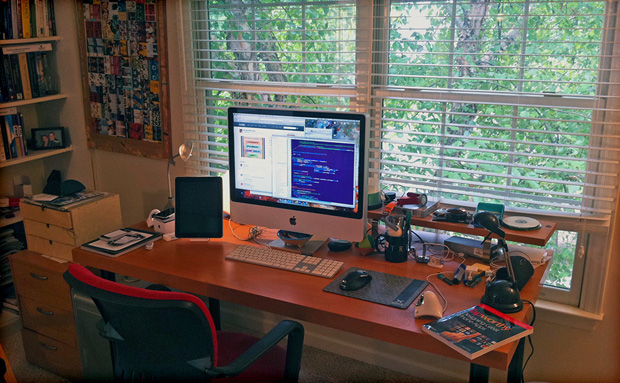
    Photoshop is my workhorse. I’ve been using it since the mid-90s and am about as familiar with it as any piece of software I use. Dribbble has become a great source of inspiration, I love browsing the Popular section or specific tags like iPhone, icon, iPad to see what cool work is being uploaded there. For non-digital planning of projects I like paper & pen because I can write down lists, annotate them, draw pictures, draw layouts, and generally be free to fully express whatever is in my head. No note-taking software I’ve used has even come close to the freeness I have when writing by hand.Mike's Desk
    Aside from design, what do you like to do in your free time?

    I’m a hardcore foosball player and golfer. We have a foosball table at my work and I’m usually playing it around lunch time and then after work with the other guys on my engineering team. I’ve been playing golf since I was in high school and really enjoy it. Nowadays I go to the driving range more than I actually get out on the course but I typically shoot in the low 80s.

    And finally, what tips would you give to anybody who is looking to get started in design or blogging?

    When I tried to get people to notice me online back around 2002-2003 there were only a handful of web designers with blogs, the community was tiny. To reach out to them you merely had to send some nice emails out to people and hope that they took a second out of their day to read it. Now the design community has just exploded, and there are so many niches that it’s impossible to count. Web designers, user interface designers (software, not sites), user experience people, icon artists, the list goes on and on. There are blogs and forums for each of these topics and hundreds more, so getting noticed is a lot harder now. The only technique that was valid back then and is valid now is to work really hard and do a lot of great work. Make up fake clients and design sites for them. Redesign apps and sites just because. Redesign your personal site over and over till it’s amazing. Work on icon sets then give them away. Write tutorials on all the things you know how to do. Study what apps or websites look amazing and figure out how they designed it, then write about what you found out. There a bunch of ways to get noticed in the design industry, and (unfortunately!) most of them involve good old-fashioned hard work.

    Thanks Mike!

    We’re really grateful to Mike spending a few minutes with One Minute With. Hopefully you, like I, found his responses really interesting!

    Why not check out Mike’s site, and follow him on Dribbble and Twitter?
    Related Posts:

  2. One Minute With… Claire Coullon

    4 Comments

    Routes of Hope

    Hi Claire, thanks for taking time to chat with One Minute With. Tell us a little about yourself and your work.

    I’m a graphic designer and typographer currently living in Prague and co-running Op45 Creative Design Agency. My main areas of work are custom type and hand lettering alongside logo design, branding and print/book design. Originally from France, I studied art and design in the UK and then worked in graphic design agency in Brussels before starting Op45.

    See more of Claire’s work here.

    Walk us through a typical day in the life of Claire Coullon.

    Each day mainly depends on individual projects and clients. I’m not big on routines, so the day usually works out depending on what projects requires most time, when things are due, what kind of work it is, etc. For things that are more technical and task-based (typeface modifications/extensions, revisions, etc.) I usually prefer to work on them at the beginning of the day. If the work is more conceptual and creative (like the beginning of projects, idea development, sketching, etc.) I’m usually best later on in the day or at night. Depending on where our clients are, we often find ourselves adapting to their timezones, so that always keeps things different too. Claire Coullon

    Your typography has a distinct, elegant feel to it. Where do you get inspiration?

    It depends on the project really. Something like a classic script or a serif usually requires more background research and sources (existing typefaces, old alphabets, etc). For more organic hand lettering, my ideas most often stem from experimentation and drawing. I also have a variety of resources that I use for reference or just general browsing which helps to give more context, depth or different angles to the work: books of historical alphabets and scripts, old signage, photographs, sketchbooks with notes and images collected over the years, etc.

    How do you approach a new project, and what is your design process like?

    Again, this varies depending on the project but usually, after discussing the brief, I think about the kind of style and feeling I’m going for and start roughly sketching out ideas. From the beginning, I keep in mind specific characteristics/goals of the project and how to incorporate them in the work as well as what references (historical or current) might be relevant, how I’ll approach the number of proposals needed, etc. In the early stages, I usually do stacks of very rough sketches as this allows the natural flow to develop freely without constraints. As the initial ides become more focused, I can then work on the details and refine them – first on paper, then on the computer. I’ll also frequently refer back to sketches or printed versions during the later stages. Claire's Sketchbooks

    It is no secret that lettering is your strong point. Do you have any plans to release a font at any point in the future? (P.S. PLEASEPLEASEPLEASE)

    Haha, well I very much hope so. When it comes to personal typeface projects, I work quite slowly (a combination of being very picky and lack of time). I really want the first typeface I release to have a strong conceptual base and clear purpose, so I’m taking my time to allow the ideas and forms to develop. I also want to ensure a good level of technical quality, so there’s a lot to take care of there as well with regards to OpenType programming, hinting, etc. I have a sans serif and a script started in the last year or so, but I’m not sure if I’ll pursue either of those fully or start something different..

    How did you find your first design client?

    I had the odd freelance project while at university, but I’d consider my first design client to be a art teacher I’d had in high school. When I first made my portfolio website (many versions back now), she asked me to design one for her paintings and it went from there. References and word of mouth are incredibly valuable, especially in the beginning.

    What design tools could you not live without?

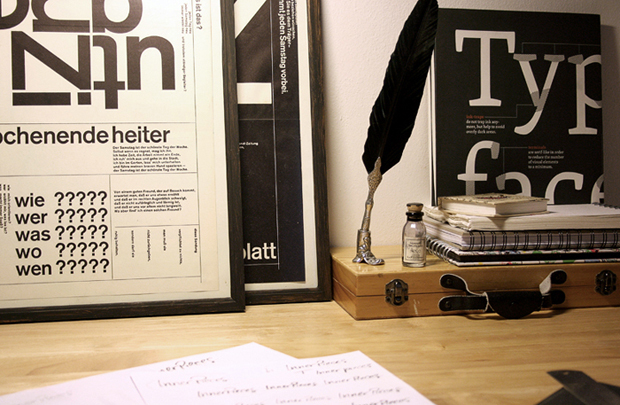
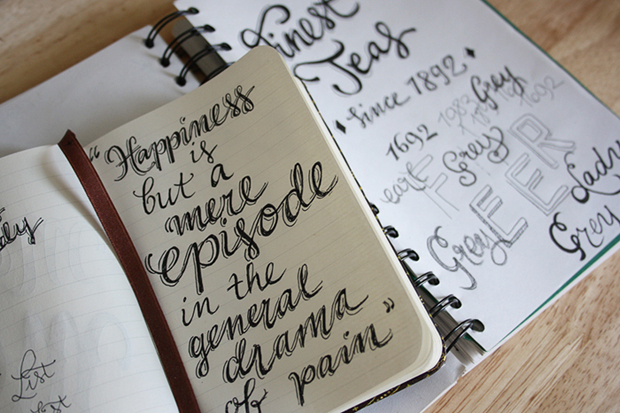
    Paper and pencil/pen. I love using different pens, quills, brushes, etc. but my essential tool is definitely just a pencil or any thin pen. A scanner and Illustrator would be my next choices, followed by a mouse for vectoring. Claire's Desk

    Aside from design, what do you like to do in your free time?

    When I’m not doing personal work or just doodling various letters/words, I love walking around Prague with my boyfriend (while trying to avoid the crowds), reading, cafés, bookshops…

    And finally, what tips would you give to anybody who is looking to get started in typography, or just design in general?

    Practice and research/reading. For typography, spending some time drawing existing fonts and lettering is great practice to really familiarise yourself with the intricacies of letterforms and the details that make successful type. It’s also important to be aware of the historical development of writing, language, phonetics, typeface design, printing… It’s crucial towards a strong contextual understanding and also gives you a wide knowledge base to bring into your own work. For design in general, keeping an open mind with regards to other areas is also really beneficial, not only to broaden your horizons, but to take advantage of those unexpected links, influences or ideas you can stumble upon. As your design and ideas progress, know yourself and how you work, what you’re best at, what mistakes you have to be careful to avoid, when to push yourself… Take the time to be critical, analyze and review what you’re trying to achieve. With the incredible amount of resources and showcases available these days, it’s great to see what other people are doing, but it’s also important to avoid falling into stylistic repetition and focus on your own individual approach.

    Thanks Claire!

    Many thanks to Claire for taking some time to talk to One Minute With. I really enjoyed interviewing her, and hopefully you enjoyed reading it!

    Why not check out Claire’s site, and follow her on Dribbble and Twitter?

    Related Posts:

  3. One Minute With… Tyler Galpin

    1 Comment

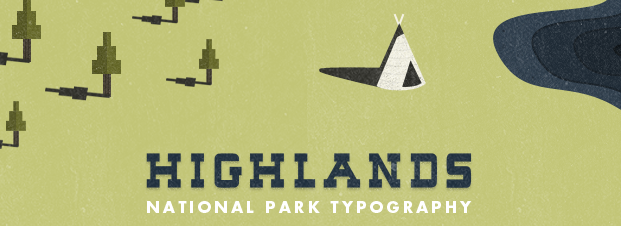
    Highlands

    Hi Tyler, thanks for taking time to chat with One Minute With. Tell us a little bit about yourself and your work.

    Well, I’m a web and UI designer currently based out of Toronto, Canada. Never went to design school but always had a passion for design and especially the power of the web as a medium for design.

    I have a weird duality in my work where my “personal style”, if you could call it that, is best known as being vintage and old-school. On the other hand, I also create what some would call “shiny” interfaces and such, but only where I think it’s appropriate.

    I’m really inspired by things of old, and their utility and value that the design provided in places like the United States and Canada

    See more of Tyler’s work here.

    Walk us through a typical day in the life of Tyler Galpin.

    I’m definitely not a morning person, so I usually wake up around 10 or 11 and do the normal things that humans do when they wake up. Usually my first task is to wrangle all the emails I’ve gotten overnight and through the morning – these are usually from people who are, in fact, morning people and can somehow manage to wake up at a reasonable time. Most of the time I have a couple client chats in a day, either via email/Basecamp or over Skype. As a freelancer it’s cool being able to give clients the one-on-one treatment that you won’t usually get with a designer at an agency.

    I like sketching my designs before I Photoshop them, so I’ll spend anywhere from an hour to four hours listening to music and getting ideas down on paper. For the most part Photoshop is open all day and I flip from one client project to another whenever I get stuck on a design. I’m a huge procrastinator so it’s important for me to start projects early – my brain needs time to process the various design problems unconsciously. Then it’s either staying up until 4 in the morning working / relaxing, or going out with friends.
    Tyler

    How did you get into design?

    When I was about 13, about 9 years ago, I got my first laptop (for the record, it was some shoddily-built Toshiba that fell apart til the very end). Being a young male, I for some reason thought it would be cool to “trick my computer out” with custom wallpapers, icons, toolbars – the whole nine yards. This was my first introduction to the DeviantArt scene, and seeing all the awesome abstract wallpapers got me interested in figuring out how to make my own. So I bought Photoshop and began following tutorials online doing pretty basic stuff. After a while I got interested in learning how to make my own website for myself, and things took off from there. I learned CSS from various articles online and looking at other designer’s source code.

    That was about 4 years ago that I learned CSS, and from there I just designed a million sites for myself as practice and sorta stumbled into freelancing as a way to make money.

    (I still don’t know how to make those abstract wallpapers)

    How do you approach a new project? What’s your design process like?

    I start all projects with a phone call, where I basically glean some information such as what the client is looking for. Really the point of that call is to find out one thing: what is the message? What does the client want to convey with their logo/website/app? Figuring this out at the start is crucial, because nailing this down means I can deliver on my promise to provide them with the exact design solution they need. Then we move onto a short questionnaire where I scope out what style the client likes design-wise. I find out what colours they prefer and which colours they don’t, existing sites/apps/logos they enjoy, competitor products, their brand message – essentially laying down a blueprint for a moodboard.

    My next step is to create this (usually) very deep collection of things that are inspiring me for the project. This consists of websites, logos, photographs – literally anything and everything that has some sort of design value in relation to the project at hand. I find that browsing through places like Flickr is great for finding little details/colours/moods that can help guide a designer through a project.

    Sketching is a big part of what I do, so I take all that I’ve learned from the project so far and try to capture it on paper. Most of the time, the first sketch is a basic layout and very simplistic. Then I’ll create a relatively in-depth sketch on the next page with all the design elements. If I think of a cool idea or know exactly how content will look in the finished product, I’ll write it down next to the detailed sketch so I don’t forget about it.

    Then I dive head-first into Photoshop and usually start with the design elements that I want to try out stylistically or elements that I have a very clear mental image of. It’s important that if you get a spark of inspiration to create something that you don’t let it go – you’ll thank yourself later for it.

    Usually I do a first draft of the design, sit on it for a day, and then review it again. This allows me to see it with a fresh pair of eyes and decide whether I love or hate it. Usually it’s the latter, so I fix up the design as I see fit and by then it is quite polished enough to show to my client.Lost Type Co-Op

    You’ve been involved in a few high-profile self-initiated projects, such as Lost Type Co-Op and Get To Build. How much of your work is self-initiated projects, and how much is client work? Is there one you prefer over the other, and why?

    I would say that I don’t prefer one over the other, but I will definitely admit that self-initiated projects can be among the most rewarding (personally and professionally).

    Usually I structure my flow of client work so that I have some “free spots” in my schedule to work on an idea that I have or do upgrades/updates to existing ideas. It’s nice being able to have fluctuations in my schedule like that – helps keep me sane.

    Depending on how big the projects are, I usually maintain 5-6 active clients/projects at a time so if I want to spend time on, say, Lost Type, I will just say “no” to a couple prospective client projects.

    Clients are important because I need to earn money and make a living for myself – they also open up lots of doors opportunity-wise. Personal projects are important because they are fun, usually benefit a greater cause, and (I would argue) open even more doors to new opportunities because of the exposure alone.

    I’ve seen many design blogs including Lost Type fonts in their endless collections of free fonts. Do you see Lost Type fonts as free fonts with the option to reward the author, or as premium fonts with the option to get them for free?

    It’s interesting you put it that way. It took me a while to think about this, and dig deep down to find out how I actually view them. My opinion of the fonts in the collection is firmly rooted in our original idea which was to offer “premium” fonts for whatever price the user was willing to pay. Radiohead obviously had huge success with their album “In Rainbows” which allowed people to pay what they wanted for the entire album. They had spent months and long hours creating this premium piece of art, and pulled a risky move (that ended up paying off). I would view the fonts at Lost Type in the same vein in that all of the designers have put in huge effort into making their respective font(s) – thereby the “premium” moniker. If we take a step back and look at various other industries like the music industry which suffers from widespread piracy due to the DRM that the labels use, we see that people will “steal” content regardless of what you do. We figured that if we made everyone pay for the fonts, the TTFs/OTFs would just get shared and pirated anyhow. By making them free with the option to donate, we eradicate the idea of pirating in one fell swoop.Block Rockin' Beats

    You mentioned that you listen to music a lot whilst sketching. What’s currently on your iPod/iTunes/Playlist/Zune?

    I listen to lots of different types of music – techno, classic rock, hip-hop, jazz. Pretty much anything and everything except country or opera. When I’m designing I am usually listening to techno/trance/house because the solid beat is a pretty great motivator. Sometimes it works too well and I have to go take a drive or step away from the computer. I discovered at a very young age that my brain works best when I have lots of distractions and white noise going on around me, so music is a huge part of my life and you can find me listening to it all day.

    What design tools could you not live without?

    Software:
    Photoshop CS5 (for designing)
    Espresso (for development)
    Transmit (FTP)

    Hardware:
    – Magic Mouse
    – 27″ iMac (the extra screen real estate is key)
    – iPhone (it’s handy for viewing iOS mockups)
    Field Notes (perfect for writing down ideas on the go, and for notes from phone meetings)
    Duller Notebook (great for sketching)
    MUJI pen (I am convinced that this is the perfect pen – super cheap and feels great in my hand)

    And finally, what tips would you give to anybody who is looking to get started in design?

    1) Practice, practice, practice.

    If you don’t have any active clients or don’t know where to get started this is the perfect opportunity to learn and hone your skills. Make fake websites for yourself, redesign other websites, and tear them down only to rebuild them again. You will benefit from not only experimenting with things like typography and layouts, but will also become better/faster/stronger at your Photoshop/Illustrator/Fireworks skills.

    2) Learn.

    Visit sites, look at logos, and play with apps that you know are exceptionally done. The easy part is recognizing good design. The hard part is fundamentally understanding *why* it is good design. Why does x element work in x design? Does it add to the design, or does it add visual noise? Figuring out the answers to these types of questions and being able to support your answers is a huge step towards growing as a designer.

    3) Karma

    I admittedly preach about this a lot, so sorry if you have heard this from me before. I still feel it is probably one of the single most important things to consider not only as a designer, but as anyone in any profession. Be nice to people. Respond to emails/@replies. Even if they aren’t a super important person. *Especially* if they aren’t a super important person. That 15 year-old kid who is asking you some “silly” questions about CSS might be the next Big Thing. You won’t remember them, but they will remember for a long time whether you helped them or not. You get one chance at a reputation, so don’t screw it up.

    Thanks Tyler!

    Many thanks to Tyler for sharing his thoughts with OMW. I genuinely had a lot of fun interviewing him, and I hope you love the interview as much I do!

    Why not check out Tyler’s site, and follow him on Dribbble and Twitter?
    Related Posts:

  4. One Minute With… Chris Spooner

    Leave a Comment

    A Poster Design by Chris

    Hi Chris, thanks for taking time to chat with One Minute With. Tell us a little about yourself and your work.

    Thanks, I’m Chris Spooner, I’m a designer/blogger who runs two design blogs on the Interwebs: Blog.SpoonGraphics.co.uk and Line25.com. Blog.SpoonGraphics is home to general design tutorials where Line25 has a focus on web design.

    Walk us through a typical day in the life of Chris Spooner.

    I wake up, eat breakfast then head out with Jake the Dog for a mini adventure. When we return my work day will start. Until lunch I’ll either purge my email inbox or begin working on a blog post for one of my two sites. I’ll break off for lunch and catch up on my YouTube subscriptions, then return to work for a few more hours before starting my daily workout at my little home gym. This usually takes me up to dinner time, after which I have the kitchen to clean up! In the evening my fiancee and I either watch a movie in front of the TV or head out to the cinema.
    Chris Spooner

    How did you get into design?

    I’ve always had an interest in design and excelled at the art and design topics in school so it was kind of natural for me to head into the design industry.

    Most (if not all) of your work is self-initiated projects and work on your two blogs. Did you start out hoping to make blogging a full-time career, or was it something which just spiralled out of control?

    I simply started my blog just to give myself a place to practice and experiment. It wasn’t until years later that I realised it could be a full time career.

    Where do you see yourself in 5 or 10 years? Are you still hoping to be making tutorials and writing for blogs, or do you want to have moved onto to something else?

    It’s a difficult one to answer because if we think back 5-10 years blogging wasn’t even around so who knows what the Internet will be like the future. I like to just take each day at a time and worry about the future when it arrives.
    Chris's Workspace

    What design tools could you not live without?

    The Adobe Suite, my Mac and my Xbox are my most prized possessions!

    Aside from design, what do you like to do in your free time?

    I’m quite a keen gamer and enjoy playing and sharing my Call of Duty videos and guides on my gaming channel on YouTube. Otherwise my other main hobby or interest is my gym work. Eating and working out has become a daily activity which I enjoy, especially when I see my hard work paying off in the mirror.
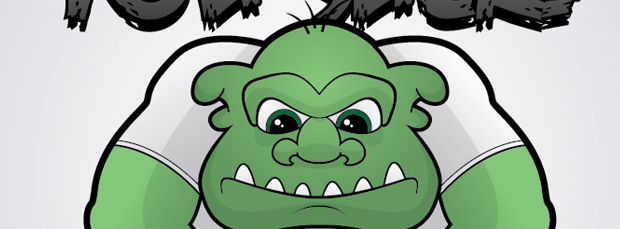
    A Troll Illustration by Chris

    And finally, what tips would you give to anybody who is looking to get started in design or blogging?

    The main ingredients I recommend are firstly to make sure you’re doing it out of passion for the subject as you’ll have to create and post content for a whole year or more before you see anything from it, those who do it for fame or fortune often cut themselves short because they run out of motivation. Secondly try and create content that will help people out, and thirdly aim to do something different. I fell on my feet creating Adobe Illustrator tutorials because there wasn’t many others covering the subject at the time, which helped me stand out as an ‘expert’ or go-to site/person for that particular topic.

    Thanks Chris!

    Thanks so much to Chris to take time out of his schedule to talk to One Minute With. I personally found his answers very interesting, and hopefully you do too!

    Why not check out Chris’s site, and follow him on Dribbble and Twitter?
    Related Posts:

  5. Welcome to One Minute With!

    Leave a Comment

    Welcome!

    Hey there!

    Thanks for visiting One Minute With! This blog has one aim and one aim only: To post fantastic and insightful interviews with your favourite designers and creatives. Find out more at our About page.

    We already have lots of great content on the site, so go and check it out – I promise you won’t be disappointed!

    We’re only just beginning, so if you’ve found any bugs, or you just want to say hi, don’t hesitate to write a lovely message via our contact form.

    Hope you have a wonderful time on here – I know I had a lot of fun making it!

    Related Posts: